
August 01, 2026
2 min read

Key takeaways:
- Approximately 80% of appeals to prior authorization denials are ultimately approved.
- Ongoing effort is required at every step of the process.
FORT LAUDERDALE, Fla. — Appealing claims denials in the prior authorization process requires continuous pressure, according to a presenter at the 2026 Rheumatology Nurses Society annual conference.
“I am not going to pretend in 45 minutes to tell you everything you need to know about prior authorizations,” Katie Taylor, CMPM, CRH-c, CRMS, an administrator with Carondelet Rheumatology, in Kansas City, Missouri, told attendees. “It is not fun and there are no shortcuts.”

In an interview with Healio, Taylor described the prior authorization process as a “beast of burden” for rheumatology doctors, nurses and administrators alike.
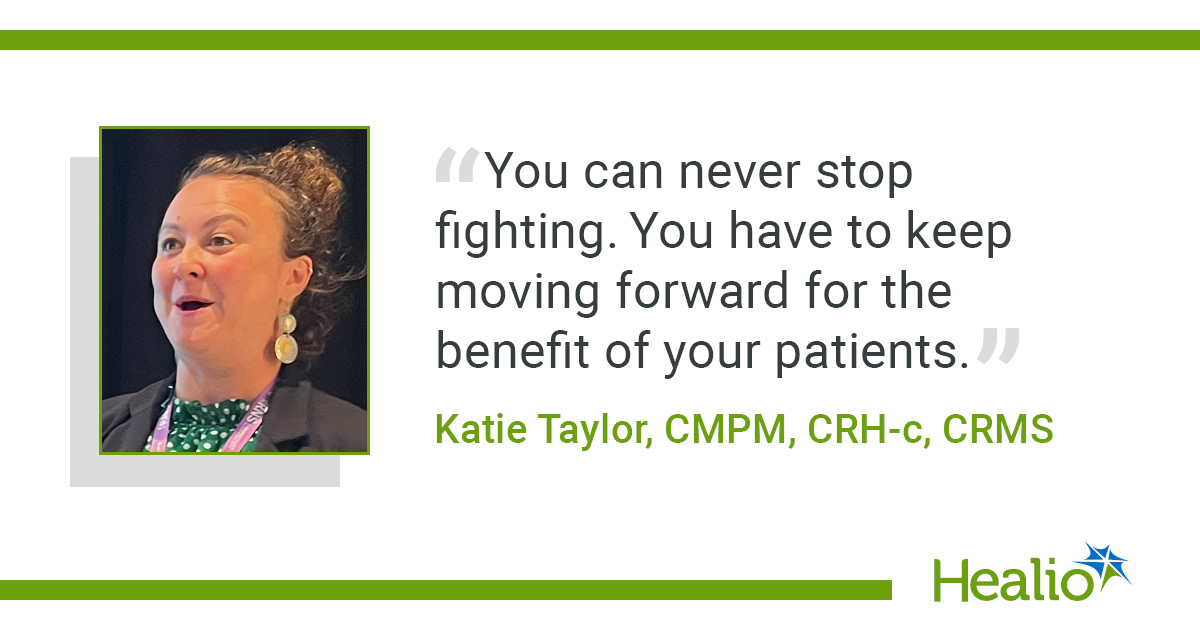
“You can never stop fighting,” she said. “You have to keep moving forward for the benefit of your patients.”
Rheumatology has the second costliest medications of any health care specialty, behind oncology, according to Taylor.
“Our patients are on very expensive medications and they are on them for life,” she said. “We are a big spend.”
Insurance companies do not want to spend the money for these medications, Taylor added.
“They try to get out of that,” she said.
Understanding this fundamental challenge is the first step to being effective at securing prior authorizations for rheumatology patients.
The next step for any practice is to determine how to handle prior authorizations. According to Taylor, between 40% and 50% of practices will have a staff member dedicated to communicating with insurance companies. Other practices divide these responsibilities among staff, she added.
Third-party companies also offer services interfacing with prior authorizations. However, individual practices should weigh the cost-benefit ratio of these vendors, according to Taylor.
“It will only decrease your workload by about 13%,” she said.
Additionally, practices using third-party vendors to help with prior authorizations should be aware of privacy and HIPAA laws, Taylor said.
Regardless of whether the prior authorizations are handled by one person, a committee or a third-party service, Taylor said the key element is continued pressure.
“Around 80% of appeals after a patient is denied medication get approved,” she told Healio. “There is no right or wrong way to do it.”
Attention to detail is paramount. According to Taylor, insurance carriers will deny claims if a single field in the application form is not filled out correctly.
“Also, treatments are evolving,” she said. “When new therapies come out, the formularies can change.”
Taylor encouraged attendees to document every step of the request, denial and appeal of the prior authorization process for every patient. Learning from past denials and mistakes can save time for the next step.
“Get a method to your madness,” she said. “You are never going to be able to do it the same way for every patient, but you can establish a roadmap.”
Understanding the difference between an exception and appeal is also critical. An exception is a special request for coverage, while an appeal is reconsideration of a denied claim, Taylor said.
“We start writing our appeals before we even start the case,” she added.
Insurance companies are increasingly using AI for denials. Taylor counseled that feeding those denials into AI platforms can help generate an effective appeal letter.
However, regardless of the steps taken or processes used, ongoing effort is essential when securing prior authorizations for rheumatology patients, according to Taylor.
“Fighting back and continuing to put pressure on the insurance companies is advocacy work,” she said. “These people making decisions on behalf of our patients don’t know them. Continuing to push is advocacy in action.”
For more information:
Katie Taylor, CMPM, CRH-c, CRMS, can be reached at kltaylor@signaturehealth.net.
Sources/Disclosures
Source:
Healio Interview
Reference:
- Taylor K, Tsosie T. Prior Authorizations: Navigating Access and Advocacy. Presented at: Rheumatology Nurses Society annual conference; July 30 to Aug. 1, 2026, in Fort Lauderdale, Florida (hybrid meeting).
Disclosures:
Taylor reports no relevant financial disclosures.

Ask a clinical question and tap into Healio AI’s knowledge base.
- PubMed, enrolling/recruiting trials, guidelines
- Clinical Guidance, Healio CME, FDA news
- Healio’s exclusive daily news coverage of clinical data