August 07, 2026
2 min read

Key takeaways:
- Prenatal and neonatal exposure to forever chemicals was linked to elevated fecal calprotectin later in childhood.
- Maternal IBD was associated with higher levels of specific toxic metabolites.
Higher levels of forever chemicals in newborn dried blood spots, cord blood and maternal serum during pregnancy were linked to elevated fecal calprotectin in early childhood, study results showed.
Children of mothers with inflammatory bowel disease also exhibited higher levels of per- and polyfluoroalkyl substances (PFAS) than those whose mothers did not have IBD.

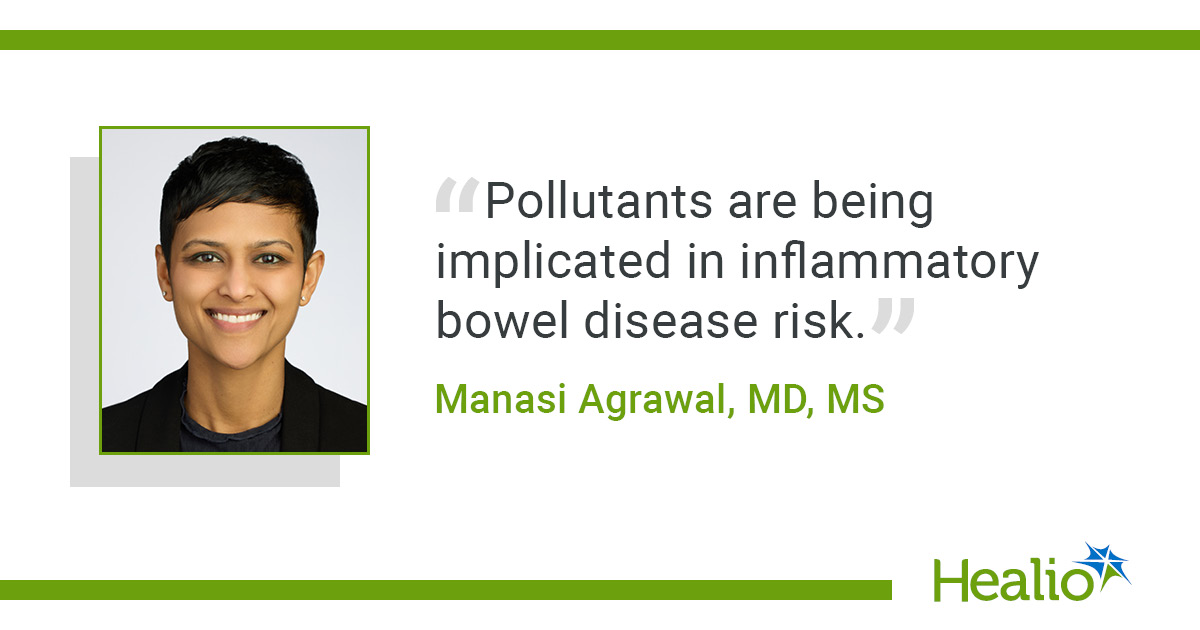
“Pollutants are being implicated in inflammatory bowel disease risk,” Manasi Agrawal, MD, MS, director of environmental gastroenterology and associate professor at Icahn School of Medicine at Mount Sinai, told Healio.
“Early life, extending from pregnancy to the first few years of life, represents a period of high vulnerability to exposures,” she added. “Yet, the impact of these chemical exposures during early life on later intestinal health remains a knowledge gap.”
Agrawal and colleagues used three birth cohorts to measure PFAS exposure through analyses of umbilical cord blood and dried blood spots sampled from newborns and maternal serum during pregnancy.
The MECONIUM cohort, which included 84 mother-child pairs recruited from June 2015 to October 2019, provided newborn dried blood spot samples and cord blood samples, and the MELODY cohort, which included nine pairs recruited from September 2019 to December 2022, provided only cord blood samples. Both cohorts were based in New York.
Fourteen mother-child pairs also were included from the ongoing PROGRESS cohort, which began enrollment in 2007 in Mexico City. This group provided maternal serum samples.
Researchers used fecal calprotectin as a longitudinal marker of intestinal inflammation, measured via offspring stool samples collected at several timepoints from each cohort.
In total, researchers analyzed 84 dried blood spots, 93 cord blood samples and 14 maternal serum samples. PFAS metabolites were identified across all sample types.
Each decile increase in PFAS mixture concentration was associated with higher fecal calprotectin in offspring between age 1 and 6 years in both dried blood spot (covariate-adjusted beta = 0.44; 95% CI, 0.18-0.7) and cord blood analyses (covariate-adjusted beta = 0.69; 95% CI, 0.53-0.85) at 6 years.
Maternal serum samples with higher levels of PFAS mixtures also were associated with elevated fecal calprotectin in offspring at age 9 to 11 years (covariate-adjusted beta = 0.19; 95% CI, 0.07-0.33).
“We noted elevation in fecal calprotectin, indicative of subclinical intestinal inflammation, with early life exposure to PFAS,” Agrawal said.
Additional analysis of cord blood samples from the MECONIUM cohort, which included pregnant women with IBD, showed that mothers with IBD were more likely than those without IBD to have higher levels of PFAS metabolites (adjusted OR/decile increase in PFAS mixture = 1.82; 95% CI, 1.22-2.69), with 3-perfluorohexyl-2-hydroxypropyl acrylate contributing the most at 30%.
Dried blood spots from children of mothers with IBD also had higher PFAS mixture levels (aOR/decile increase in PFAS mixture = 1.45; 95% CI, 1.12-1.89), most of which was attributed to perfluoro-1-octane sulfonamide acetic acid at 67%.
Agrawal noted that the results were consistent across calendar periods, children’s age at fecal calprotectin measurement, cohorts, geography and sample types.
Researchers acknowledged study limitations, including the small sample size, variability in the covariates measured in each cohort and fewer available stool samples on follow-up.
To minimize early-life exposure to PFAS chemicals, Agrawal emphasized the importance of educating patients about forever chemicals and sources of exposure, efforts to mitigate exposure, and further research in this space.
“The impact of these chemicals on clinical outcomes over longer-term follow-up and utilizing other study designs will be important,” she said.
For more information:
Manasi Agrawal, MD, MS, can be reached at gastroenterology@healio.com.
Sources/Disclosures
Source:
Midya V, et al. Clin Gastroenterol Hepatol. 2026;doi:10.1016/j.cgh.2026.07.001.
Disclosures:
Agrawal reports funding from National Institute of Diabetes and Digestive and Kidney Diseases, National Institute of General Medical Sciences, NIH, National Institute of Environmental Health Sciences and the Leona M. and Harry B. Helmsley Charitable Trust. Please see the study for all other authors’ relevant financial disclosures.

Ask a clinical question and tap into Healio AI’s knowledge base.
- PubMed, enrolling/recruiting trials, guidelines
- Clinical Guidance, Healio CME, FDA news
- Healio’s exclusive daily news coverage of clinical data