August 17, 2026
5 min read
Key takeaways:
- Infant girls are approximately twice as likely to not receive intramuscular vitamin K prophylaxis as boys.
- Researchers conducted the study after noticing a recent rise in parental declines.
Newborn females are significantly less likely to receive intramuscular vitamin K prophylaxis and slightly less likely to receive the hepatitis B vaccine than newborn males, according to retrospective cohort study data.
Findings published in JAMA Network Open from three centers in the University of Pennsylvania health system showed that overall parental decline of both vitamin K prophylaxis and the HBV vaccine has increased since 2018.

“This is something that we’re seeing in Philadelphia,” Sarah A. Coggins, MD, MSCE, a neonatologist at Pennsylvania Hospital and assistant professor of pediatrics at the Children’s Hospital of Philadelphia, told Healio. “Our study doesn’t say this is happening in the entire country, but our results may be generalizable to other cities similar to Philadelphia in terms of geography or patient population.”
Coggins and colleagues analyzed newborn births from 2018 to 2025 for babies eligible for care in the well-newborn nursery. They used linear regression to determine crude annual trends and multivariable logistic regression to understand factors associated with both vitamin K prophylaxis and HBV administration.
Data showed newborn female sex to be associated with significantly higher odds of parental decline of vitamin K prophylaxis (adjusted OR = 2.03; 95% CI, 1.74-2.35) and parental decline of HBV administration (aOR = 1.06; 95% CI, 1.01-1.1) compared with newborn males.
The rate of parental decline of vitamin K prophylaxis among female newborns increased from 9.6 per 1,000 births in 2018 to 19.8 per 1,000 births in 2025, while the rate for male newborns increased from 4 per 1,000 births to 10.1 per 1,000 births over the same period.
Meanwhile, the rate of parental decline of HBV administration increased annually by 10.3 newborns per 1,000 births from 2018 to 2025; data show it increased annually by 11 newborns per 1,000 births for male newborns over the same period.
Healio spoke with Coggins about the rising rates of nonreceipt of both vitamin K prophylaxis and HBV, potential reasons for sex-based differences in parental decline and what additional research on this topic might look to address.
Healio: What sparked your interest in pursuing this study topic?
Coggins: My research team and I are NICU doctors and specialists in the care of newborn babies. Clinically, parents declining various aspects of recommended preventive newborn care isn’t all that new, but we’ve been struck by the increasing rates of declining care over the last 6 months to a year. We’ve personally noticed higher rates of parental decline of vitamin K prophylaxis, which again isn’t anything new, but the volume of parents declining seemed to be markedly different.
We are currently in a societal milieu where distrust of the medical system is rising. Parents are doing a lot of their own research, which is informing a lot of these decisions about whether they’re going to accept recommended newborn preventative care or not. Unfortunately, some of the sources that parents are consulting with are providing disinformation, so this study was born out of our clinical everyday observations.
Healio: How did the sex-based differences aspect become a focal point of the study?
Coggins: That was also rooted in a clinical observation. When I counsel families who decline vitamin K prophylaxis in order to address any questions or concerns they might have, I tell them that it’s my job to inform them of the potential consequences of that decision.
I tell them that their child could develop spontaneous bleeding that could cause brain damage, gastrointestinal bleeding, or even death, and some families would still be willing to take that risk. But if it was a male infant, we would also inform them that our hospitals don’t perform circumcisions if the baby doesn’t receive vitamin K prophylaxis. We noted that this piece of information seemed to change some parents’ minds. It wasn’t so much about the counseling and morbidity and mortality that could be associated with vitamin K deficiency bleeding, it was the fact that their son couldn’t get a circumcision.
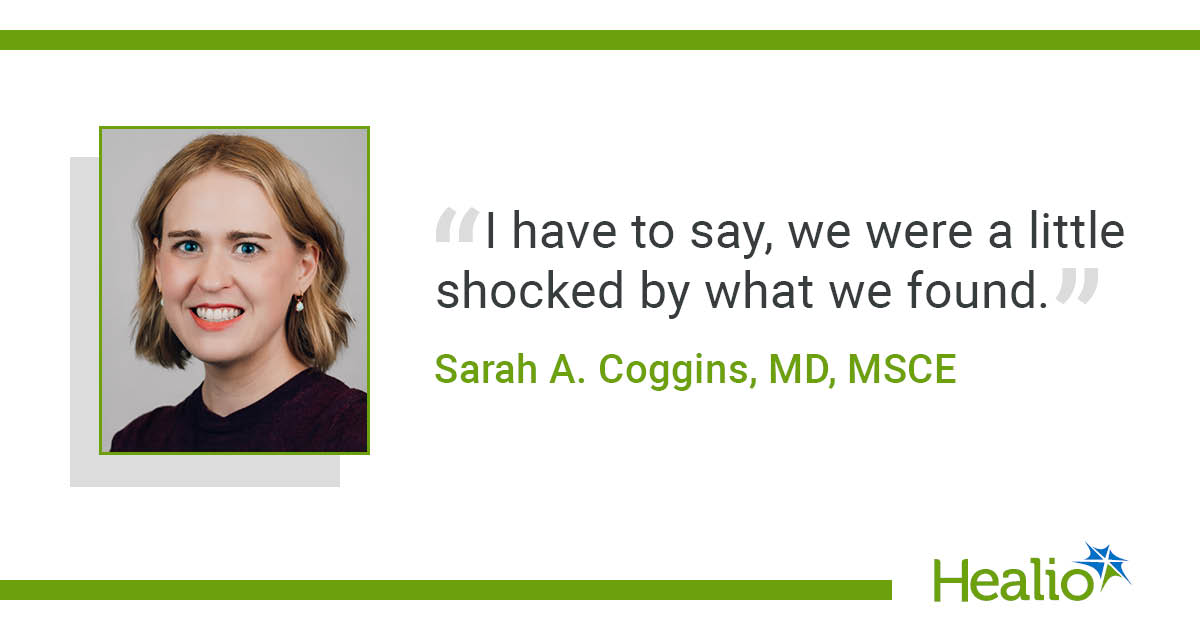
There are no similar procedures that are specifically earmarked for female infants in the nursery that would prompt parents to make that kind of a switch in decision-making. So we asked ourselves: what are the rates of vitamin K refusal over time, and is there a difference in refusal rates between male and female infants? It’s a very simple question but I have to say, we were a little shocked by what we found.
Healio: What are the reasons you’ve heard personally for declining vitamin K prophylaxis?
Coggins: There are various reasons. Some of it is general mistrust of medical interventions. Vitamin K refusal often precedes vaccine hesitancy. There are also folks who don’t trust the safety of the interventions that we’re offering. Some of this is also rooted in a desire for holistic care; we’ve heard things like “vitamin K isn’t natural” or “vaccines aren’t natural.”
Finally, some parents desire to avoid interventions that they perceive as unnecessary, or even just painful exposures to their newborn after birth.
Healio: Having anecdotally observed what you believed to be a rise in overall refusals and the potential separation of sex-based differences, did you expect the results to be as dramatic as they were?
Coggins: This study looked at three birthing hospitals within the University of Pennsylvania health system that reflect different parts of the Philadelphia area, including Center City Philadelphia and the suburbs. We suspected vitamin K refusal may be higher among female newborns, but we were shocked at how much higher it was among girls compared to boys.
We also looked at HBV vaccine refusal, recognizing this was also becoming increasingly common. Rates of HBV refusal also served as a sort of “control” comparison group for the vitamin K analysis. The first thing to note is that the rates of HBV vaccine decline are much higher than vitamin K prophylaxis decline. As of 2025, it’s around a 20% rate of decline compared to 1% rate of decline, respectively.
While the difference between HBV decline among male and female infants was statistically significant, the difference was much smaller than for vitamin K, and we were less able to explain the potential systemic sex-based parental decision-making around HBV administration.
However, there’s a clear divergence in that male-female disparity when comparing vitamin K to HBV receipt — female infants had two times higher odds of not getting vitamin K, compared with male infants. That implied to us there’s another factor related to infant sex that was driving refusals in vitamin K that wasn’t affecting HBV refusals.
Healio: Where do you go from here in future research or next steps?
Coggins: We now need a larger analysis to understand whether sex-specific differences in vitamin K prophylaxis refusal are present on a national level. Beyond that, another important step is whether those feared complications of vitamin K refusal or HBV refusal are occurring at a different rates among male and female newborns. The potential that more vitamin K deficiency bleeding is occurring among female newborns is our ultimate worry.
For me, it’s a passion project now. Pediatricians at our core are advocates for children, and particularly for newborns who can’t speak for themselves. We see ourselves as trusted sources of information for parents to help them make the best decisions possible to keep their kids healthy and safe. These concerns drove us to conduct this research study, and we want to emphasize that rising vitamin K and vaccine refusal is a major public health issue.
For More Information:
Sarah A. Coggins, MD, MSCE, can be reached at cogginss@chop.edu.

Ask a clinical question and tap into Healio AI’s knowledge base.
- PubMed, enrolling/recruiting trials, guidelines
- Clinical Guidance, Healio CME, FDA news
- Healio’s exclusive daily news coverage of clinical data