
What Scalp Psoriasis Actually Is
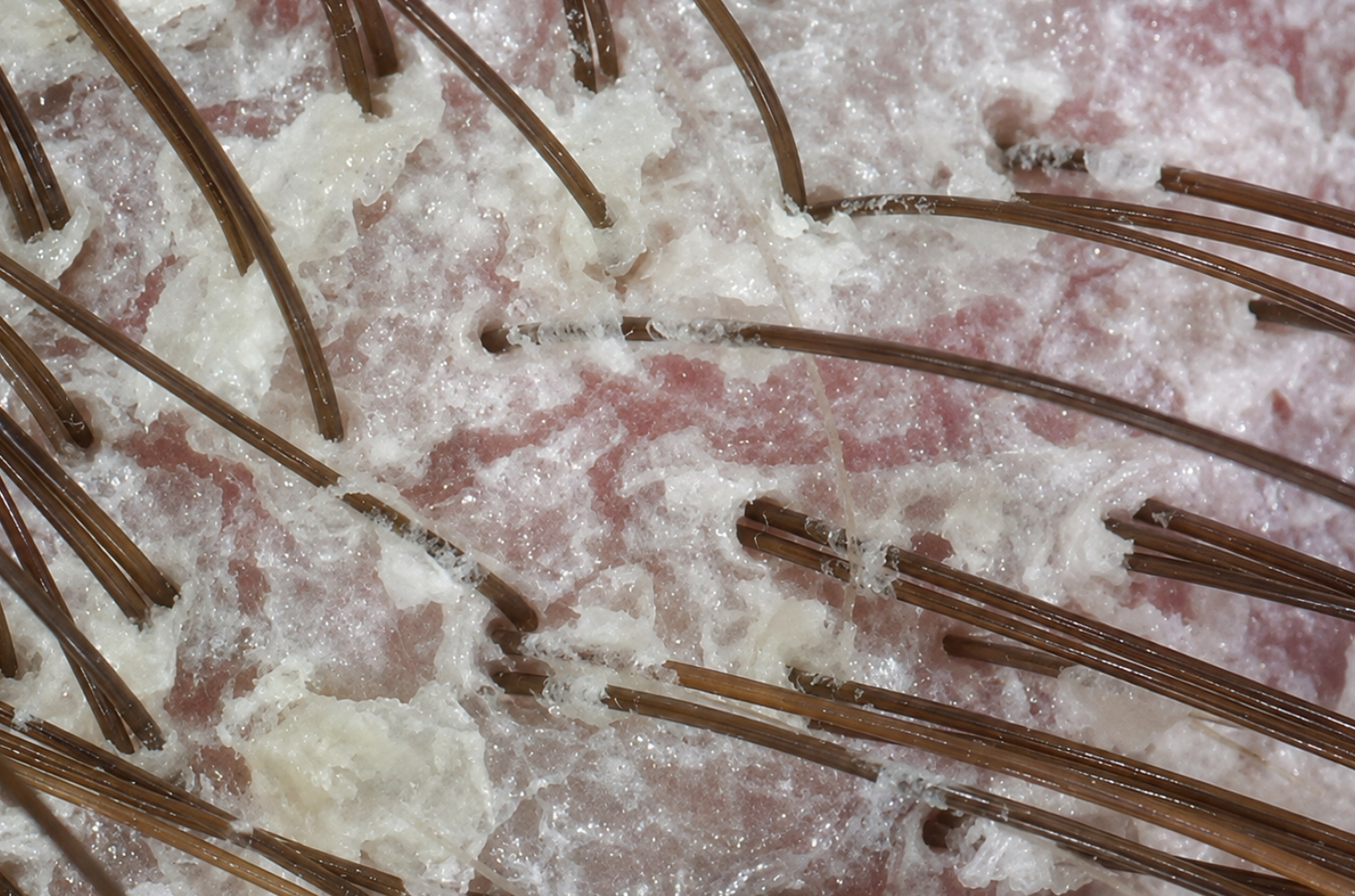
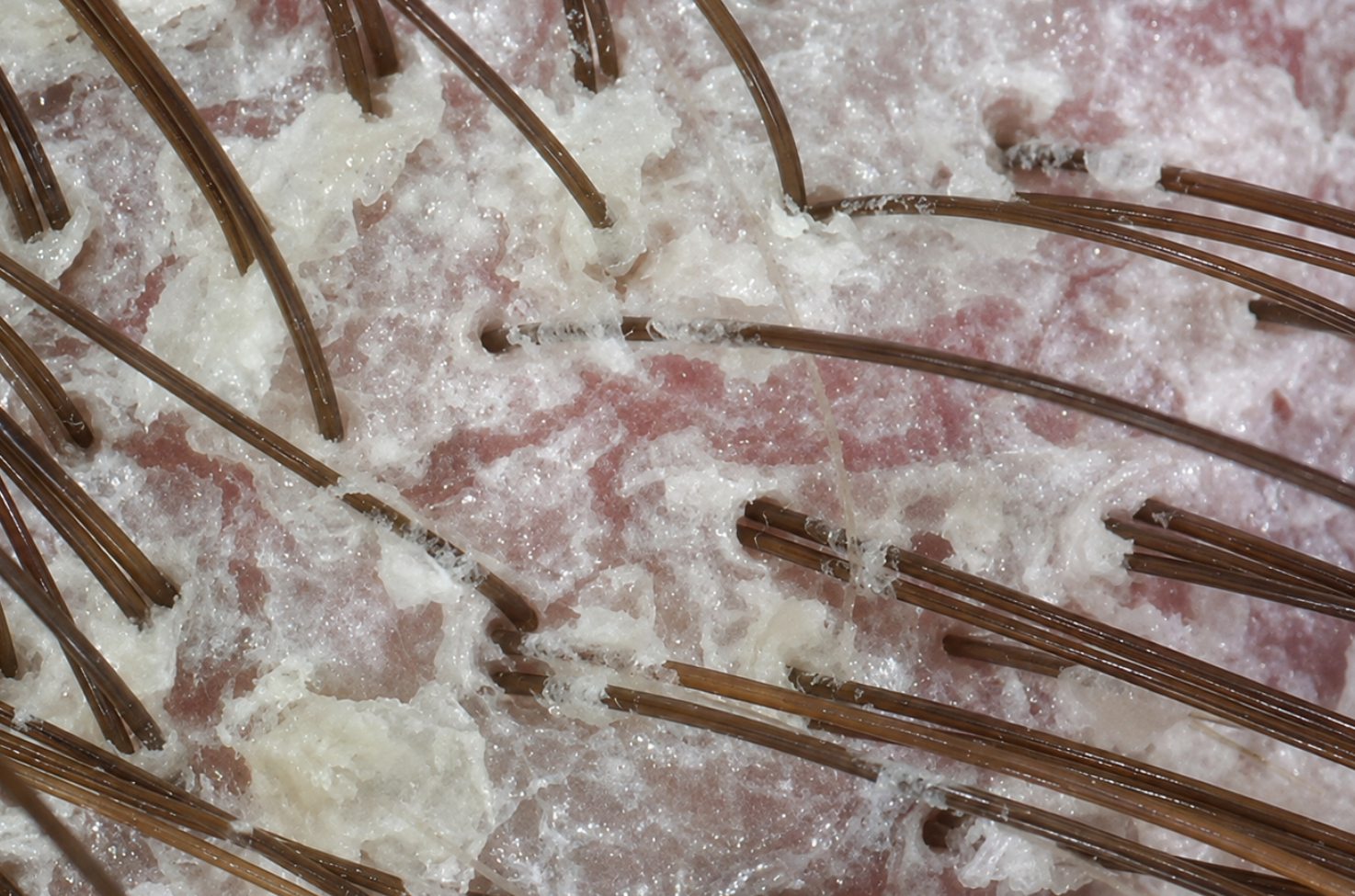
Psoriasis is a chronic condition driven by an overactive immune system, not by poor hygiene or a fungal infection. In healthy skin, cells grow and shed over about a month. With psoriasis, that cycle speeds up dramatically, completing in as little as three to four days. Instead of shedding normally, the extra cells pile up on the skin’s surface, forming the thick, scaly plaques associated with the condition.
On the scalp, this can appear as fine flaking that looks similar to dandruff, or as thick, crusted plaques covering large areas. Plaques may appear red, purple, or brown depending on skin tone, and often extend beyond the hairline onto the forehead, the back of the neck, or the skin around the ears.
Scalp Psoriasis Versus Dandruff and Seborrheic Dermatitis
These three conditions are frequently confused, but they look and behave differently.
-
Scalp psoriasis tends to appear powdery with a silvery sheen.
-
Seborrheic dermatitis, a common cause of standard dandruff, tends to look yellowish and greasy instead. A dermatologist can usually tell the difference through a visual exam, though a skin biopsy is occasionally used when the diagnosis is unclear.
What Triggers a Flare
Scalp psoriasis flares are driven by the same triggers as psoriasis elsewhere on the body, including stress, certain medications, smoking, alcohol, skin injury or trauma, illness and infections, weather changes, and diet. Identifying and managing personal triggers is often a meaningful part of long term management, even though it will not replace medical treatment.
The Real Connection Between Scalp Psoriasis and Hair Loss
This is the part patients are usually most surprised by. Scalp psoriasis does not directly attack hair follicles the way autoimmune conditions like alopecia areata do. However, in more severe or long standing cases, the intense itching and inflammation can lead to real hair thinning.
Much of this comes down to a phenomenon called Koebnerization, where scratching or otherwise traumatizing psoriasis plaques actually makes the underlying condition worse. Repeated scratching damages the follicle environment over time, and in rare severe cases can cause temporary hair loss. The encouraging part is that hair loss tied to scalp psoriasis is generally reversible once the underlying inflammation is brought under control and the scalp is given the chance to recover.
Why Scalp Psoriasis Can Signal More Than a Skin Issue
Scalp involvement is not just cosmetically significant. Roughly one in three people with psoriasis will go on to develop psoriatic arthritis, and having scalp psoriasis specifically appears to raise that risk further. If you have scalp psoriasis and also notice joint pain, particularly in the fingers, toes, or lower back, it is worth mentioning to your dermatologist so they can screen for related joint involvement.
Current and Emerging Treatments
Treatment approaches typically move through several tiers depending on severity.
-
Over the counter options rely on ingredients such as salicylic acid, which softens and lifts scale, and coal or pine tar, which slows skin cell growth and reduces inflammation and itching. Zinc pyrithione and ketoconazole shampoos can help with related flaking as well.
-
Prescription topicals include stronger steroid formulations and non steroidal options, often combined with vitamin D analogues that help normalize skin cell turnover.
-
Phototherapy uses targeted ultraviolet light to slow skin cell growth. Handheld devices with built in combs allow light to reach through hair to the scalp, and in office excimer laser treatment delivers a concentrated, narrow band UV dose directly to affected areas, typically two to three times weekly.
-
For more severe or treatment resistant cases, systemic options including oral medications, biologics, and biosimilars are often necessary, particularly since the scalp is considered a high impact, harder to treat site.
The treatment landscape is also evolving quickly. New oral therapies in late stage trials are showing strong results: in Phase 3 trials, zasocitinib achieved PASI 90 (90 percent skin clearance) in roughly half to sixty percent of patients by week 16, with about a third reaching PASI 100, or completely clear skin, outperforming placebo and existing oral comparators. Icotrokinra has shown similar strength in its own Phase 3 program, with 65 percent of patients reaching PASI 90 by week 24. Neither is approved yet, but both point to a meaningfully expanded set of oral options on the horizon.