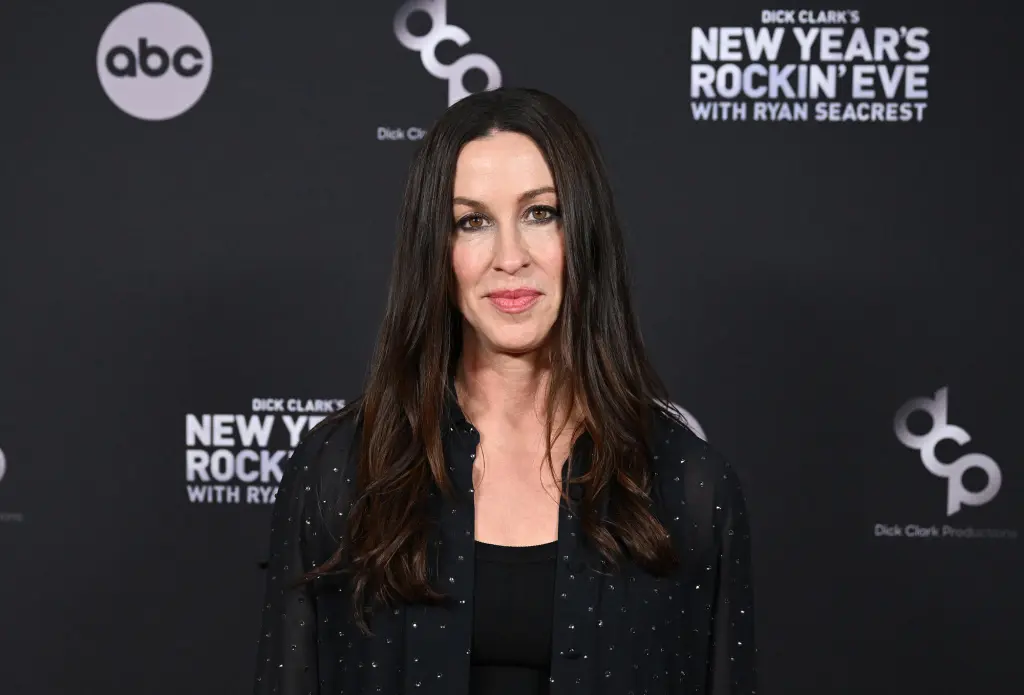
Alanis Morissette is sharing the reality of her battle with postpartum depression (PPD) following the births of her three children.
During a recent appearance on the Call Her Daddy podcast, the 52-year-old musician addressed her lifelong history with depression and the sudden, terrifying symptoms that hit after giving birth.
Morissette shares children Ever, Onyx, and Winter with her husband, Mario “Souleye” Treadway.

Related story
Michael J. Fox Shares the Reason He Still Feels ‘Privileged’ 35 Years After Parkinson’s Diagnosis
PPD and Intrusive Thoughts
“The depression piece inside PPD, unfortunately and fortunately, I was familiar with it,” Morissette said. “It was all the other stuff. It was the invasive thoughts and the terror — just all I could picture was death and terrible things.”
The clinical term for these alarming mental images is “perinatal intrusive thoughts,” and according to the International OCD Foundation, 70-100% of new moms have them.
Unlike postpartum psychosis, which is a psychiatric emergency where a person loses touch with reality, “intrusive thoughts” are unwanted flashes of disturbing mental images or scenes where a mother envisions harming her child — even though she is horrified by the thought and would never actually act on it.
Morissette described her own visions as “harrowing, terrible, ceaseless.” She also pointed out the harsh expectations placed on women who just went through “the most transformative, traumatic experience that physiologically a human being could ever go through.”
A Loss of Trust and Speaking Out
“The minute the mother gives birth, it’s like we get invisible again,” Morissette continued. She described the jarring shift from being surrounded by care during pregnancy to suddenly facing demands to “get up” and lose the baby weight.
The intense anxiety also made her worry about how her loved ones viewed her. “The bummer for me inside PPD was that I was losing people’s trust in my sanity,” Morissette said, adding that people looked at her like she might “fly off the handle.”
She admitted that she even “dipped into psychosis” while pushing through stage shows on tour. “Invasive thoughts, anxiety, depression, rage, off the charts. I felt [so] out of control. Yet, I was touring and leading and being a boss and taking care of money and finances and everything,” she said.
Now on the other side of her struggle, she expressed relief to feel like herself again. When asked why she chose to speak out while actively suffering, she replied, “It just was what was happening.” She shared that her phone immediately blew up with messages from families in the same situation.