September 30, 2026
3 min read

Key takeaways:
- Once a main motivating factor for being a leader is established, women should seek opportunities to reach their goals.
- To be a great leader is to listen, be organized, be a team player and be authentic.
CHICAGO — According to WHO, women represent 67% of the global health and social care workforce, providing essential health services to approximately 5 billion people worldwide.
However, research has shown that fewer than 30% of women hold senior leadership positions within medicine.

“Traditionally, most of the people we have seen in leadership within and outside of medicine have typically been men and, even more specifically, white men,” Mary K. Mulcahey, MD, professor and chief of sports medicine in the department of orthopedic surgery and rehabilitation at Loyola University Medical Center, told Healio. “What it has been, too, is women have not felt like they have been supported or encouraged as much to pursue these roles.”
But Mulcahey said that women in leadership roles in medicine is “critical.”
“We want to have people in leadership positions who represent the patients we are taking care of, who can help make decisions that impact what we are doing in medicine, how we are taking care of our patients, the opportunities that we have available from both the clinical side and also in academic medicine as we are training residents and fellows and supporting our junior faculty,” Mulcahey said. “We want to have a diverse representation of leaders, and that is gender, racial, ethnic — all aspects of diversity.”
Identify your motivating factor
In discussing her presentation at the Women in Medicine Summit, Mulcahey said it may take time for women to identify their main motivating factor or driving force for becoming a leader in medicine. Once that is established, it is important to seek out opportunities that support those goals.
“Once you truly understand what it is that drives and motivates you, it is important to determine what you want to accomplish and how you can help accomplish that in whatever setting you are in,” Mulcahey said. “If you are in your department, your division or a committee in a society, what can you do to accomplish that and not for you as an individual, but for the greater good for the group.”
According to Mulcahey, part of accomplishing goals as a leader is developing a leadership voice.
“It is using your voice, using your position, too, and your experience, your network and those around you to help accomplish that goal, to affect change and move things forward,” she said.
But Mulcahey told Healio it takes time and a lot of trials to develop a leadership voice.
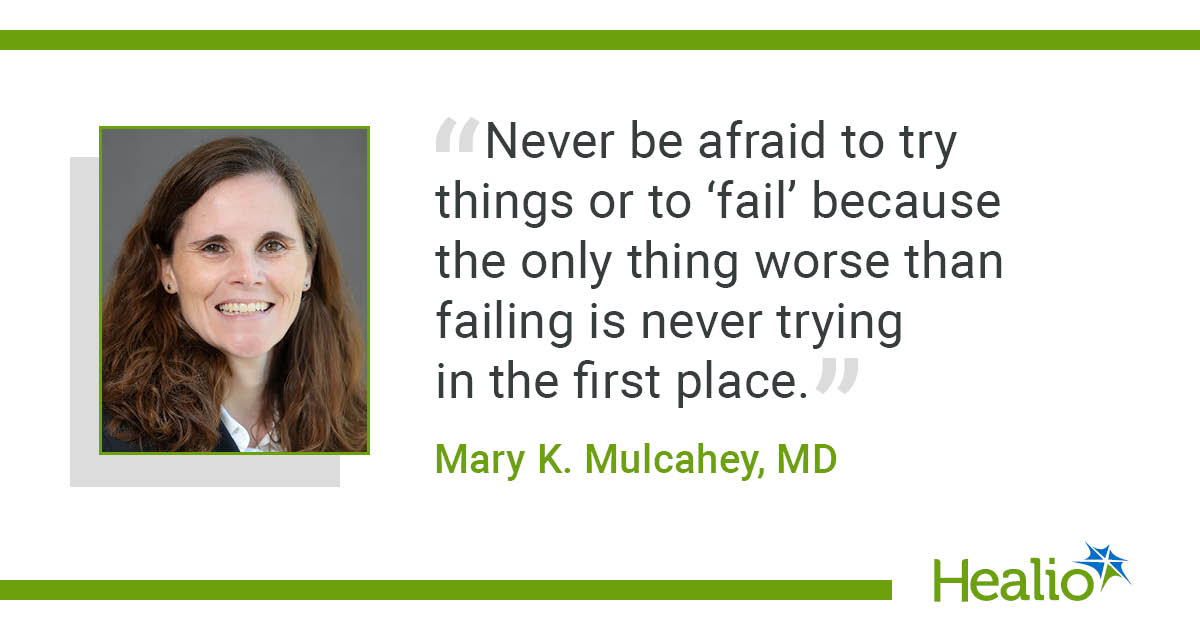
“A big part of that is never being afraid to try things or to “fail” because the only thing worse than failing is never trying in the first place,” Mulcahey said. “A lot of growth happens as you try different things, and being willing to do that helps you further develop your leadership voice become stronger and more confident.”
Be authentic
In addition to developing a leadership voice, Mulcahey said it is important for leaders to be good listeners, organized and a team player.
“Never try to be the smartest or the best person in the room or the group, but surround yourself with people who are strong in different areas and leverage those strengths because everyone benefits,” she said.
According to Mulcahey, “Authenticity is another critical aspect of being an effective leader.”
She said this means being true to yourself and showing up as yourself, while also keeping in mind the context of the event.
“How we show up at the family barbecue on Saturday is completely different from if we are giving an important presentation to a Board,” Mulcahey said. “We can still show up as ourselves but just be aware of the context.”
Part of being authentic includes having both internal and external self-awareness. Mulcahey said internal self-awareness includes understanding how you respond emotionally to different situations, whether in the clinic or a meeting, while external self-awareness involves how the emotions that are being expressed outwardly impact the people around you.
“As leaders, how we act and how we carry ourselves impacts the members of our team and everyone around us,” Mulcahey said. “As effective leaders, we want to be able to be strong in both of those areas, be aware of what we are experiencing and be able to, in some ways, control it.”
While stepping into a leadership role may feel daunting, Mulcahey said that it is something that no one will ever feel completely ready for, but to do it anyway.
“Being a physician, that in and of itself defines you as a leader,” Mulcahey said. “We are all leaders. Just bearing that in mind is helpful to use as physicians to seek out opportunities to grow and develop these skills.”
For more information:
Mary K. Mulcahey, MD, can be contacted at mary.mulcahey.md@gmail.com.
Sources/Disclosures
Source:
Mulcahey MK. Finding your leadership voice: Authenticity, strategy and culture in leading change in Medicine. Presented at: Women in Medicine Summit. Sept. 24-26, 2026; Chicago.
References:
Disclosures:
Mulcahey reports no relevant financial disclosures.

Ask a clinical question and tap into Healio AI’s knowledge base.
- PubMed, enrolling/recruiting trials, guidelines
- Clinical Guidance, Healio CME, FDA news
- Healio’s exclusive daily news coverage of clinical data