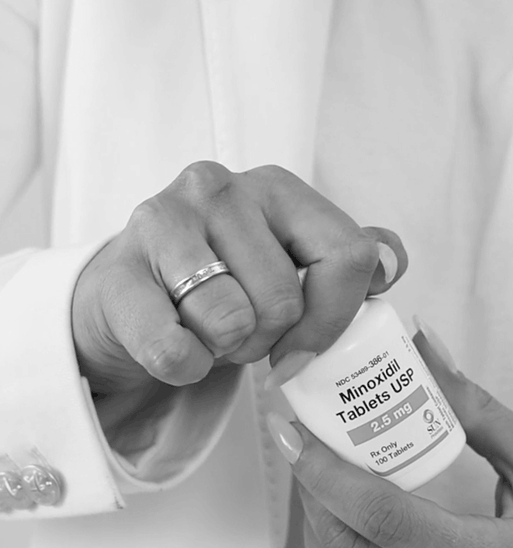
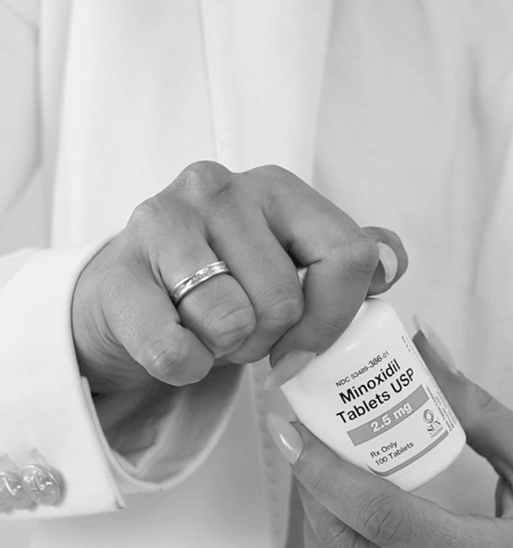
At NHLMA, choosing minoxidil is not as simple as deciding between a pill and a topical formula. Before recommending either option, we first determine what type of hair loss is present, what may be contributing to it, and whether minoxidil addresses the full picture.
A detailed scalp and follicle evaluation allows us to document your current density, shedding pattern, and degree of follicle miniaturization. This helps distinguish androgenetic alopecia, which often responds well to minoxidil, from temporary shedding or another condition that may require a different approach.
Comprehensive lab work can reveal internal factors such as low ferritin, thyroid dysfunction, vitamin D deficiency, nutrient imbalances, inflammation, or hormonal changes. Minoxidil may support growth, but it cannot correct an untreated deficiency or underlying medical issue that is continuing to disrupt the hair cycle.
At NHLMA, we may also recommend our non-invasive, top-recommended genetic saliva test for hair loss. The test analyzes genetic markers associated with hormone sensitivity, follicle growth cycles, nutrient metabolism, inflammation, and treatment responsiveness. These insights can help us understand whether your hair loss has a strong genetic or DHT-driven component and whether minoxidil is likely to work best alone or as part of a broader plan that also addresses the underlying cause of miniaturization.
Genetic testing cannot guarantee that minoxidil will work or replace a medical evaluation. It gives our providers another layer of information to interpret alongside your scalp findings, lab results, health history, and previous treatment response.
Because low-dose oral minoxidil is an off-label hair-loss treatment that works throughout the body, we also review blood pressure, resting heart rate, cardiovascular and kidney history, current medications, pregnancy plans, and any history of swelling or fluid retention. When oral minoxidil is prescribed, the dose and follow-up plan are selected for the individual rather than taken from a standard protocol.
This process helps us answer more than whether oral or topical minoxidil is more convenient. It helps us determine whether minoxidil is appropriate for you, which form makes the most sense, what dose can be used safely, and whether another treatment should be included to address the biological driver of your hair loss.
At NHLMA, the model is simple: test first, then treat. Learn more about genetic saliva testing and how hair follicle and laboratory testing can help uncover the potential causes of hair loss.