Raise your hand if your OB-GYN has ever mentioned the rete ovarii. (I’ll wait.)
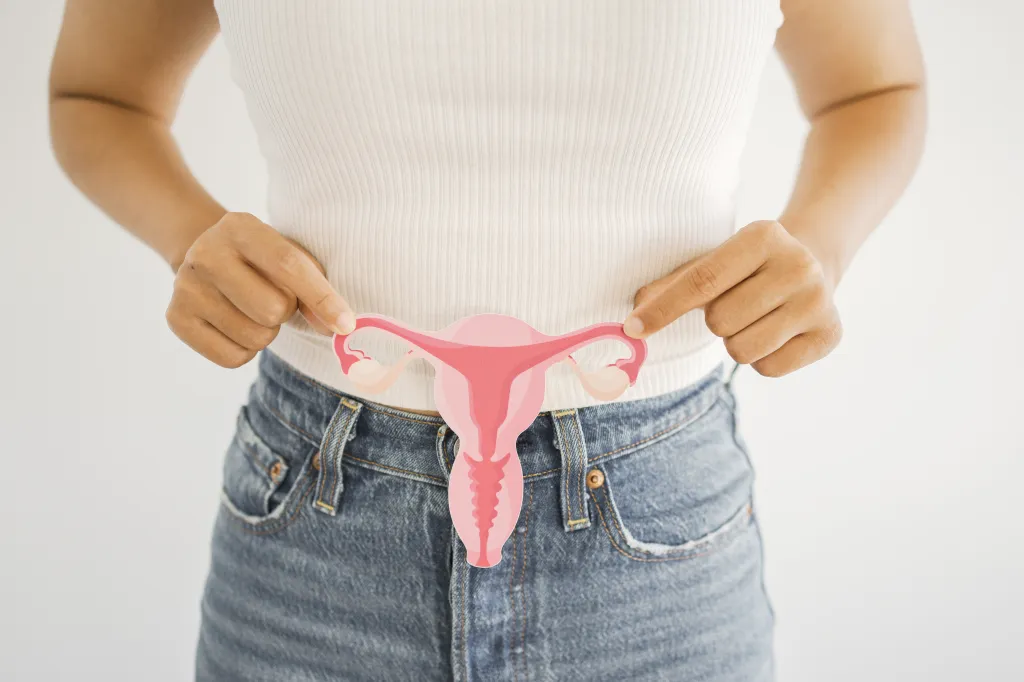
If you’ve never heard of it, you’re not alone. (I definitely hadn’t.) The rete ovarii is a tiny structure that sits right against the ovary and was first described by scientists in 1870. It even showed up in early editions of Gray’s Anatomy. But since nobody could figure out what it actually did, it got labeled a “functionless vestige” and was eventually cut from textbooks altogether. Cool. Very cool.
Comedian Michelle Wolf entered the chat with a recent TikTok video that now has more than 130,000 likes. “We research women’s health just about as thoroughly as a man looks for ketchup in the fridge,” she joked before giving the rete ovarii a proper welcome: “Being overlooked by a man because they didn’t think you were important, rete ovarii, we’ve all been there. Welcome back, baby.”

Related story
Whitney Port Says This ‘Annoying’ Surgery Is the Next Step in Her IVF Journey
What Is the Rete Ovarii, and What Does It Do?
The rete ovarii’s comeback was kind of a happy accident. Developmental biologist Jennifer McKey was imaging mouse ovaries at Duke University when she spotted something she didn’t recognize: a horseshoe-shaped structure curled around the bottom of the ovary. After some digging through old scientific literature, she realized it was the long-lost rete ovarii.
In a 2025 study published in eLife, McKey and her colleagues mapped three distinct regions of the structure (the intraovarian rete, the connecting rete, and the extraovarian rete), all of which stick around into adulthood. And for something that was supposedly useless, it’s pretty busy. Parts of it form tubes that move protein-filled fluid toward the ovary, and it’s surrounded by blood vessels, nerves, and immune cells. Some of the proteins it releases are tied to egg maturation and follicle health, and their activity ramps up when estrogen levels rise. One researcher even compared it to an “ovarian antenna.”
There’s just one thing I need to mention, though: this study was done on mice. Humans have a rete ovarii, too, but nobody knows yet whether ours works the same way. “We do not yet know whether the same functional mechanisms operate in humans or whether the rete ovarii has a clinically significant role in human fertility,” Dr. Snehal Kohale, an OB-GYN, fertility specialist, and founder of Ova Care, tells SheKnows.
Why the Rete Ovarii’s Rediscovery Matters
Interestingly, Kohale isn’t totally sold on the word “erased.” She sees it “more as an example of how scientific understanding evolves with new evidence, research priorities and technological capabilities.” Fair enough. But research priorities are kind of the whole point, aren’t they? Meanwhile, as Wolf noted in her video, the male version (the rete testis) has been in anatomy textbooks this whole time. Make it make sense.
“A structure being poorly understood does not necessarily mean that it is biologically irrelevant,” Kohale says. She adds that conditions like endometriosis, polyendocrine metabolic ovarian syndrome (PMOS, formerly known as PCOS), and infertility still need deeper research, and that “there are still important gaps in our understanding of female biology across the entire life course.”
So, no, your doctor probably won’t bring up the rete ovarii at your next annual exam. (Not yet, anyway.) But as Kohale puts it, “The more carefully we study the female body, the more we recognize how much there is still to learn.” Here’s hoping the next generation of OB-GYNs learns its name.