October 12, 2026
2 min read

Key takeaways:
- Adding inulin significantly reduced C. difficile colonization in fecal samples of patients with UC.
- Findings suggest bacteria that is needed for resistance may be present in UC, but require prebiotic support.
Nashville, Tenn. — The prebiotic inulin increased resistance to colonization with Clostridioides difficile in fecal microbiome samples from patients with ulcerative colitis, according to data presented at ACG Annual Scientific Meeting.
“UC flares are frequently accompanied by enteric infections, and we already knew that UC patients have a microbiome that is much more susceptible to infections with pathogenic bacteria,” Kira Newman, MD, PhD, clinical assistant professor of internal medicine at Michigan Medicine, told Healio regarding her presentation. “I was interested in seeing whether we could reverse this susceptibility in a way that might be safe even for people who are on immunosuppressive medications.”

Improving resistance to pathogen colonization remains a gap in care for patients with UC, according to study background. Newman and colleagues investigated whether inulin, a naturally occurring, fiber-based prebiotic, could address this need.
They collected fecal samples from adults with UC (n = 12) and from healthy controls (n = 11). Patients exposed to antibiotics within 3 months of sample collection were excluded from the study.
The researchers analyzed susceptibility to C. difficile using an anaerobic cultivation system with peristaltic flow, increasing the median inulin level from 0.1% to 1%.
Consistent with prior research, samples from patients with active and quiescent UC were significantly more susceptible to C. difficile colonization than those from the control group.
A total of 42% of healthy control samples were colonized with C. difficile, compared with 91% of samples from patients with UC.
Susceptibility also varied with taxonomic differences in the microbiome, particularly with higher levels of Dialister spp. and lower levels of Collinsella sp. and Lachnoclostridium sp.
According to the researchers, the addition of inulin reduced C. difficile colonization in the samples from patients with UC.
“We found that there was individual-level variation in the effect of inulin on the microbiome’s ability to resist infection with C. difficile.” Newman said. “It is intriguing because it suggests there may be multiple ways we need to target microbiome repair or that there may be a need to personalize the approach for different people.”
Newman emphasized that the inulin tested in the study, derived from chicory root, included both short and long-chain inulin molecules.
“Many commercial products with added inulin use predominantly short-chain inulins, which other researchers have found may be less effective than long-chain inulins — like those found in whole foods — at improving gut health,” she said.
Research is under way to evaluate whether inulin has the same impact on the microbiome in vivo, according to the researchers.
“Our work is not yet ready to apply to clinical practice, but it does highlight the importance of dietary fiber for microbiome function,” Newman told Healio. “Many patients with IBD are advised to avoid fiber, and this could be having unintended consequences.
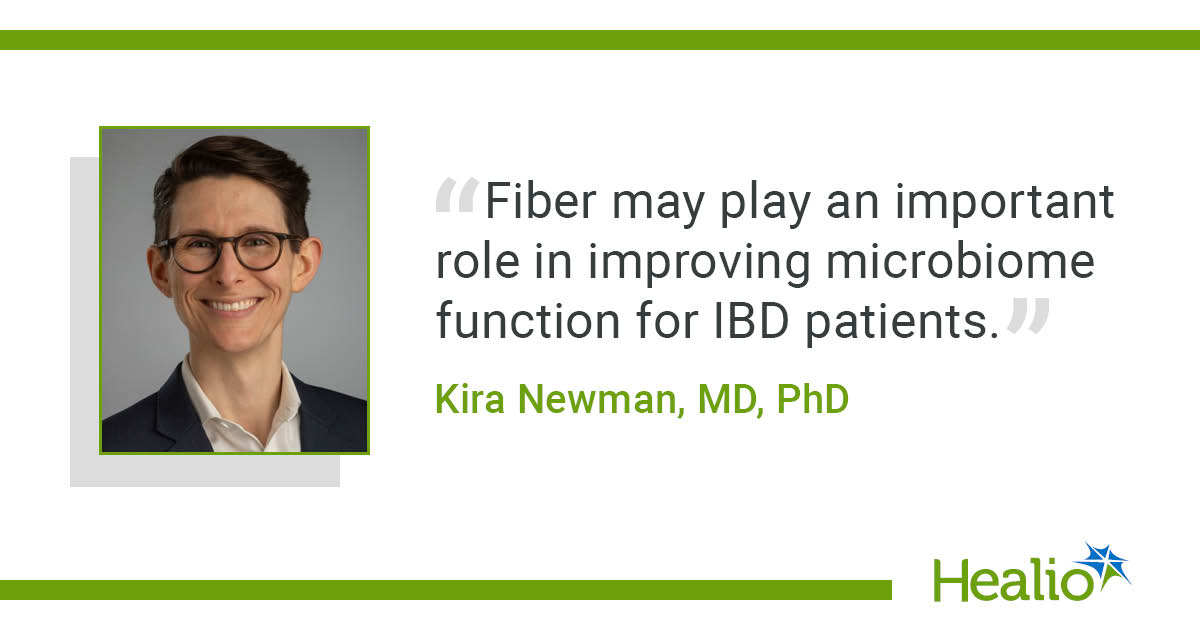
“Fiber may play an important role in improving microbiome function for IBD patients,” she added.
For more information:
Kira Newman, MD, PhD, can be reached at kiranewman@med.umich.edu.
Sources/Disclosures
Source:
Newman K, et al. Inulin restores colonization resistance against C. difficile of ulcerative colitis patient microbes in vitro. Presented at: ACG Annual Scientific Meeting; Oct 12-14, 2026; Nashville, Tenn. (hybrid meeting).
Disclosures:
Newman reports a consulting role with Takeda and research support from Pfizer. Please see the study for all other authors’ relevant financial disclosures.

Ask a clinical question and tap into Healio AI’s knowledge base.
- PubMed, enrolling/recruiting trials, guidelines
- Clinical Guidance, Healio CME, FDA news
- Healio’s exclusive daily news coverage of clinical data