October 12, 2026
2 min read

Key takeaways:
- Analysis showed 85% of women with IBD who underwent embryo transfer achieved pregnancy.
- Active disease and prior pelvic-related IBD surgery did not appear to affect fertility treatment success.
NASHVILLE, Tenn. — Assisted reproductive technology, particularly IVF, appears to be effective for women with inflammatory bowel disease, including those with prior IBD-related surgery, according to study results.
Findings presented at ACG Annual Scientific Meeting also showed that active disease did not have a significant impact on the success of fertility treatments.

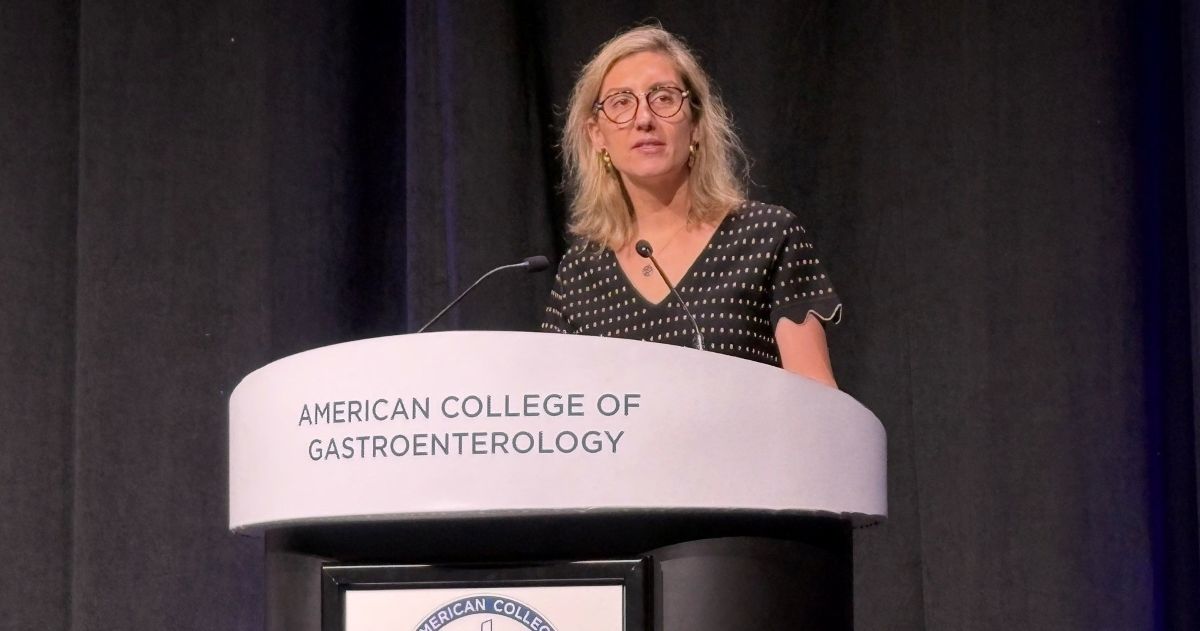
Eugenia Scmidt, MD, FACG, FCCF, presents data from the podium at ACG Annual Scientific Meeting. Photo: Heather Biele.
“We know that women with IBD face unique reproductive challenges,” Eugenia Shmidt, MD, FACG, FCCF, founder of the IBD Preconception and Pregnancy Planning Clinic at University of Minnesota, told Healio. “Some women with IBD have reduced fertility. We know that fertility treatments can help overcome this challenge.”
Although guidelines have shown assisted reproductive technology to be equally effective among women with and without IBD, little is known about its use and predictors of success among those with IBD.
Shmidt and colleagues analyzed prospective data from the Women with Inflammatory Bowel Disease & Motherhood (WIsDoM) study, which includes women aged 18 to 45 years with IBD attempting pregnancy within 15 months.
Achieving pregnancy after fertility treatment served as the primary outcome. Secondary outcomes included associations between treatment success, disease activity and previous IBD-related surgery.
Analysis included 421 women, of whom 67 underwent fertility treatments. Thirteen underwent only intrauterine insemination (IUI), and 39 underwent embryo transfer, with or without IUI.
Women who underwent fertility treatment were significantly more likely to be older than those who did not undergo treatment (34 vs. 32 years; P < .001). They also were more likely to have received prior fertility treatment (31.3% vs. 8.8%; P <.001), attempted conception longer (11 vs. 2 months; P < .001) and have active disease at the time of treatment (56.7% vs. 43.5%).
Prior pelvic IBD surgery was more common in this group, as well (16.4% vs. 5.4%; P = .01).
Overall, there were 97 pregnancy attempts (IUI, n = 49; embryo transfer, n = 48). Repeated treatments were common, with 42% of women requiring multiple attempts (IUI cycles: mean, 2.45; embryo transfers: mean, 1.23).
Outcomes were “highly encouraging,” Shmidt told attendees, noting that 73% of women achieved pregnancy with fertility treatment. However, she emphasized that success “varied dramatically” by modality.
Among women undergoing only IUI, 38% achieved pregnancy, whereas 85% of women undergoing embryo transfer, with or without prior IUI, conceived.
“Most strikingly, among nine women with prior IBD-related pelvic surgery, all of those who underwent embryo transfer conceived, whereas none who attempted IUI alone became pregnant,” Shmidt said.
Multivariable analysis also showed significantly higher odds of achieving pregnancy with embryo transfer vs. IUI (adjusted OR = 44; 95% CI, 8.9-221).
“The most intriguing finding was the difference between IUI and IVF success rates,” Shmidt told Healio. “We found that controlling for prior treatment cycles and other factors, patients demonstrated a 44-fold increase in pregnancy odds when undergoing IVF compared to IUI.”
Pregnancy success remained higher with embryo transfer, regardless of prior IUI (OR = 0.83; 95% CI, 0.17-4.1).
The researchers observed no associations between treatment success and prior IBD surgery, pelvic-specific IBD surgery or active disease when undergoing fertility treatment.
“We hope that our findings equip clinicians with the knowledge that fertility treatments can be a viable option for women with IBD who are interested in motherhood,” Shmidt told Healio.
For more information:
Eugenia Shmidt, MD, FACG, FCCF, is associate professor in the division of gastroenterology, hepatology and nutrition and codirector of the IBD program at University of Minnesota. She can be reached at gastroenterology@healio.com.
Sources/Disclosures
Source:
Shmidt E, et al. Assisted reproductive technology outcomes in women with inflammatory bowel disease: Prospective data from the WIsDoM cohort. Presented at: ACG Annual Scientific Meeting; Oct. 12-14, 2026; Nashville, Tenn. (hybrid meeting).
Disclosures:
Shmidt reports advisory committee/board member roles with Johnson & Johnson. Please see the study for all other authors’ relevant financial disclosures.

Ask a clinical question and tap into Healio AI’s knowledge base.
- PubMed, enrolling/recruiting trials, guidelines
- Clinical Guidance, Healio CME, FDA news
- Healio’s exclusive daily news coverage of clinical data