October 12, 2026
2 min read

Key takeaways:
- Mailed FIT outreach significantly increased CRC screening for underserved adults, including those aged 45 to 49 years, vs. usual care.
- Colonoscopy rates also increased with outreach after an abnormal FIT result.
NASHVILLE, Tenn. — A mailed fecal immunochemical test-based outreach program increased colorectal cancer screening rates by more than 50% among underserved adults in New York City, according to study results.
Finding presented at ACG Annual Scientific Meeting also showed the program improved colonoscopy rates by nearly 70% compared with usual care following an abnormal fecal immunochemical test (FIT) result.

Data derived from Shaukat A, et al. A randomized clinical trial of multi-level intervention to improve colorectal cancer screening rates at multiple federally qualified health care centers in New York City. Presented at: ACG Annual Scientific Meeting; Oct. 12-14, 2026; Nashville, Tenn. (hybrid meeting).

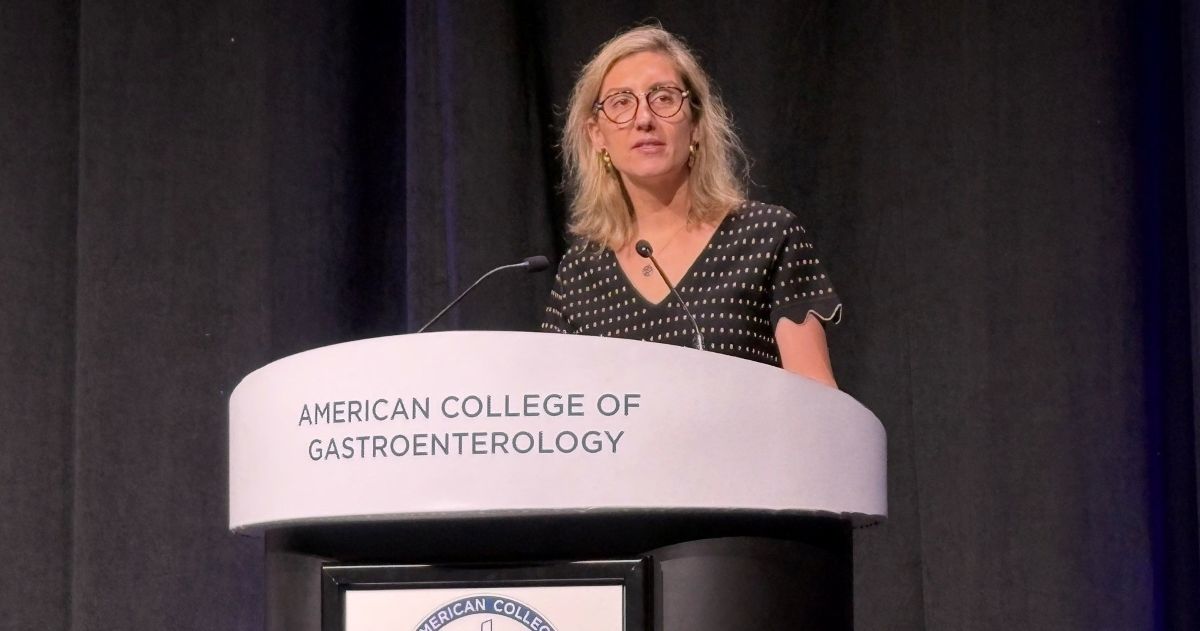
Aasma Shaukat
“Overall, we found an absolute increase of 12 [percentage points] in screening completion,” Aasma Shaukat, MD, MPH, Robert M. and Mary H. Glickman Professor of Medicine at NYU Grossman School of Medicine, told Healio. “We found the same increase in younger individuals [aged 45 to 49 years], suggesting outreach works for this age group.”
CRC screening rates are low across several federally qualified healthcare centers in New York City, according to study background.
Outreach via mailed FIT — an at-home CRC screening option for average-risk adults — is understudied among individuals receiving care through these facilities.
Shaukat and colleagues investigated whether a multitiered outreach program could improve CRC screening rates, as well as understand projected costs, barriers and facilitators to use, among underserved adults across five federally qualified healthcare centers in Brooklyn.
They randomly assigned 2,007 adults aged 45 to 75 years (median age, 57.5 years; 66.5% women; 69.4% Black) to a FIT outreach intervention (n = 891) or to standard care (n = 1,116). Overall, 40.4% of the cohort was unemployed and 40.7% were on Medicaid.
The intervention included letters explaining screening and FIT instructions, a call or voice message reminder to return the kit, and a letter reminder if needed.
Participants with an abnormal FIT result received vouchers to pay for colonoscopy preparation and for transportation to and from a clinic for the procedure.
Completion of FIT screening within 6 months of randomization served as the primary outcome, and completion of colonoscopy following an abnormal result served as the secondary outcome.
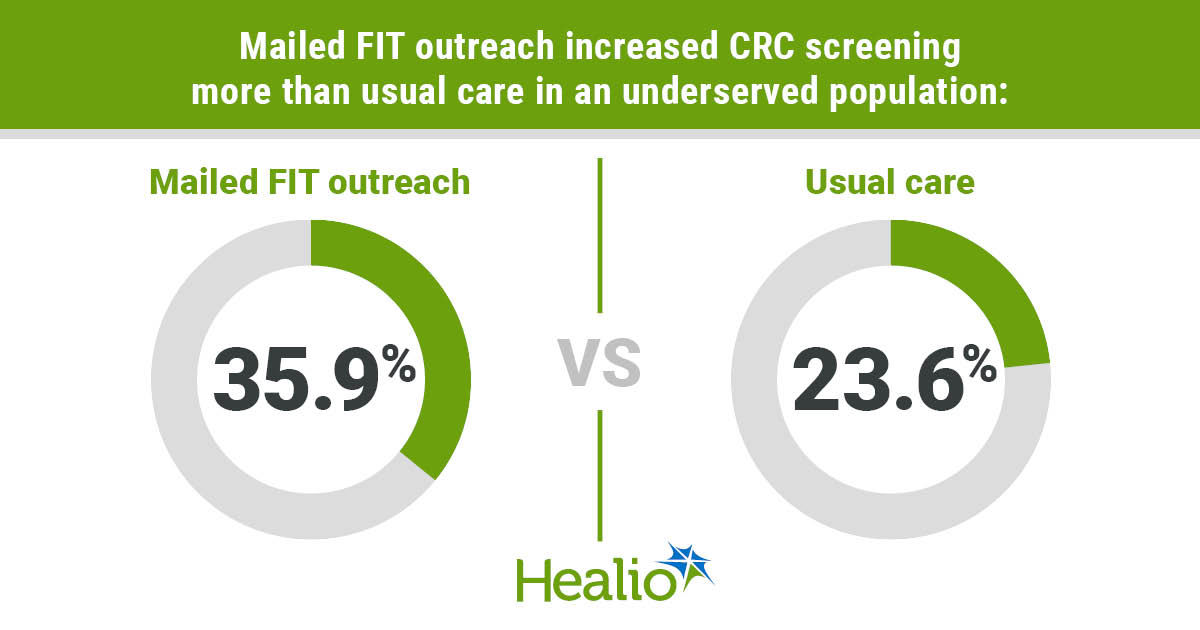
Overall screening completion was higher with mailed outreach than usual care (35.9% vs. 23.6%; P = .001), a finding that was consistent among those aged 45 to 49 years (31.9% vs. 20.1%; P = .02).
“Based on other studies, we had expected a 10 [percentage point] increase,” Shaukat told Healio. “We are encouraged to see a 12 [percentage point] improvement, especially considering that the [aged 45 to 49 years] group is newly added, and may be more difficult to show an improvement.”
Individuals in the mailed outreach cohort also were significantly more likely to undergo colonoscopy following an abnormal FIT result (92% vs. 54%; P = .03), according to the researchers.
Results showed unemployment was associated with lower odds of participating in screening (OR = 0.77; 95% CI, 0.63-0.95), whereas older age (OR = 1.024; 95% CI, 1.008-1.039) and Black race (OR = 0.708; 95% CI, 0.528-0.944) were linked to improved odds of screening.
“Even after controlling for lack of insurance, unemployment was associated with low screening rates, suggesting deeper social determinants of health at play,” Shaukat said.
Interviews conducted with participants showed they valued outreach efforts and wanted more information about cancer risks to inform their decisions, she added.
“We simply cannot wait for patients to come to clinic to see us, but need to reach out” Shaukat told Healio. “It’s important that we meet our patients where they are at. We need to provide flexibility in how patients receive preventive care, and use digital and other tools for outreach.”
For more information:
Aasma Shaukat, MD, MPH, can be reached at aasma.shaukat@nyulangone.org.
Sources/Disclosures
Source:
Shaukat A, et al. A randomized clinical trial of multi-level intervention to improve colorectal cancer screening rates at multiple federally qualified health care centers in New York City. Presented at: ACG Annual Scientific Meeting; Oct. 12-14, 2026; Nashville, Tenn. (hybrid meeting).
Disclosures:
Shaukat reports consulting roles with Freenome, Geneoscopy, Iterative Health and Universal Diagnostics.

Ask a clinical question and tap into Healio AI’s knowledge base.
- PubMed, enrolling/recruiting trials, guidelines
- Clinical Guidance, Healio CME, FDA news
- Healio’s exclusive daily news coverage of clinical data