October 14, 2026
2 min read

Key takeaways:
- Rural gastroenterologists performed more general endoscopies but fewer advanced procedures than their urban counterparts.
- Stagnant rural GI workforce growth threatens to widen gaps in advanced procedure access.
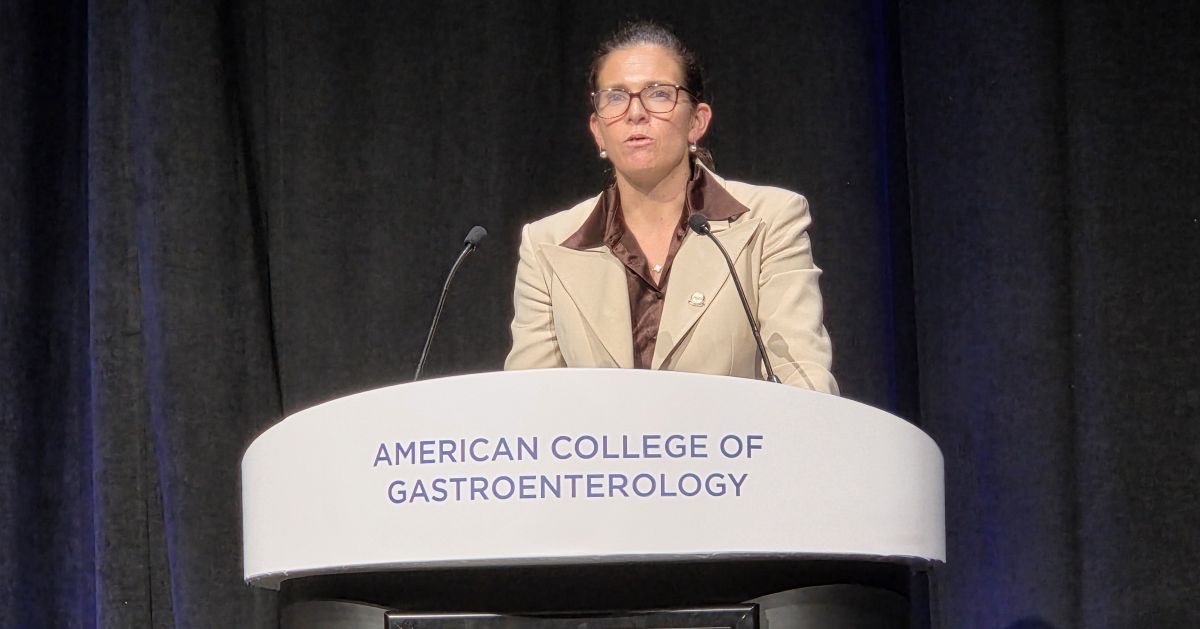
NASHVILLE, Tenn. — Gastroenterologists in rural areas performed 37% more general endoscopies per physician than their urban peers, but 14% fewer advanced procedures, according to a study presented at ACG Annual Scientific Meeting.
Despite performing more endoscopic procedures per physician, rural gastroenterologists saw workforce growth stagnate over 11 years, rising just 8% compared with 18% growth in the urban gastroenterologist workforce.

“These findings suggest that workforce planning should consider not only how many gastroenterologists we have, but also where they practice and what procedural expertise is available in those communities,” Priya Kumari Maheshwari, MD, an incoming hospitalist at HCA Florida Capital Hospital, told Healio.
Approximately 20% of the U.S. population lives in rural areas, but only 7.7% of gastroenterologists practice there, according to study background.
Although prior research has shown geographic disparities in GI workforce, less is known about how these gaps affect procedural workloads per physician and whether the burden varies by endoscopic procedure type.
To investigate, Maheshwari and colleagues analyzed longitudinal trends in general and advanced endoscopic procedures per gastroenterologist, comparing rural and urban practices.
The researchers used data from CMS and the National Plan and Provider Enumeration System to analyze gastroenterologists’ procedural volumes by provider ZIP codes across all 50 states and Washington, D.C., from 2013 to 2024. The analysis included 143,670 total gastroenterologist-year observations.
Primary outcomes included procedural volume, gastroenterologist workforce distribution, advanced procedures and geographic variation.
In 2024, rural gastroenterologists performed 37% more general endoscopic procedures per physician than their urban counterparts (308 vs. 225).
“However, we saw the opposite pattern with advanced endoscopy,” Maheshwari told Healio. “Urban gastroenterologists performed approximately 75 advanced procedures per physician compared with approximately 66 in rural practice — about 14% more. Advanced procedures also accounted for 4.1% of urban endoscopic volume compared with 2.2% of rural volume in 2024.”
The researchers acknowledged that the study was limited to Medicare fee-for-service data and did not capture procedures performed for patients with private insurance or other coverage, potentially limiting the findings’ generalizability.
From 2013 to 2024, the total U.S. gastroenterologist workforce grew from 11,954 to 13,936. However, during that time, the rural proportion of the workforce declined from 5.5% to 4.6%.
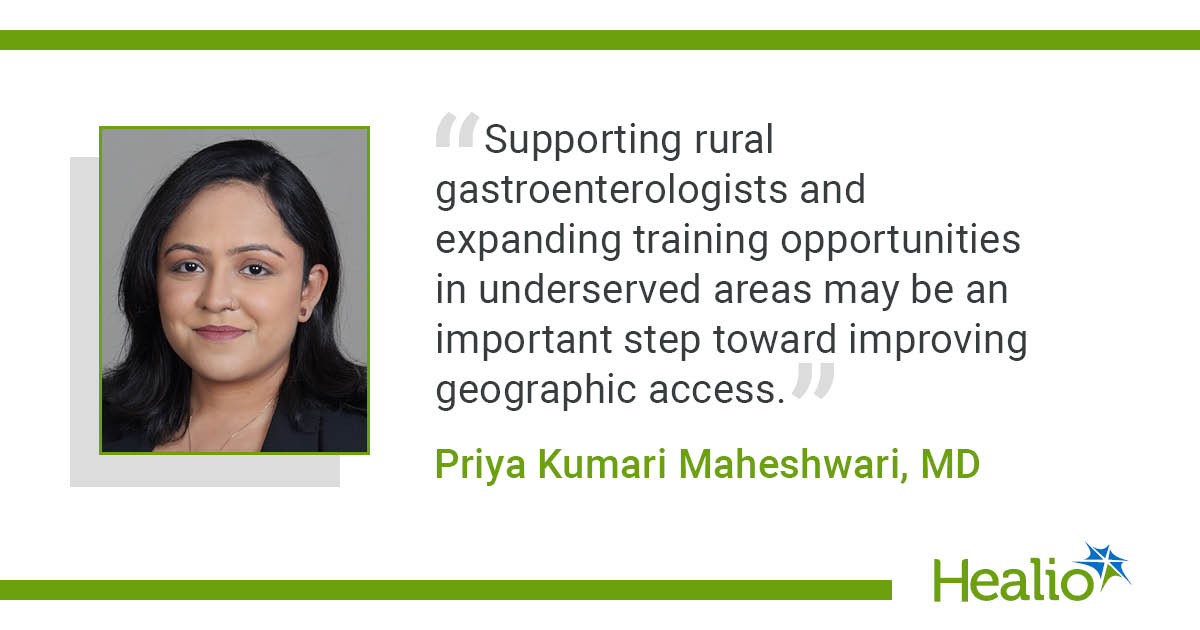
“These findings highlight the importance of targeted rural workforce planning and recruitment as well as potentially expanding advanced endoscopy training opportunities in underserved areas,” Maheshwari told Healio. “Supporting rural gastroenterologists and expanding training opportunities in underserved areas may be an important step toward improving geographic access to both general and advanced procedures.”
For more information:
Priya Kumari Maheshwari, MD, can be reached at priyakmaheshwari@outlook.com.
Sources/Disclosures
Source:
Maheshwari PK, et al. Disparities in general and advanced endoscopic procedures between rural and urban gastroenterologists in the United States. Presented at: ACG Annual Scientific Meeting; Oct. 9-14, 2026; Nashville, Tenn. (hybrid meeting).
Disclosures:
Maheshwari reports no relevant financial disclosures. Please see the study for all other authors’ relevant financial disclosures.

Ask a clinical question and tap into Healio AI’s knowledge base.
- PubMed, enrolling/recruiting trials, guidelines
- Clinical Guidance, Healio CME, FDA news
- Healio’s exclusive daily news coverage of clinical data