As told to Jackie Duda
It was September 28, 2023. My 9-year-old son Lucas was just settling in for a new school year. There were signs of cooler weather signaling that fall was in the air. I had a pre-op appointment for a routine outpatient procedure, to remove uterine fibroids so my husband, Alex, and I could try for another baby. I had questions, but my gynecologist seemed rushed and my questions went unanswered. That should have been my first clue. Something didn’t feel right.
The procedure took place a few days later, on October 4. I went home the same day. Later in the evening, I couldn’t pee. Or hold anything down. I was also uncharacteristically belligerent and very weak, crawling to the bathroom.
We blamed the lingering effects of the anesthesia, but my symptoms were actually red flags for sepsis, the body’s overactive and toxic response to an infection. A real five alarm medical emergency.
After I spent the night writhing in agony in a distorted dystopian hell, my husband took me straight to the gynecologist’s office in the morning. We sat in the waiting room for what felt like hours, only to have her dismiss my extreme discomfort as “normal” and send us home with pain medications. Luckily, my husband ignored her advice and took me across the street to the hospital emergency room. I felt like I had reached the end of the line. The staff quickly placed me on a gurney. I said goodbye to my husband. The forever kind of goodbye you tell your loved ones when you don’t think you’ll ever see them again.
Within an hour, I was flatlining and placed in a medically induced coma. The culprit was a perforated bowel and uterus from the procedure the day before. My stomach had been filling up all night with a sickening infectious mess, and I developed septic shock. Emergency surgery repaired my insides and pulled me back from the brink of death. But the damage was done.
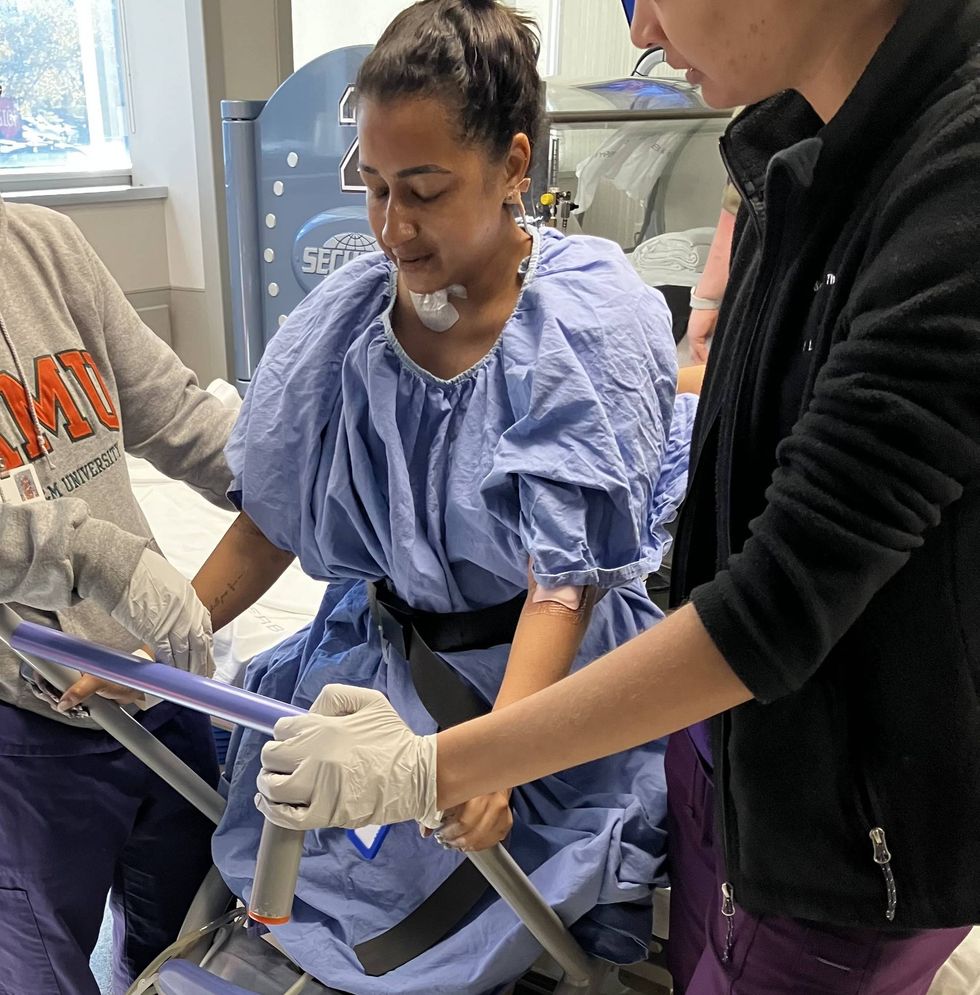 November 2023
My body was like a mass casualty zone. My fingers and feet were necrotic, black from dying tissue, there were bandages and tubes, a central line in my neck, a ventilator in my mouth and a colostomy bag on my stomach. I woke up wondering what the hell had just happened? I looked like Frankenstein and worried that my appearance would scare my son. Even I got scared looking at myself.
Doctors and nurses cleaned the open wounds. The outside layer may have been dead, but the inside was very much alive. And a part of my foot caved in. I could see all the way to the bone. The poking and prodding made me want to climb straight up the walls. I quickly learned, like a lot of sepsis survivors, that surviving sepsis was just the first part of a long journey. My roller coaster hadn’t even left the station yet.
After about a month, I finally came home, weak, in pain, hands and feet bandaged. Our home wasn’t set up for someone in my altered condition, and stair lifts and modifications are expensive. I camped out upstairs in our bedroom and listened longingly as life moved forward downstairs. My son heading off to school, my husband, my in-laws, the sounds of laughter and talking. I was like Rapunzel in her tower. Lost and lonely. An enormous wave of depression swept over me.
My hospitalization was not a “one and done.” Partial finger amputations followed and were staged over several months. They also did bilateral transmetatarsal amputations, meaning I lost my toes and forefoot on both feet. They eventually reversed my colostomy and tucked the stoma, the piece of intestine that eliminated waste, back inside. I’ve had 18 surgeries so far. My son gets anxious about every trip I make to the hospital. He’s been scarred by my initial crisis.
I was completely dependent on my family and felt like an extreme burden. I didn’t even fit into the amputee community because some consider my foot loss “cosmetic.” I suffer phantom limb sensations, nerve damage and circulation issues, just like amputees who lose a leg or arm. The sad part is that people with my type of amputations are not only considered “cosmetic,” but it’s a hidden disability that we must mention to be seen. It helps people empathize or accommodate your disability if it’s visible to them. Orthotics don’t help, nor do special socks. Walking on half a foot is extremely painful. It’s taken me a long time to finally accept my feet the way they are.
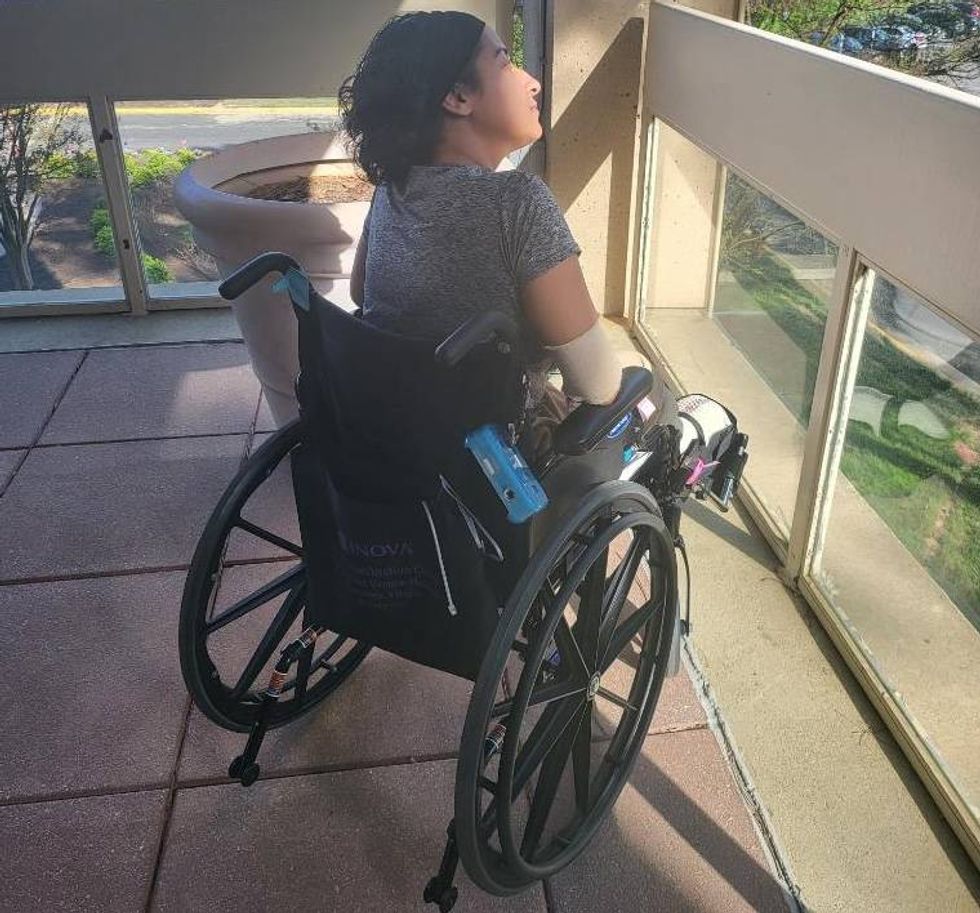 April 2024
My memories from the ICU still haunt me. I heard voices inside the walls as conspiracy theories swirled inside my head. No one tells you about the ICU psychosis that will follow you home. I thought I was crazy and wouldn’t say a peep to anyone for fear I’d be locked away forever. If the hospital had only mentioned this, I would have felt safer and more able to manage it instead of feeling all alone. ICU psychosis is real. Fentanyl psychosis is real. And post-sepsis syndrome is frighteningly real and troubles a lot of us.
I’m glad I didn’t listen to my mind that said, “Take the pills and end it all.” But how many sepsis survivors follow through on these thoughts? This angered me. And that anger threw the spark that ignited my advocacy.
We can’t depend on hospitals or other institutions to prepare us for what to expect. I never want other sepsis survivors to go through what I did. I went to bed crying every night, engulfed by depression that no amount of pills would touch. I was awake from 10 p.m. till 5 a.m., left to my own devices. Questions kept peppering my brain. “Why did this happen to me?” “What did I do to deserve this?”
I’m the breadwinner, and I was always traveling for work. Everything was go-go-go 24/7. I realized that if anything was going to make me change course, it couldn’t be a slight nudge or gentle persuasion. It had to clip my wings so I would have time to re-evaluate my path and life’s purpose. It was a hard pill to swallow, but I began to see the writing on the wall. About two years in, I started staying up at night after work creating the Phoenix Health Compass and Phoenix Navigator, to help patients locate the best doctors. And pouring my feelings into a memoir that describes this crazy crisis, Through the Ashes.
I started getting involved, appearing on NBC4 Washington and speaking to audiences about my experience. It dawned on me that I’m still here, and I’m able to watch my precious son grow, to be with my husband and our families, and to ultimately make a difference for other survivors. And that is an incredible gift.
Have your own Real Women, Real Stories you want to share? Let us know.
Our Real Women, Real Stories are the authentic experiences of real-life women. The views, opinions and experiences shared in these stories are not endorsed by HealthyWomen and do not necessarily reflect the official policy or position of HealthyWomen.