November 19, 2026
5 min read

Key takeaways:
- Thanksgiving dinner can create a perfect storm for foodborne illness.
- Proper preparation, food handling, cooking temperatures and hand washing are key to not getting your guests sick.
Despite having five burners, three ovens, a plancha and two additional induction burners at his disposal, Chef Andrew Zimmern still relies on a pen and paper to plan Thanksgiving dinner.
The celebrity chef, who hosts approximately 20 guests for the holiday each year, said the biggest mistake he sees home cooks make is not necessarily overcooking or undercooking their turkey. Rather, it is failing to account for the time, space and equipment required to prepare a large holiday meal.

Image: Madeleine Hill. Reprinted with permission.
“I actually find that the majority of problems really are in a completely different category,” Zimmern, an Emmy- and four-time James Beard Award-winning TV personality, chef and author, told Healio. “It just has to do with organizational setup.”
According to Zimmern, inadequate preparation can lead to rushed decisions, forgotten precautions and increased opportunities for food safety mistakes.
“The reason that affects everything is that people make mistakes and take shortcuts and forget things like washing hands when they are stressed and rushed,” he said.
Thanksgiving and foodborne illness
Although holiday gatherings can present opportunities for foodborne illness, they do not necessarily correspond with an increase in overall reported cases.
According to a CDC spokesperson, the agency sees no meaningful increase in overall reported foodborne illnesses from November through January, although outbreaks involving certain pathogens — Salmonella, Clostridium perfringens and norovirus — occur frequently during November and December.
Foodborne illnesses may actually be more common during summer gatherings, when food is frequently left outside for prolonged periods, according to William Schaffner, MD, Healio | Infectious Disease News Editorial Board Member and professor of preventive medicine and infectious diseases at Vanderbilt University Medical Center.
However, experts agree that Thanksgiving meals still present opportunities for contamination, particularly when food is improperly handled during preparation or left at room temperature after serving.
The CDC cited improper turkey storage, thawing and cooking, as well as cross-contamination during the preparation of multiple dishes, as potential contributors to foodborne illness during holiday gatherings. The agency noted that raw turkey may harbor pathogens including Salmonella and Campylobacter, and that improperly cooled or held cooked foods can also support the growth of C. perfringens.
Preparation is key
Zimmern recommended beginning Thanksgiving preparations approximately 2 weeks before the holiday, identifying which dishes can be made ahead of time and delegating responsibilities to other guests.
He takes that advice seriously. Zimmern said he prepares gravy as much as a year in advance and freezes it, and his goddaughter is responsible for bringing rolls and pies from a local bakery.
Organization is particularly important because, in addition to hosting a large gathering, Zimmern said he typically fields 20 to 25 calls from friends and family seeking last-minute cooking advice on Thanksgiving morning.
“Just getting organized allows your brain on the day of to be in smart mode, not stressed mode,” he said.
He added that planning ahead is particularly important when preparing a frozen turkey — a process that can take several days to be completed safely.
Zimmern said he typically purchases a frozen turkey and allows approximately 4 days for it to thaw in the refrigerator.
“If you take a 17- or 18-pound bird and you put it in your refrigerator 48 hours beforehand, it will still be frozen in the middle when you take it out,” he said.
Tyler Loranger, a registered dietitian and 8-year veteran of the Butterball Turkey Talk-Line, said thawing is consistently the most common subject of calls to the service.
“The No. 1 question that we’re getting year after year is always in regards to thawing,” Loranger told Healio.
According to Loranger, Butterball recommends allowing approximately 1 day of refrigerator thawing for every 4 pounds of turkey.
For cooks who need a faster option, the turkey can be submerged in cold water in leakproof packaging, with the water changed every 30 minutes. This method requires approximately 30 minutes per pound.
A turkey thawed using the cold-water method should be cooked immediately after thawing, according to CDC guidance.
Loranger said some callers mistakenly believe they can thaw a turkey on the countertop, in a garage or even in the trunk of a car — all methods that risk exposing the turkey to temperatures that would allow bacteria to grow.
Zimmern recommended handling raw turkey before preparing other ingredients, particularly foods that will not undergo additional cooking.
After preparing the bird, he thoroughly cleans his work surfaces and equipment to reduce the risk for cross-contamination.
Schaffner also emphasized the importance of handwashing and cleaning cutting boards.
“I would mention hand washing and washing off those cutting boards to make sure that they are clean because they can sometimes be the source of contaminating food,” he said.
Loranger cautioned against washing raw turkey, explaining that rinsing the bird can spread bacteria to surrounding surfaces rather than make it safer to eat. Instead, she recommended containing raw poultry juices and thoroughly cleaning and sanitizing kitchen surfaces after handling the bird.
Do not rely on appearances
Another common mistake is assuming a turkey is fully cooked based on its appearance, Loranger said.
Some callers report checking whether the juices run clear, whether the meat appears pink or whether the turkey leg moves easily. However, none of these methods reliably establishes that the bird has reached a safe internal temperature.
“The real one and true way of knowing that it’s cooked to a food-safe temperature is by using a meat thermometer,” Loranger said.
The CDC’s food safety guidance recommends cooking turkey to a minimum internal temperature of 165°F, measured in the thickest part of the breast, innermost part of the thigh and innermost part of the wing. The guidance says stuffing cooked inside the bird should also reach 165°F.
Loranger recommended calibrating your food thermometer before the holiday to ensure accurate readings. According to the USDA, this can be done by submerging the thermometer in ice water or boiling water for at least 30 seconds and then checking to make sure it reads 32°F for the ice water method or 212°F for the boiling water method.
Temperatures are also critical after dinner is served to ensure leftovers are handled safely.
The CDC recommends keeping perishable foods out of the temperature danger zone — between 40°F and 140°F — where bacteria can multiply. Perishable foods should be refrigerated within 2 hours, or within 1 hour when exposed to temperatures above 90°F.
Schaffner said the period after Thanksgiving dinner may present a particular risk because guests often leave food on the table while socializing, playing games or resting.
Zimmern takes a similarly organized approach to post-meal cleanup, assigning a small group of guests to handle leftovers while others wash dishes or prepare dessert.
Recognizing foodborne illness
The symptoms and timing of foodborne illness can vary depending on the pathogen responsible, according to Schaffner.
Some illnesses, including staphylococcal food poisoning, can cause symptoms within hours of consuming contaminated food. In these cases, toxins produced by bacteria may cause sudden vomiting.
Other foodborne illnesses, including those caused by Salmonella, Campylobacter and certain strains of Escherichia coli, may cause fever, abdominal cramps, diarrhea and general malaise after a longer incubation period.
Schaffner noted that symptoms may not appear until after holiday guests have returned home, potentially making it more difficult to identify a shared source of exposure.
He emphasized that older adults, young children, pregnant people, immunocompromised individuals and those with chronic medical conditions should have a low threshold for contacting a health care professional if symptoms develop.
“These illnesses have a tendency to dehydrate,” Schaffner said. “You lose fluid through vomiting and through diarrhea, and keeping up with your fluids is important.”
Ultimately, Zimmern said his most important recommendation is to avoid taking on more than one person can reasonably manage.
Planning ahead and delegating responsibilities can reduce the stress that leads to mistakes, he explained.
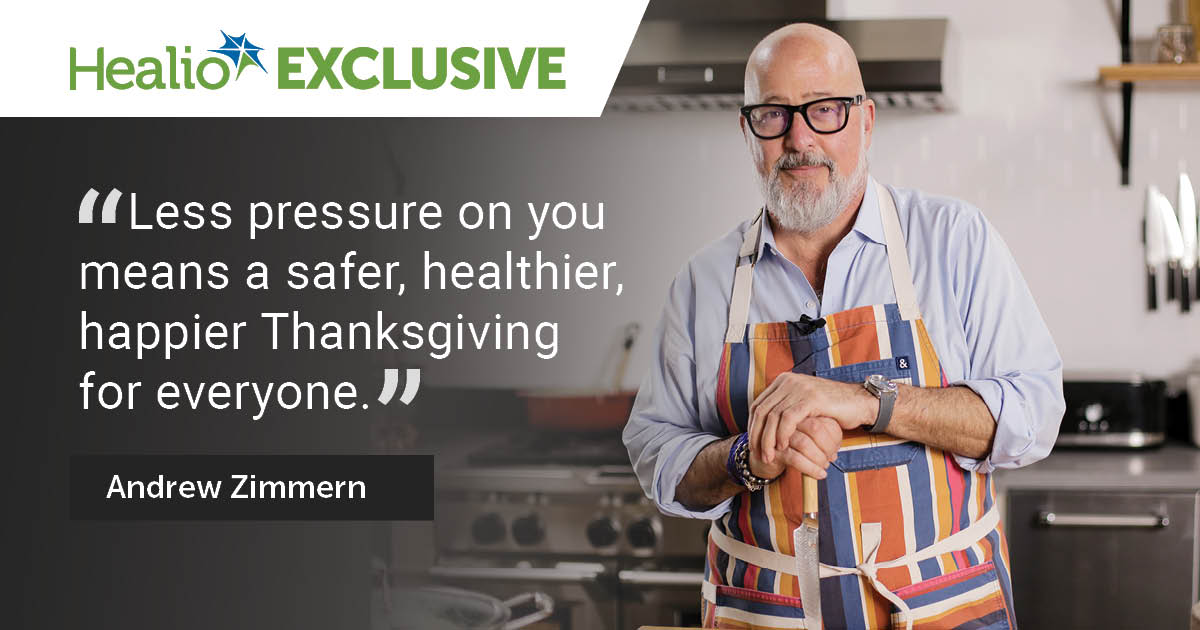
“Less pressure on you means a safer, healthier, happier Thanksgiving for everyone,” Zimmern said. “Most importantly, the person hosting.”
Zimmern concluded his holiday advice with one final request for home chefs: “Enjoy yourself.”
[Editor’s note: You can reach the Butterball Turkey Talk-Line by calling 1-800-BUTTERBALL or texting 844-877-3456 .]
For more information:
Tyler Loranger, RD, can be reached at infectiousdisease@healio.com
William Schaffner, MD, can be reached at william.schaffner@vumc.org.
Andrew Zimmern can be reached at infectiousdisease@healio.com.
Sources/Disclosures
Source:
Healio Interviews
References:
Disclosures:
Loranger, Schaffner and Zimmern report no relevant financial disclosures.

Ask a clinical question and tap into Healio AI’s knowledge base.
- PubMed, enrolling/recruiting trials, guidelines
- Clinical Guidance, Healio CME, FDA news
- Healio’s exclusive daily news coverage of clinical data