

RE:YOU. AI-enabled new hair growth molecule discovery. In 2022, I wrote a post about the increasing use of artificial intelligence (AI) to discover new hair loss drugs. This phenomenon has really grabbed attention this week. First, we heard about Absci (US) raising $100 million for its generative AI-developed hair loss drug ABS-201 (after positive interim Phase 1 clinical trial findings). And now I discuss a brand new company called RE:YOU (US). RE:YOU: AI-Enabled Discovery of Small Molecules for Hair Follicle Rejuvenation Several days ago, a new US-based company named RE-YOU (or Re:You) was covered in BioSpace. They announced promising preclinical research in relation to the AI-enabled drug discovery of four novel molecules for hair growth. Each of these four molecules targets a distinct biological pathway involved in hair follicle growth and the scalp environment. All four molecules were evaluated in primary human cell systems and human hair follicle organoid models. Moreover, the scientists behind this discovery published a lengthy pre-print paper in bioRxiv on June 9, 2026. It is titled: “AI-enabled discovery of small molecules targeting complementary pathways for hair follicle rejuvenation.” RE:YOU has named the four molecules as follows: NV-623 and NV-624. Both support and “energize” dermal papilla cell viability and proliferation. Each molecule supposedly showed 30% greater hair growth in comparison to minoxidil. NV-273. Inhibits prolyl hydroxylase domain protein 2 (PHD2), activates hypoxia-inducible factor-1α (HIF-1α) and increases secretion of VEGF-A and lactate. All of this is supposed to benefit the scalp hair growth environment, circulation and regenerative signaling. Interestingly, the massively hyped Pelage Pharmaceuticals’ PP405 hair growth product works by boosting lactate production. NV-1065. A non-steroidal inhibitor of 5α-reductase, the enzyme responsible for converting testosterone into dihydrotestosterone (DHT). The later is the key cause of male pattern hair loss. The researchers claim that this molecule suppresses DHT to a similar extent as dutasteride. Amazing if true. RE:YOU classifies its portfolio of multi-pathway hair growth molecules under the brand name NOVOGRO™. Someone has written a very lengthy article on minoxidil vs Novogro that might be worth a read. I did not have the time or motivation to go through it as yet. Key quote from the BioSpace article: “Using a combination of machine learning, graph neural networks, structure-based virtual screening, and experimental validation, researchers screened more than 20 million compounds and identified four lead candidates with distinct mechanisms of action.” All of this sounds very interesting due to the involvement of AI-led drug discovery. Especially if the company can deliver something brand new to topically inhibit scalp DHT levels (without causing any of the potential side effects of oral dutasteride). But at the moment, I remain skeptical and would not be surprised if all we get is yet another new hair loss cosmeceutical product. If the pre-print article gets published in a reputable journal, I will get a bit more interested. At the bottom of RE:YOU’s home page, they say that: “A 150+ subject, 6-month, double-blinded, randomized controlled trial comparing NOVOGRO™ -powered serum (NV-273, NV-623, NV-624) with a minoxidil benchmark arm is currently underway.” They hope that an interim dataset will be available by the end of July 2026. To me, a comparison with finasteride or dutasteride would be more interesting. Note that this company and the study co-authors are in various ways affiliated with Integrated Biosciences and LK Innovations. Source link
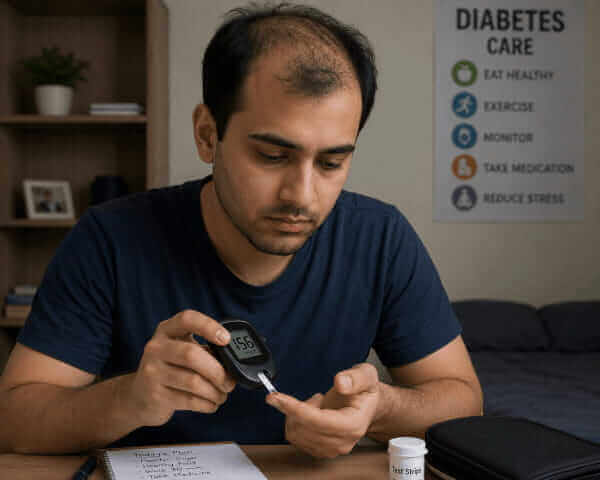
Early-Onset Androgenetic Alopecia and Diabetes
Diabetes and Androgenetic Alopecia (AGA) Connection. In 2017, I wrote a post about how male pattern hair loss and hair graying were both correlated with significantly increased rates of heart disease. This is especially true if someone is balding or graying at an early age, and if they have crown (vertex) area hair loss. Both androgenetic alopecia (AGA) and heart disease also have a strong inflammatory component. Interestingly, hair loss drug Minoxidil likely has brain and heart health benefits due to its making stiff arteries and blood vessels more flexible. Thereby lowering blood pressure, albeit modestly if taking a low dose to fight hair loss. Early-Onset Androgenetic Alopecia Indicates Diabetes Risk In the July 2026 issue of the Journal of the American Academy of Dermatology, a new study from China concludes that: “Early-onset androgenetic alopecia may indicate diabetes mellitus (DM) risk in young and middle-aged adults.” A massive 12,000 participants were analyzed in the study. The AGA prevalence rate was 32.4% in males and 7.1% in females. Interestingly, while the analysis revealed a significantly higher rate of DM in AGA patients aged between 18-49 years, no such correlation was seen in patients aged over 50 years. I first heard about this study from dermatologist and hair loss expert Dr. Maryanne Makredes Senna’s recent video on Instagram. Some past studies have found a connection between AGA and higher rates of both insulin resistance and metabolic syndrome. And a 2019 US study found that Type 2 diabetes was associated with an increased risk of severe central scalp hair loss in African American women. All of these findings are not necessarily conclusive as yet. But if you are young and have crown hair loss, it is probably worth monitoring your cholesterol, blood pressure and glucose (sugar) levels regularly. Also make sure to read my past post on the possible connection between diet, lifestyle and hair loss per one reader’s impressive 60-page research. If only far more homeless people and alcoholics were balding, a lot of people would take this connection more seriously! Humans tend to believe their eyes and real life experiences more than study findings. Unfortunately, it has probably never been studied as to whether people who go bald at a younger age end up being less likely to take care of their overall health. i.e., they exercise less, eat more fast food, drink more and suffer from higher rates of depression and loneliness. Anecdotal online stories on hair loss forums suggest this as a strong possibility. Source link
Hair Loss in Women: Causes, Types, and What Actually Helps
Nutritional Deficiencies Hair follicles are among the most metabolically active structures in the body, which means they are highly sensitive to nutritional gaps. The most common deficiencies linked to female hair loss are iron and ferritin, vitamin D, zinc, and B vitamins. Ferritin is particularly important and frequently overlooked. Standard iron panels often come back in the normal range while ferritin, the protein that stores iron, remains low enough to impair hair growth. A functional workup that specifically includes ferritin is essential for any woman experiencing unexplained shedding. Crash dieting and rapid weight loss are common triggers for telogen effluvium because they create sudden nutritional stress for the follicle. If you have recently changed your diet significantly or are on a GLP-1 medication for weight management, hair shedding can be a side effect worth discussing with your provider. Scalp Conditions and Inflammation Chronic scalp inflammation, whether from seborrheic dermatitis, psoriasis, or other conditions, can disrupt the follicle environment and contribute to hair loss over time. An unhealthy scalp is a less hospitable environment for hair growth, which is why scalp health is an important piece of any hair restoration approach. Medications Certain medications can contribute to hair loss in women, including some antihistamines, blood thinners, antidepressants, and hormonal contraceptives. If you started a new medication and noticed shedding a few months later, that timing is worth flagging with your provider. We also offer a genetic test for hair loss that is a game-changer for hair loss treatments, providing a personalized treatment plan that uses your unique DNA to eliminate the frustration of trial and error. By analyzing your genetic data, this test precisely identifies the most effective medications and compounds for your biological needs, helping your provider choose the optimal treatment from day one. This scientific approach ensures you avoid ineffective solutions and potential side effects, allowing you to accelerate results and achieve significant, successful hair restoration much faster than with traditional, generic methods. Source link
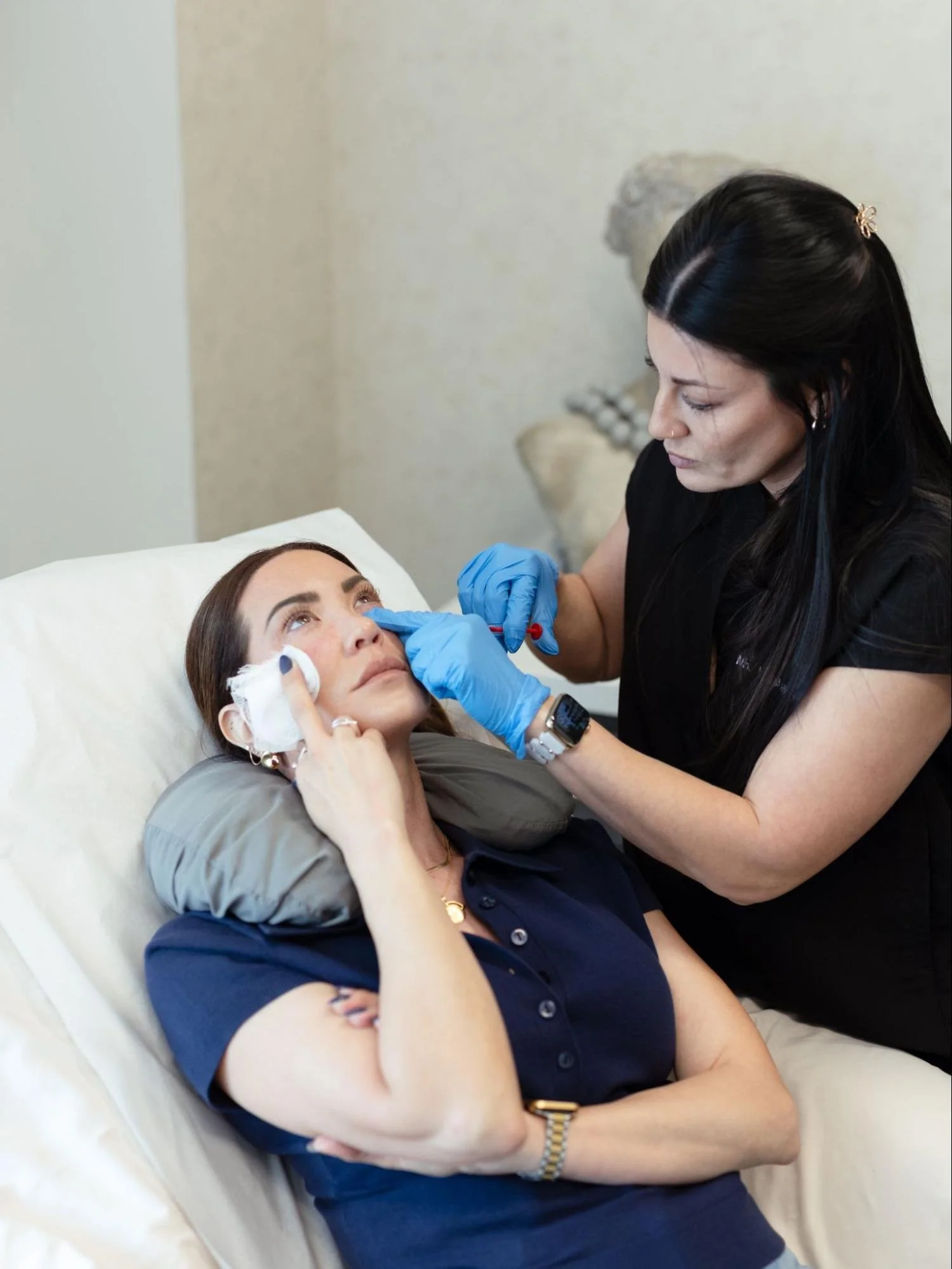
PRF Under Eyes in Scottsdale
If you have tried every eye cream on the market and still feel like your under-eye area is aging faster than the rest of your face, you are not alone, and you are not imagining it. The skin under the eyes is the thinnest on the entire face. It loses collagen and volume faster than anywhere else, and once that hollowness or darkness sets in, topical products can only do so much. PRF under eye treatment is one of the most effective non-surgical options available for addressing this, and it is one of the services we offer at our Scottsdale location. Here is the honest breakdown of what it does and who it is actually right for. What Is PRF? PRF stands for platelet-rich fibrin. It is a next-generation evolution of PRP (platelet-rich plasma) that uses your own blood to create a concentrated healing solution that is then injected into the treatment area. Here is how it differs from PRP. Both treatments involve drawing a small amount of your blood and spinning it in a centrifuge to separate the components. PRP isolates the plasma layer and its growth factors. PRF takes this further, it is spun at a slower speed and without anticoagulants, which produces a fibrin matrix that traps a higher concentration of platelets, growth factors, and white blood cells. The result is a more potent and longer-lasting regenerative effect at the injection site. In practical terms, PRF releases its growth factors slowly over time rather than all at once, which means the regenerative process continues in the tissue for days and weeks after the treatment rather than just in the immediate window post-injection. What PRF Does for the Under-Eye Area The under-eye area ages the way it does for a few distinct reasons: loss of collagen and elastin thinning of the skin reduction in fat volume beneath the surface and in some cases, visible blood vessels that create the appearance of darkness. PRF addresses several of these simultaneously. The concentrated growth factors stimulate collagen production in the treated area, which gradually thickens and firms the skin over the following weeks. The fibrin matrix also improves local circulation and tissue quality, which can reduce the translucency that makes blood vessels visible underneath the skin. Because PRF uses your own biological material, it also integrates into the tissue rather than sitting on top of it. This makes it particularly well-suited for the delicate under-eye area, where foreign fillers can sometimes create the bluish discoloration known as the Tyndall effect. Results build gradually rather than appearing immediately, which is one of the things that makes PRF look natural. Most patients notice meaningful improvement in skin quality, thickness, and the appearance of darkness and hollowness over a period of four to eight weeks following treatment. Source link
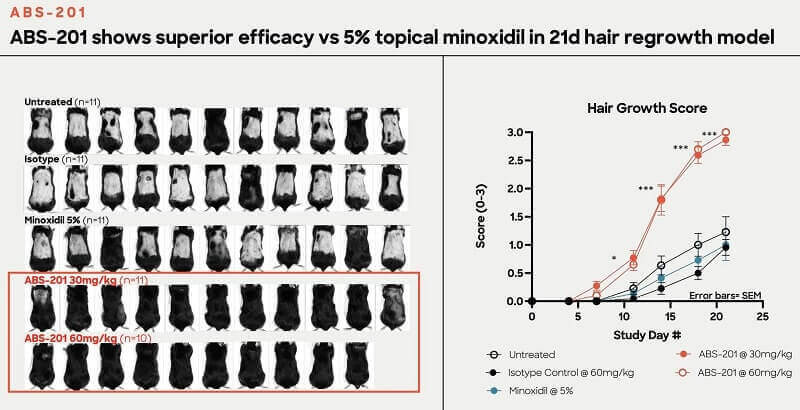
Absci ABS-201: Targeting the Prolactin Receptor
I originally wrote this post about Absci and its AI-developed ABS-201 that targets the prolactin receptor in April 2025 (see the bottom section). New updates are regularly added on top. Update: June 22, 2026 Joe Tillman (the Hair Transplant MentorTM) is interviewing Absci CEO Sean McClain today and the video will be released on Wednesday. If any reader has a question he/she would like to ask, please post it in the comments by 2pm PST today! The recorded interview will be available on Joe’s YouTube channel on Wednesday (I assume in the “Videos” tab of the channel). A recent article about Absci on seekingalpha is also worth a read. Update: January 22, 2026 Absci is publishing numerous new videos on its YouTube channel. All of them are very encouraging so far. Also check out the company’s detailed presentation on ABS-201 from the end of 2025. Absci ABS-201 and its hair growth compared to Minoxidil. Absci (US) is an artificial intelligence (AI) drug and biologic creation company that is developing novel treatments via the use generative AI. One of the key products that they are focusing on is a prolactin receptor (PRLR) targeting injection based hair growth treatment called ABS-201. Phase 1 clinical trials for this product began in Australia at Sinclair Dermatology in December 2025. Note that Hope Medicine (China)’s Phase 1 clinical trials for its prolactin receptor blocking HMI-115 injections also occurred at Sinclair Dermatology in 2022. Hope Medicine later completed Phase 2 trials in China in 2025. The top half of this post is all new updates. Update: December 11, 2025 ABS-201 Regenerates Hair Stem Cells and Promotes Key Growth Modulators Absci today unveiled new preclinical data for ABS-201. The data was generated using translational human ex vivo scalp models. It demonstrated that ABS-201 stimulates hair growth by regenerating the stem cell niche as well as by promoting additional key growth modulators. The studies were led by Dr. Ralf Paus, who says: “Our study provides the first evidence that antagonizing prolactin signaling with ABS-201 could open a radically new chapter in future AGA management.” Among the key findings: ABS-201 significantly inhibits the PRLR signaling pathway. ABS-201 prolongs the anagen phase by blocking catagen, and promoting hair matrix keratinocyte proliferation. In addition, it increases the production of the hair growth-stimulatory growth factors IGF1 and FGF7. ABS-201 protects and expands the hair follicle progenitor cell pool. It inhibits prolactin-induced apoptosis of K15+ stem cells , and increases their proliferation and capacity to generate CD34+ progeny. This is crucial, since the depletion of progenitor cells is a key hallmark of androgenetic alopecia. It facilitates the reconversion of vellus hairs to terminal hairs. Also of interest, long-time hair loss sufferer and former US soccer superstar Landon Donovan has teamed up with Absci. Way out of leftfield. Update: December 4, 2025 Absci just announced that the first volunteers have been dosed in their Phase 1/2a HEADLINE study evaluating ABS-201. Absci will host a virtual KOL seminar on Thursday December 11 to discuss further details about this drug and its clinical trials. Also check out this great detailed interview of Absci founder and CEO Sean McClain with ARK Invest’s legendary Cathie Wood. Update: October 20, 2025 Absci to Begin Phase 1 Clinical Trials for ABS-201 in December 2025 In a new article about Absci’s ABS-201 hair growth injections that target the prolactin receptor, it is mentioned that Phase 1 clinical trials will begin in Australia in December 2025. The renowned Dr. Rodney Sinclair will oversee the trials at his Sinclair Dermatology clinic. Interestingly, Hope Medicine’s Phase 1 clinical trials for its prolactin receptor blocking HMI-115 injections also occurred in Australia at Sinclair Dermatology in 2022. Of note, the Absci research team believes that ABS-201 could also cure premature greying by re-pigmenting the hair. This is based on their pre-clincial work on macaques, in which the animals’ hair reverted back from grey to black. Key quote regarding Absci’s use of AI to develop this product: “Using AI to develop the needle itself (in this case, the perfect antibody sequence) researchers were able to discover key antibody binding regions that could precisely target the prolactin receptor, thus ceasing hair loss. Using computer simulations, Absci was able to optimize certain drug qualities, including increased potency and decreased likelihood of negative immune response.” Update: July 2025 The CEO of Absci posted the below Tweet recently. The before and after macaque monkey image in there seems identical to the image from Hope Medicine’s HMI-115 and its effect on macaques. Strange. The same image can also be seen in their 2024 R&D document. Both HMI-115 and Absci’s ABS-201 target the prolactin receptor to regrow hair. Hope Medicine has already completed Phase 2 clinical trials, while Absci is yet to commence any human trials. ABSCI ABS-201 Hair Growth Prolactin. April 6, 2025 Absci is a data-first artificial intelligence drug and biologic creation company that is unlocking novel treatments through the use generative AI. Most interestingly, one of the key products that they are focusing on is a hair growth treatment called ABS-201 that targets the prolactin receptor. I first heard about the company in January 2025 when Absci received a $20 million investment from chip manufacturer Advanced Micro Devices (AMD). Unlike virtually all new entrants in the hair loss world, Absci has a great website. However, it should be noted that the company originally started operations way back in 2011, under the auspices of founder and CEO Sean McClain. In March 2025, Absci presented on the subject of AI in dermatology at the Dermatology Innovation Forum. On a related note, in 2022, I wrote a post on AI and machine learning for hair loss drug discovery. Absci Presentation on ABS-201 Considering that Absci’s pipeline page shows that ABS-201 is yet to even enter Phase 1 clinical trials, I was reluctant to write this post. However a new video presentation (embedded below) that the company uploaded in February 2025 changed my mind. It is titled “Absci R&D Day 2024”. The portion devoted
TRICHOSCOPY OF HAIR LOSS: ALPHABET SOUP — Donovan Hair Clinic
June 09, 2026 I enjoyed speaking to our dermatology residents at the University of British Columbia about important trichoscopic signs of hair loss last week. We review 20 of the most common signs! This article was written by Dr. Jeff Donovan, a Canadian and US board certified dermatologist specializing exclusively in hair loss. Source link
Celebrating 4 Years of Baricitinib (Olumiant) for Alopecia Areata — Donovan Hair Clinic
Over the past four years, the landscape of alopecia areata has changed dramatically. What was once a condition with limited and often unpredictable treatment options has entered an era of evidence-based targeted therapies. Baricitinib helped pave the way for additional approvals, while also accelerating research into the biology of autoimmune hair loss. Perhaps most importantly, baricitinib changed expectations. Patients, physicians, researchers, and regulators began to view significant hair regrowth not as an exception, but as a realistic treatment goal for many individuals with severe disease. Four years later, we continue to learn about long-term outcomes, durability of response, and how best to personalize treatment. But June 13, 2022 will always be remembered by me as the day alopecia areata treatment entered a new era. Here’s to the patients who participated in the clinical trials, the researchers who advanced the science, and the many individuals with alopecia areata who continue to inspire progress every day! Source link
The Secret of Trichoscopy: SAY What you SEE!! — Donovan Hair Clinic
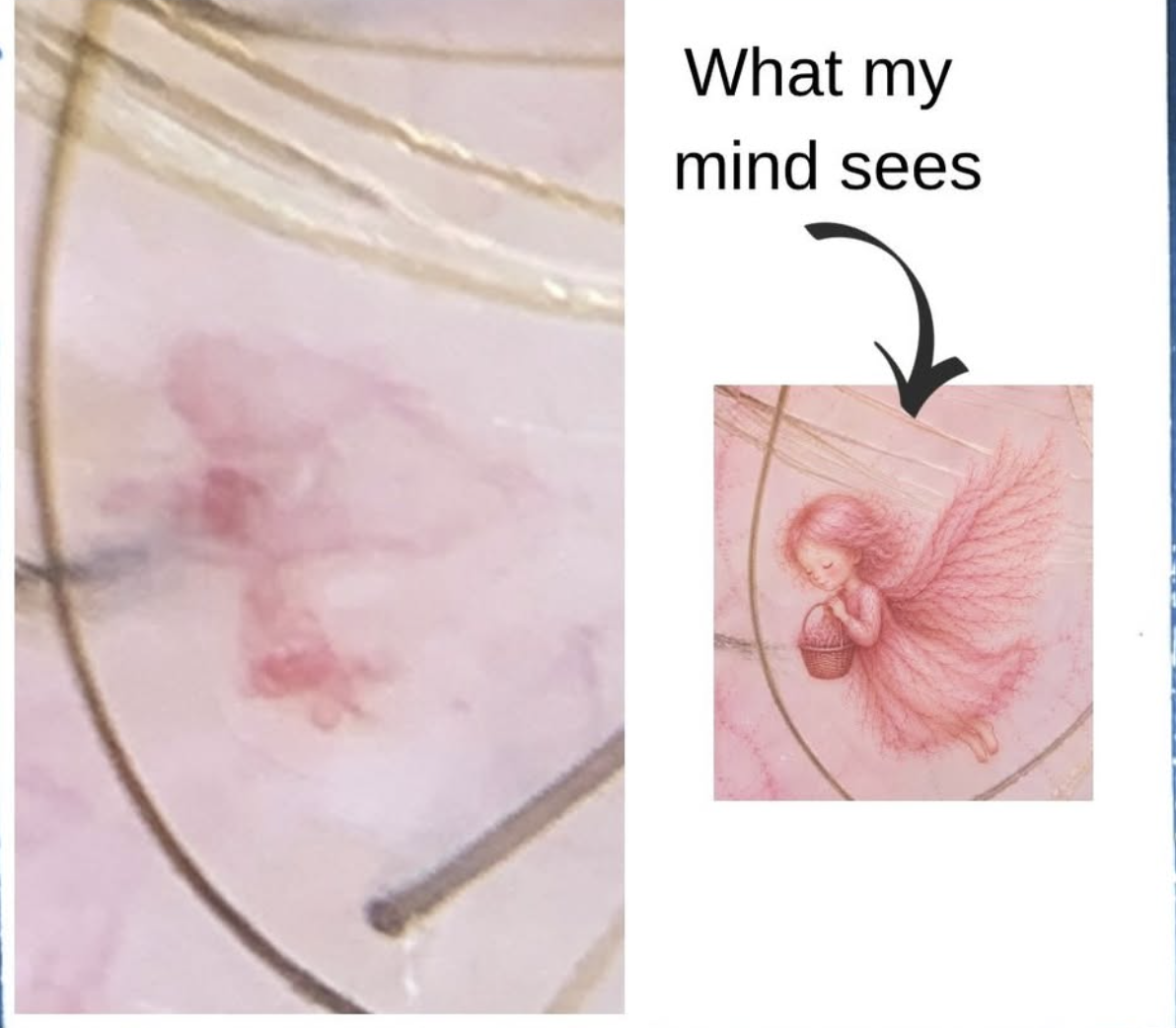
We need to forget about formal terminology for a few moments- and just observe, observe, observe. One of the mistakes many practitioners make is trying to match every trichoscopic image to a known list of “trichoscopic signs.” Although this cataloguing is important, true trichoscopic skill starts somewhere much simpler: State what you see! The terminology comes later. The difficult part of trichoscopy (and in fact, all of hair loss diagnosis) is developing the power of simple observation. The detective Sherlock Holmes once said “You see, but you do not observe.” Indeed, many people look at things without truly processing what they are seeing. When I perform trichoscopy, I don’t begin with trying to find terms that fit with textbook terms. I begin with observing:• shapes• loops• colors• symmetry Only afterwards do I attach terminology – and then seek to link what I observe with disease pathogenesis and ultimately a diagnosis. As an example, consider this image. I ask practitioners…. What do you see? In nearly all situations, I hear some wonderful answers about vascular patterns and bleeding. After listening to a few answers, I let the audience know that to my eye, it looks like “a fairy holding a bucket.” That may sound silly — but it’s actually incredibly useful. By describing the image in a simple term, I am forcing myself to state what I see not what I think matches some textbook definition of vascular patterns. Yes, these are likely thin loops (vascular structures) related to seborrheic dermatitis…but I allow my brain to reach that conclusion only later. To me, trichoscopy is more than memorization. It is a wonderful form of biologic storytelling. We tell the best stories when we observe – rather than state what we think we are supposed to be seeing≠≠≠ Source link
Yellow Dots in Alopecia Areata — Donovan Hair Clinic
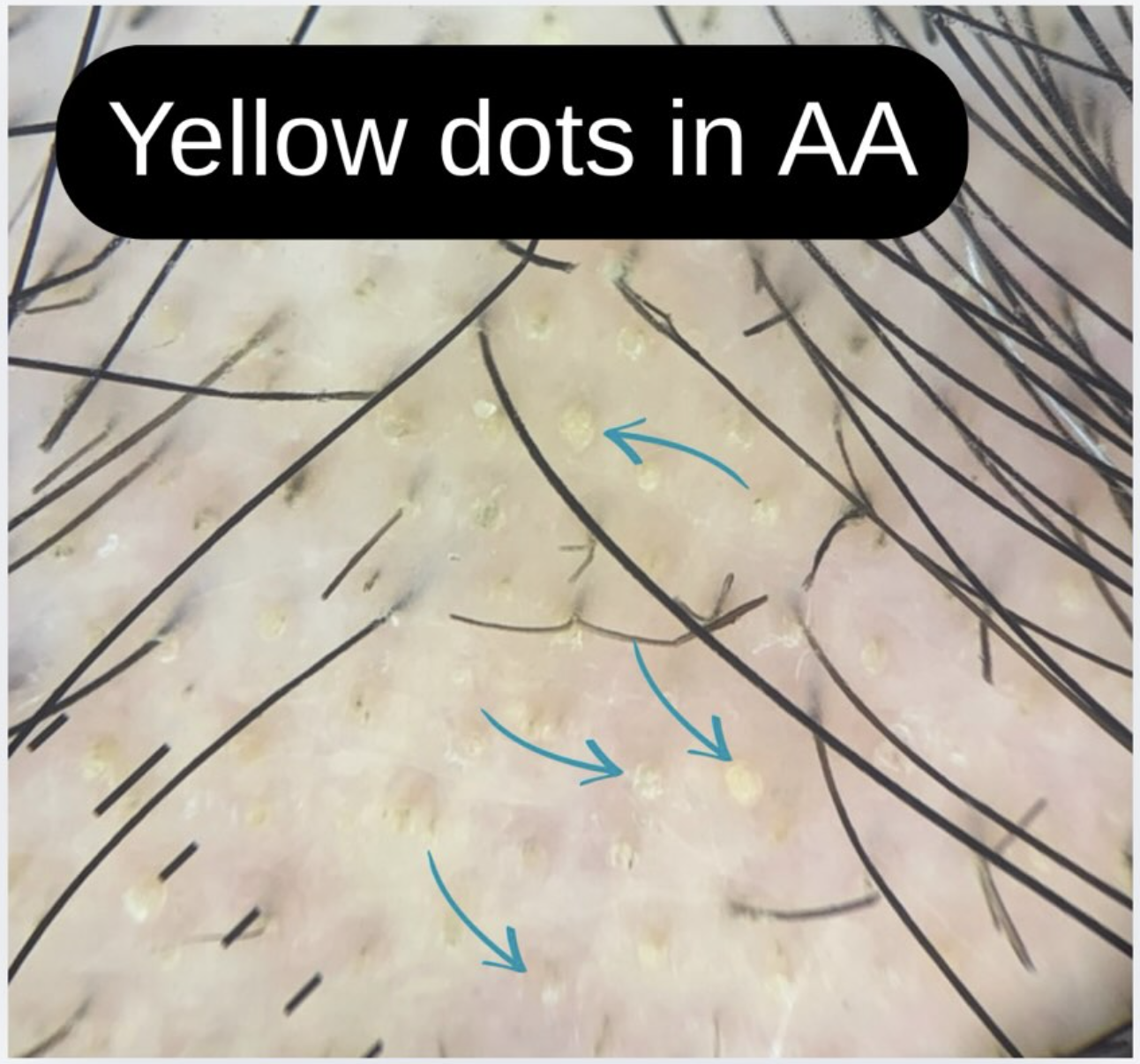
Although they are a classic sign of alopecia areata, it is important to understand both their strengths and limitations. Yellow dots are generally quite sensitive for diagnosing alopecia areata, meaning they are commonly present and often help point us toward the diagnosis. However, they are not very specific. Yellow dots may also be seen in other disorders including androgenetic alopecia, telogen effluvium, discoid lupus, dissecting cellulitis, and several additional scalp disorders. One fascinating aspect of yellow dots is their relationship to age. They are seen much more commonly in adults than in children. This likely relates to sebaceous gland development. Before puberty, sebaceous glands are not fully mature and produce far less sebum. Since yellow dots partly reflect accumulation of sebaceous material within follicles, they are less prominent in children. Yellow dots may also provide clues regarding disease severity. Patients with more extensive alopecia areata often demonstrate larger numbers of yellow dots across affected scalp regions. For those learning trichoscopy, yellow dots are an important structure to recognize. However, true expertise comes not simply from identifying “yellow dots,” but from understanding why they form, when they appear, and what else belongs in the differential diagnosis. Source link
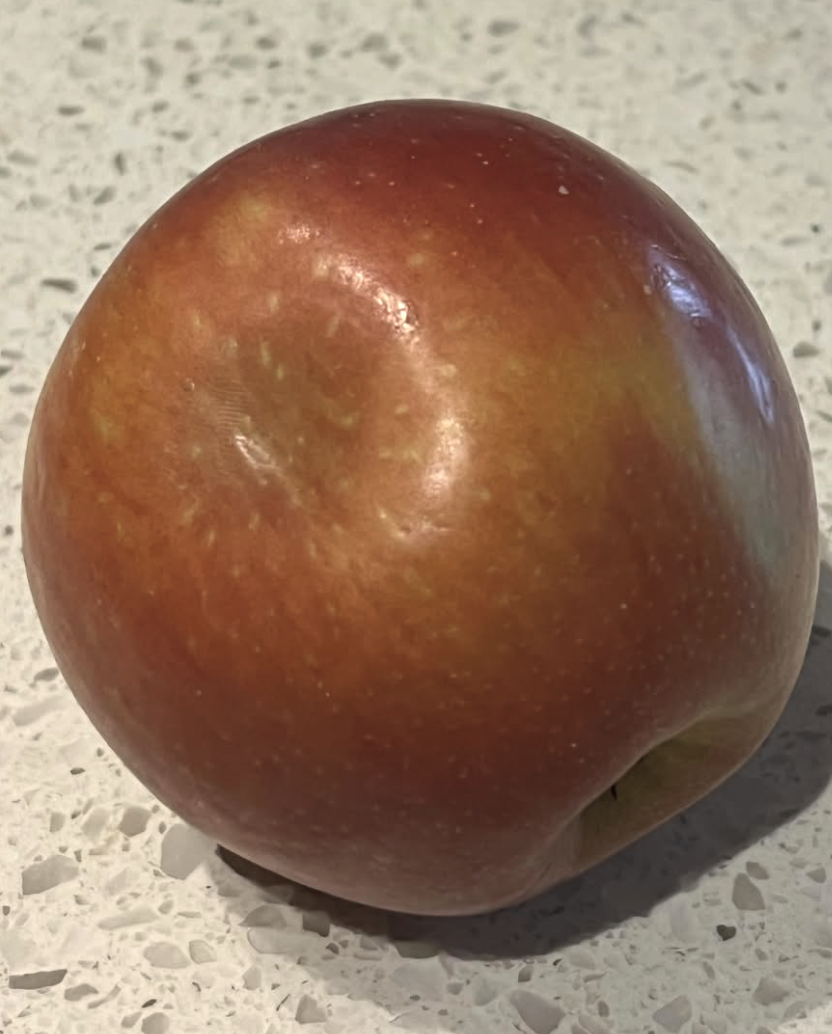
Atrophy from Steroid Injections to the Scalp — Donovan Hair Clinic
While the apple’s dent was simply a harmless imperfection, steroid-induced skin atrophy can create a similar appearance in the skin—a visible depression or “dent” caused by thinning of the skin and underlying tissues. Patients sometimes describe these areas as looking like a “divot,” “crater,” or “sunken spot.” In reality, the process is more complex than an apple dent, but the image serves as a useful visual reminder of what can happen when corticosteroids affect collagen production and local fat tissue. Just as the apple has lost some of its normal contour, steroid-induced atrophy results in localized loss of tissue volume. The skin may appear depressed, shiny, wrinkled, lighter in color, or accompanied by small visible blood vessels. Fortunately, unlike many dents in apples, most cases of steroid-induced skin atrophy gradually improve with time. Understanding why these dents occur—and how to prevent them—is an important part of safely using intralesional corticosteroid therapy in dermatology. In my opinion, the secret to reducing the risk of atrophy is for hair specialists and dermatologists to use 2.5 mg per mL triamcinolone as their baseline NOT 5 mg/mL and to limit injection to every 6-12 weeks (not every 2-4 weeks) Source link