
You reach for Zyrtec every morning without a second thought. It keeps the sneezing at bay, clears your head, and lets you get through allergy season like a functioning human being. But lately you have been noticing more hair in the shower drain or on your pillow, and now you are wondering: could my allergy pill actually be thinning my hair? It is a surprisingly common concern. You are not imagining things, and you are not alone in asking. Let’s talk through what we actually know. The Reports Are Real, Even If the Science Is Still Catching Up Hair loss is not listed as an official side effect of cetirizine (the active ingredient in Zyrtec) in the product labeling. But that does not mean nobody is experiencing it. According to FDA adverse event data analyzed by eHealthMe, out of more than 109,000 people who reported side effects while taking Zyrtec, about 1.59% noted hair loss. That might sound like a small number, but it adds up to roughly 1,745 people. So the pattern exists. What is less clear is whether Zyrtec is the actual cause, or whether something else is going on. Why You Might Be Shedding More (And It May Not Be the Pill) Here is something worth knowing: the most common type of hair loss that follows a medication or stressor is called telogen effluvium. Think of it like a traffic jam in your hair growth cycle. Normally, your follicles cycle through growing, transitioning, and resting phases. When your body experiences any kind of disruption, whether that is illness, stress, hormonal changes, or certain medications, more follicles than usual get nudged into the resting phase at once. A few months later, you start shedding. The tricky part? The timing delay means you might blame whatever you started three months ago, when the real trigger was something entirely different. Some researchers have also raised the question of whether long-term antihistamine use could interfere with the absorption of nutrients like zinc or iron, both of which are critical for healthy hair growth. This is still a theoretical connection and not proven outright, but it is worth having on your radar. Source link
Kintor Pharmaceutical Phase 3 Trial Results for KX-826 and GT20029
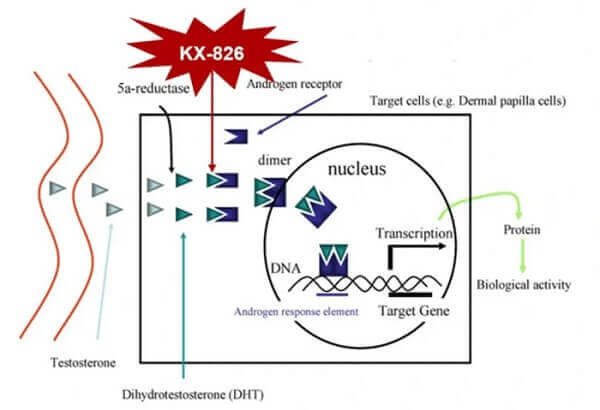
All the latest updates are underneath the below introductory section on KX-826 and GT20029. Note that Kintor is already selling its KX-826 (Pyrilutamide) androgen receptor antagonist (finishing Phase 3 trials in 2026) as a topical cosmetic on Amazon. Kintor Pharmaceutical Pyrilutamide (KX-826) Androgen Receptor Antagonist. Kintor Pharmaceutical: KX-826 and GT20029 for Androgenetic Alopecia My original post on Kintor Pharmaceutical (China) has become way too lengthy after so many updates. I will now add all new updates in this post below this section. This rapidly moving well funded company is in Phase 2 and Phase 3 trials in the US and China for both its male androgenetic alopecia (AGA) products. Kintor (pipeline here) is conducting hair loss trials for: Two separate androgen receptor (AR) targeting products: a degrader (GT20029) and an antagonist (KX-826 aka Pyrilutamide). Each of these trials is being conducted in both China and the US. Each of these products is being tested for both males and females with androgenetic alopecia (aka pattern hair loss). i.e., a total of 8 types of clinical trials times 3 phases in each = 24 developments we have to track. A bit too much if all of these do end up taking place, but a most welcome development. Over one-half of these 24 potential trials are already finished. The GT20029 product is an androgen receptor degrader (AR Degrader). It is developed using Kintor’s proprietary Proteolysis Targeting Chimera (PROTAC) platform. This is the world’s first topical androgen receptor (AR) compound (AR-PROTAC) to enter clinical trials. GT20029 degrades the AR protein via the E3 ubiquitin ligase pathway. During preclinical studies, GT20029 did not cause any notable side effects or systemic drug accumulation. Kintor’s main product for treating male pattern hair loss is KX-826 (Pyrilutamide) and is an androgen receptor antagonist (AR Antagonist). KX-826 is currently in Phase 3 clinical trials in the US and has completed Phase 3 trials in China. Note that Cassiopea’s Breezula (Clascoterone) is an AR antagonist that is also currently in Phase 3 trials in the US. Kintor’s website has an interesting article discussing both these competing AR antagonist products and hair loss. Make sure to also read my related past post on destroying the androgen receptor to reverse hair loss. Kintor GT20029 Androgen Receptor Degrader. Update: June 2, 2026 KX-826 Phase 3 Results Positive and Approval is Likely Kintor made a poster presentation at last week’s WCHR Conference that was well received and received an award. Professor Cheng Zhou from Peking University People’s Hospital (the lead principal investigators of the phase III clinical trial), presented the final results of KX-826 1.0% tincture. The treatment group consisted of male Chinese adults with androgenetic alopecia. On their site, they released an encouraging summary of the results, with the following quote: “The overall results demonstrated that KX-826 exhibited excellent efficacy and safety in patients with AGA.” Kintor is now actively pursuing the marketing authorization for KX-826. Upon approval, KX-826 is expected to become the first new treatment for male pattern hair loss in 30 years. Minoxidil was approved to treat androgenetic alopecia in 1988; and finasteride was approved for the same purpose in 1997. Update: March 18, 2026 KX-826 1.0% Phase 3 Trial Primary Endpoint Results Kintor just announced that the Phase 3 stage of the company’s pivotal clinical trial for its KX-826 tincture 1.0% for the treatment of AGA has obtained top-line results. The numbers show statistically significant and clinically meaningful hair growth outcomes, while demonstrating excellent efficacy and safety. A total of 666 patients were treated for 24 weeks. Both the 1.0% BID (i.e. twice a day) group and 0.5% BID group demonstrated statistically significant therapeutic efficacy and clinical significance relative to the placebo group. The target area non-vellus hair counts (“TAHC”) of the 1.0% BID group showed an increase of 15.33 hairs/cm2 from baseline. The TAHC of the 0.5% BID group showed an increase of 14.46 hairs/cm2 from baseline. The TAHC of the placebo group showed an increase of 4.68 hairs/cm2 from baseline. Note that at the bottom of the press release, they basically imply that competing product Breezula will beat them to market in the US and EU. Update: December 3, 2025 Positive Phase 2 Trial Results for GT20029 In my April 2024 update, I discussed the positive interim results for the Phase 2 clinical trial of GT20029 in China. Now we have a final report published on PubMed. The randomized, double-blind, placebo-controlled Phase II trial entailed 180 Chinese adult males with androgenetic alopecia. It lasted from April 2023 to April 2024. The subjects were randomized equally into six groups receiving GT20029 (0.5% or 1.0%) or placebo, either once daily (QD) or twice weekly (BIW) for 12 weeks. All four GT20029-treated groups showed significant increases in target area hair count (TAHC) at Week 12. Target area hair width (TAHW) also improved significantly in the 1.0% BIW group vs placebo. Update: September 25, 2025 Check out the Kintor AMA on Reddit with one of their medical scientists. Update: August 1, 2025 KX-826 1.0% Phase 3 Trials to Finish in Early 2026 Kintor’s enrollment of 666 patients in the Phase III Pivotal Clinical Trial of KX-826 tincture 1.0% for the treatment of AGA is finished. This trial is expected to be completed by the beginning of 2026. Update: July 25, 2025 KX-826 1.0% versus KX-826 0.5% Among the numerous trials that Kintor is undertaking for its two androgen receptor targeting products is a Phase II/III trial for KX-826 tincture 1.0% dosage. Yesterday, it announced the results of its “Phase 2 stage” of this pivotal trial consisting of 90 volunteers. The target area non-vellus hair counts (“TAHC”) of the 0.5% BID group increased by 22.39 hairs/cm2 from baseline. The TAHC of the 1.0% BID group increased by 21.87 hairs/cm2 from baseline. The TAHC of the placebo group increased by 8.73 hairs/cm2 from baseline. So the 0.5% and 1.0% dosages seem equally effective. A bit disappointing. Update: May 2, 2025 Clinical Observational Study finds KX-826 plus Minoxidil to be Superior Kintor just published the primary endpoint

What to Expect at Your First Hair Loss Consultation in Scottsdale, AZ
What Happens During Your Hair Loss Consultation in Scottsdale A Real Conversation First Your consultation begins with a conversation, and we mean a real one. Your clinician will ask about your health history, lifestyle, stress levels, diet, and any significant life changes that may correlate with your hair loss. We are listening for patterns and clues that go beyond what is visible on the surface, because hair loss is almost always a signal of something happening internally. A Thorough Scalp Analysis Using clinical-grade tools, your clinician will conduct a detailed analysis of your scalp and hair follicles. This allows us to assess follicle health, scalp condition, hair density, and the pattern of loss in a way that a mirror at home simply cannot replicate. This step is foundational to building a plan that targets the right areas with the right treatments. Identifying the Root Cause This is where NHLMA differs from a standard office visit. Rather than prescribing a generic solution based on surface symptoms, we work to identify the underlying cause of your hair loss. This might involve a recommendation for comprehensive lab testing to look at hormones, thyroid function, nutrient levels, inflammation markers, and other systemic contributors that often drive hair loss from within. Understanding the root cause is what allows us to build a plan that produces lasting results rather than temporary improvements. Exploring Your Treatment Options Once your clinician has a clear picture of what is happening and why, they will walk you through the treatment options that are most appropriate for your situation. This is a collaborative conversation. We explain the science behind each option, what the process looks like, the expected timeline for results, and how the treatments work together within a personalized protocol. You will leave knowing exactly what we recommend, why we recommend it, and what you can realistically expect. Source link
OrganTech Aims to Regenerate Hair and Teeth
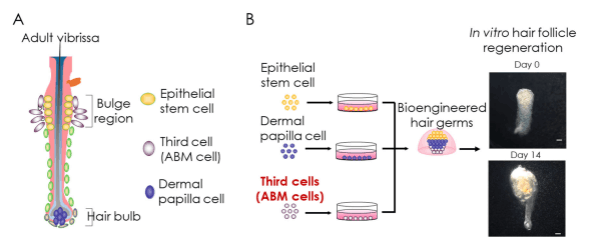
I have covered Japan-based OrganTech (previously known as Organ Technologies) for many years due to the company’s affiliation with founder Dr. Takashi Tsuji and RIKEN (Japan). I have covered Dr. Tsuji’s groundbreaking hair loss cure related work for over 12 years. This post was first written in 2020, and I regularly update it with the latest developments on top. Update: June 4, 2026 Injecting the “Third Cell” Planned for 2027 A day after I made the below major update yesterday, Dr. Tsuji granted a new interview to a Japanese website (h/t “Theo”) with some very interesting points. A therapy involving injecting “the third cell” into the affected area of hair loss is planned for 2027. Following that, the goal is to transplant hair follicle seed cells containing the third type of cell by 2028. Finally, the transplanting of regenerated hair follicles cultured in vitro (third generation) will occur by the 2030s. I am not sure from the translation whether the 2027 first generation treatment will be available to all (or just for clinical trial participants). The estimated cost (for the third generation treatment I think) will be around 20 million Japanese yen (equivalent to $125,000). This matches the lower end of the 20 million to 40 million yen estimate that Dr. Tsuji announced in 2019, albeit before the new “third cell” discovery. They plan to reduce costs to around 5 to 10 million yen down the road. I assume that the first generation 2027 treatment will be a lot cheaper. Key quote from Dr Tsuji: “The crucial difference with the third generation is that they are cultured outside the body, and seedlings are grown from seeds and then transplanted. Just like with rice cultivation, it is more reliable to plant seedlings that have properly developed than to sow the seeds and pick what grows.” Update: June 3, 2026 OrganTech gets Financing and Dr. Tsuji gets the Attention of the BBC In a great development, OrganTech just announced the successful completion of a financing round to support its next stage of growth. Some of these new funds will go into “accelerating the hair regeneration research and business development” related to the “Third Cell Type”. I discussed these “Third Cell” findings in my prior two updates from earlier this year. Long-time readers of this blog may remember how the first iteration of OrganTech (Organ Technologies) had to fold due to lack of funding. In 2021, I even tried to help RIKEN raise funds per their request (since I had so much respect for Dr. Tsuji). Also of significance, Dr. Tsuji got major coverage today in an article about women’s hair loss in the BBC. In the past, he almost never got any mentions in western media. Interestingly, they skipped covering almost all of Dr. Tsuji’s past two decades of work. The focus is just on the 2026 “novel third cell type” breakthrough finding, which Dr. Tsuji describes as a potential game changer in the treatment of alopecia. Update: May 20, 2026 Production of Hair Regeneration Supporting “Third Cell” Begins OrganTech has granted a manufacturing license to Kojin Bio (Japan) for the production of the “Third Cell” (hair follicle regeneration support cell). The latter was discussed in my last update. Apparently, Kojin Bio already sells a high-performance culture medium that enables the cultivation of dermal papilla cells and hair follicle regeneration supporting cells. Note that the artificially created “third cell” assists adult hair follicle-derived epithelial stem cells and dermal papilla cells to progress beyond hair bulb formation to actual hair shaft production. Update: February 21, 2026 OrganTech and RIKEN Scientists Discover “Third Cell” that Produces Hair OrganTech “third cell” for hair regeneration. Assists adult hair follicle–derived epithelial stem cells and dermal papilla cells to progress beyond hair bulb formation to sustained down-growth and hair shaft production. OrganTech and RIKEN just published a new study regarding the identification and subsequent artificial creation of a “third cell” to induce hair growth in mice. They first made the discovery of a previously unrecognized accessory mesenchymal cell population that is indispensable for functional hair follicle regeneration. When this new third cell was added to two existing cells (that had previously been identified as necessary for hair production), they were able to create a hair-producing organ. If applied to humans, this could lead to the development of new treatments for alopecia. The plan to begin clinical trials by the end of 2026. More details can be found on their website. “Specifically, the investigators describe a “third cell type,” termed hair follicle regeneration–supporting cells, which enables adult hair follicle–derived epithelial stem cells and dermal papilla cells to progress beyond hair bulb formation to sustained downgrowth and hair shaft production.” Edit: This news is now being published in many different publications. The latest eye catching headline: “Scientists Built Working Hair Follicles in a Lab. They Could Cure Baldness Forever.” It was already known that epithelial stem cells and dermal papilla cells are important for hair follicle regeneration. But while the presence of a ‘third cell’ was considered essential for hair follicles to enter the growth phase and produce hair, its identity remained unknown for a long time per Dr. Tsuji. In contrast to the conventional hypothesis that it was fibroblasts or adipocytes, the Tsuji team discovered a new group of cells in the mesenchymal region surrounding the bulge region of the hair follicle. These hair follicle regeneration supporting cells lead to the down-growth phenomenon in which hair follicles extend into the deeper layers of the skin. “The discovery that a third type of cell divides and powerfully pushes the tip of the hair follicle deeper into the skin is a groundbreaking achievement that overturns previous research. Mouse experiments have demonstrated that fully functional hair follicles can be regenerated by stacking these three types of cells vertically.” Update: July 12, 2025 HairDao’s much anticipated interview with Dr. Tsuji is out. I am traveling outside the country right now and won’t get a chance to listen to it till tomorrow. Update:
Vitamin D and Hair Loss: The Connection Explained
Signs Your Hair Loss Could Be Linked to Low Vitamin D Hair loss from vitamin D deficiency tends to look a little different from other types. Here’s what to watch for: Diffuse thinning across the entire scalp rather than in one specific area. Increased daily shedding that goes beyond the normal 50 to 100 hairs per day. Hair that grows back finer, weaker, or slower than before. A scalp that feels dry, tight, or irritated. Fatigue, muscle weakness, or mood changes alongside the hair loss, since vitamin D affects far more than just your hair. If any of this sounds familiar, it’s worth getting a simple blood test to check your 25-hydroxyvitamin D levels. Most experts consider levels below 30 ng/mL insufficient and below 20 ng/mL deficient. What You Can Do About It The encouraging news is that vitamin D deficiency is one of the more straightforward root causes to address once you know it’s a factor. Here’s where to start: Get tested. A simple blood draw is all it takes. At NHLMA, we recommend this as part of a comprehensive evaluation for anyone experiencing hair loss, because understanding what’s happening on the inside is just as important as what we can see on the outside. Supplement wisely. Vitamin D3 is the most bioavailable form, and pairing it with vitamin K2 helps ensure proper calcium metabolism. Our Essential Vitamin D3 + K + A was formulated with exactly this in mind, delivering the nutrients most people are deficient in, in the forms your body can actually use. Support absorption. Vitamin D is fat-soluble, so taking it with a meal that contains healthy fats makes a real difference. And if you have gut health concerns, addressing those will help your body absorb and utilize the vitamin D you’re taking in. Prioritize safe sun exposure. Even 10 to 15 minutes of midday sun on your arms and face a few times per week can support your body’s natural production (with usage of SPF of course). Balance is everything here. The Bigger Picture At NHLMA, we always say that hair loss is rarely about just one thing. Vitamin D is often one piece of a larger puzzle that might include hormonal shifts, stress, gut health, inflammation, or nutritional gaps. That’s exactly why we dig deeper than surface-level solutions. Your hair is telling you something about what’s happening inside your body, and listening to that message is where real progress begins. If you’ve been struggling with thinning or shedding and feel like you’ve tried everything, consider whether your vitamin D levels have ever been part of the conversation. Sometimes the answer has been hiding in plain sight. We’re here at our hair loss clinic in Scottsdale, AZ when you’re ready to find it. Ready to get to the root of your hair loss? Book a consultation with our team and let’s build a plan that’s personalized to you. Source link
Effective Cell Therapy for Hair Regeneration
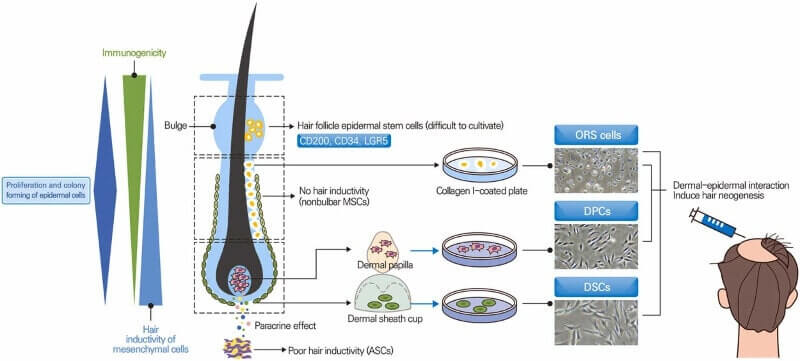
Update: June 8, 2026 More new Papers from Jong-Hyuk Sung Epibiotech’s CEO and prolific hair loss researcher Jong-Hyuk Sung has co-authored two new major papers in recent months: Update: Epibiotech CEO Sung (who is the author of the new 2022 paper covered in this post) is answering our questions in the comments this week. Please note that English is not his first language. Q & A has now ended. November 25, 2022 Effective cell Therapy for Hair Regeneration Earlier this month, Epibiotech CEO Jong-Hyuk Sung published a detailed new paper titled “Effective and economical cell therapy for hair regeneration.” It was widely covered in South Korean media (h/t “Theo”, who also sent me this update on Mr. Sung’s presentation covering the paper). They call him Seong Jong-Hyeok in that article. My interest piqued when I read such a thorough scientific paper from a CEO. Almost unheard of in the western world. I showed it to a well known US hair transplant doctor, and he found it to be a great summary. Adipose-Derived Stem Cells, Dermal Papilla Cells and Dermal Sheath Cup Cells Note that Dr. Sung has published numerous papers on adipose-derived stem cells and hair regeneration (and wound healing) for 15 years. This CEO seems to be a scientist first and foremost, rather than a business person. This latest paper covers the three main types of cell based hair regeneration treatment strategies that are currently being developed: Adipose-derived stem cells (ADSC or ASC). Dermal papilla cells (DPC). Dermal papilla epithelial cup cells, better known as dermal sheath cup cells (DPSC or DSC). The paper also mentions the manufacturing of hair organoids using induced pluripotent stem cells. Including a shout out to Dr. Takashi Tsuji. Note that Shiseido (including its use of Replicel’s technology) now offers a hair regeneration treatment involving culturing of dermal sheath cup cells. Also note that in the past, Aderans and Intercytex both saw some success in hair growth via dermal papilla cell culturing and injection into balding scalps. HairClone is currently trying something similar. Dr. Sung’s company Epibiotech is ultimately driven by “Off-the-shelf” allogeneic DPC therapy. It aims to begin Phase 1 clinical trials for its EPI-001 dermal papilla cell hair multiplication treatment in 2023. We are all hopeful that things will move faster in Asia in comparison to the US or Western Europe. The company can already mass-produce dermal papilla cells with hair growth ability using spheroid culture, hypoxic conditions, and growth factors. Cell therapy for hair growth. Adipose, dermal papilla and dermal sheath cup cells. Source: Biomedicine & Pharmacotherapy, January 2023. Adipose Derived Stem Cells Given the author’s background, the paper is especially detailed when it comes to ADSC (ASC). Dr. Sung highlights the pros and cons. Adipose-derived stem cells are easy to access and isolate in large quantities. This is not true when it comes to dermal papilla cells and dermal sheath cup cells. While ASCs promote hair growth through the paracrine effect, they have a poor potential in hair neogenesis. Dr. Sung suggests further development in methods to enhance the trichogenecity of ASCs. Other New Recent Studies on Hair Regeneration As if this was not enough, two new papers on hair regeneration came out in the past month. A literature review from Japan covers numerous cell therapies for hair regrowth. This includes mesenchymal stem cell (MSC) implantation. Adult sources of MSC include: adipose tissue (including SVF); bone marrow; DPC; DSC; placenta and umbilical cord. The paper also analyzes non-cell therapies, including exosomes, extracellular matrix, platelet-rich plasma, and the MSC secretome. The last mentioned “comprises bioactive materials, such as growth factors, cytokines and nucleic acids that play an important role in regulating the hair follicle cycle and regeneration”. A new study from China on microenvironmental reprogramming of human dermal papilla cells for hair follicle tissue engineering. Source link
Laser Cap vs Medical-Grade LLLT for Hair Loss: What Works?
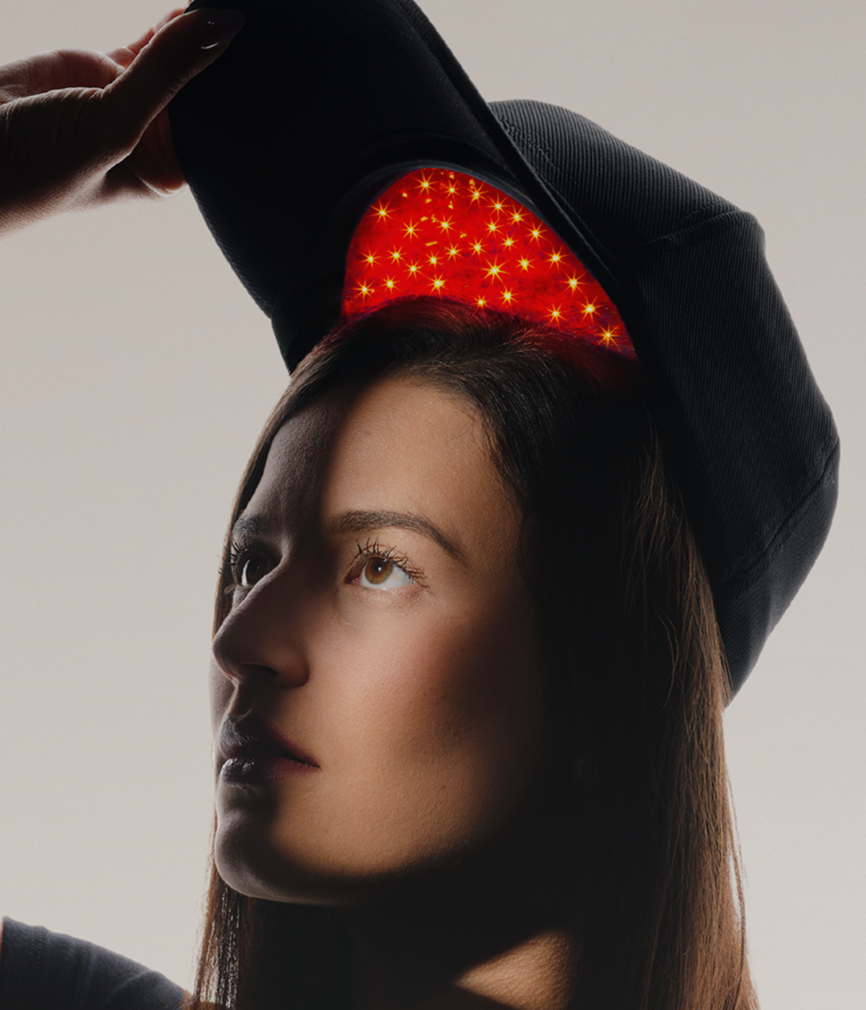
If you’ve been searching for at-home laser caps, you’re not alone. At-home devices have become one of the most talked-about options for treating hair thinning. They’re convenient, easy to use, and promise visible results. But how do they actually compare to in-clinic treatments like medical-grade LLLT? And more importantly, which one is worth it? At NHLMA in Scottsdale, we are big advocates of LLLT at the highest medical-grade form because our patients have seen great success from it. What is LLLT for hair loss? LLLT hair loss treatment uses low-level light to stimulate the scalp and support healthier hair growth. It works by: increasing blood flow to the follicles extending the hair growth cycle supporting thicker, stronger strands over time It’s non-invasive and widely used for early to moderate hair thinning. Source link
Oxytocin and Hair Growth | Hair Loss Cure 2020
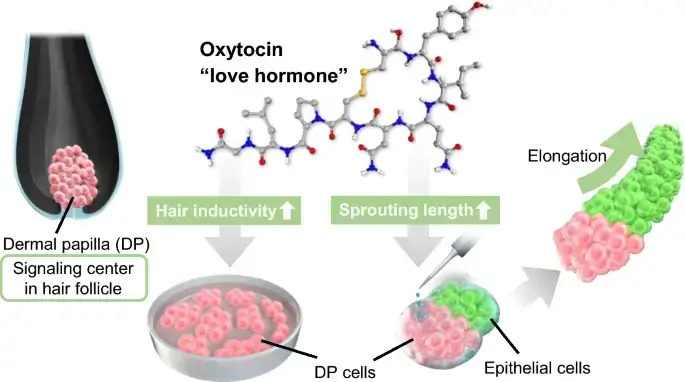
This post covers all the studies that Dr. Junji Fukuda and his team at Fukuda Lab have published in relation to oxytocin and hair growth. It is in reverse chronological order. Update: June 11, 2026 And now a fifth study from Fukuda Lab researchers in relation to “love hormone” oxytocin and hair growth. They found that oxytocin affects both hair growth promotion and stem cell proliferation within hair follicles. They also demonstrated that outer root sheath cells produce oxytocin, which in turn increases the “hair growth-promoting potential of dermal papilla cells”. And they verified the the autocrine and paracrine effects of oxytocin. Update: June 6, 2026 Hypericin and Berberine for Oxytocin Signaling Activation A fourth study from the Fukuda team in relation to oxytocin and hair growth. They identified two compounds that promote hair elongation via oxytocin signaling activation. The first, hypericin, enhances oxytocin receptor expression. The second, berberine, is an oxytocin receptor agonist. Quote: “The additive effects of hypericin and berberine on hair growth promotion were further demonstrated using hair follicle organoid-based assays.” Update: October 14, 2024 Oxytocin Receptor Agonists A third study in relation to oxytocin and hair growth has been published by the same Japanese team of Fukuda, Kageyama, Seo and Lan. This one is titled: “Effects of oxytocin receptor agonists on hair growth promotion.” The researchers findings from October 2023 (see next section) showed the hair growth promoting effects of oxytocin (in hair follicle organoids). However, the clinical use of oxytocin is difficult due to its rapid degradation in vivo and poor permeability due to a large molecular weight. Looking for alternatives, in February 2024 (see bottom of this post), the Japanese team reported that cinnamic acid promoted hair growth via the activation of oxytocin receptor (OXTR) expression. And now in October 2024, the researchers have found that oxytocin receptor agonists WAY267464 and LIT001 increased the expression of hair growth-related genes in dermal papilla cells. And they significantly promoted hair “follicle sprouting”. According to “Ben”, both WAY267464 and LIT001 are endogenous, already synthesized and purchasable. April 16, 2024 Oxytocin and Hair Growth In October 2023, Japanese researchers (led by Junji Fukuda and Tatsuto Kageyama) published an interesting paper that concluded that oxytocin has a positive effect on hair growth via upregulation of dermal papilla cell signature markers. These findings were later covered by a NHK News video report from Japan. Oxytocin (OXT) is better known as the “love hormone”. It is produced and released by women during childbirth and lactation. It is also produced during skin stimulation, such as when hugging or getting a massage. OXT is also called the anti-stress hormone. In this study, OXT treatment resulted in the upregulation of genes that were associated with hair growth promoting factors. These included VEGFA (a protein encoded by the VEGF gene), PDGFB, FGF7 and BMP2. This ultimately results in peg-like hair sprouting via the improved hair growth ability of dermal papilla cells. Oxytocin and Hair Growth. Source: Nature, 20 October, 2023. Fukuda et al. Cinnamic Acid, Oxytocin Receptor Activation and Hair Growth In February 2024, the same researchers from Japan published yet another study that found cinnamic acid to promote hair growth via the activation of oxytocin receptor (OXTR) expression. Cinnamon is officially known as Cinnamomum cassia, and cinnamic acid is a component of Cinnamomum cassia. “Treatment with cinnamic acid led to upregulation of OXTR and trichogenic gene expression in human dermal papilla (DP) cells.” Three people e-mailed me the story about these findings that was published on phy.org several weeks ago. And a few others also posted blog comments about this news. No-one seemed to connect both these Japanese studies if I recall correctly. Cinnamic Acid, Oxytocin Receptor Activation and Hair Growth. Source: Nature, 27 February, 2024. Fukuda et al. Note that cinnamic acid can also be derived naturally from a number of plants. The most famous being cinnamon, shown in the image above. Yet one more ingredient to add in the list of natural treatments for hair loss. A 2012 study from Japan found that cinnamon extract promotes Type I collagen biosynthesis via the activation of IGF-I signaling in human dermal fibroblasts. Also from 2012, a study from Taiwan concluded that cinnamic aldehyde (a constituent of Cinnamomum cassia) has excellent anti-inflammatory properties. A 2018 study from Taiwan found that Cinnamomum osmophloeum Kanehira (COK) leaves caused dermal papilla cell proliferation and increased hair growth in mice. Source link
Iron Deficiency and Hair Loss: What Your Labs Might Be Missing
What to Ask For at Your Next Appointment If you want to know whether iron is a factor in your hair loss, here is what to specifically request from your provider. Ferritin is the most important one and the most commonly skipped. Ask for it by name because it is not automatically included in most standard panels. Serum iron and TIBC (total iron binding capacity) give useful context alongside ferritin. A complete blood count checks for full anemia. And C-reactive protein (CRP) is worth adding because it helps interpret the ferritin result accurately since inflammation can make ferritin appear higher than it actually is. The short version: ask your doctor specifically for ferritin. That one number can change the entire conversation. What Happens If Your Ferritin Is Low The encouraging thing about iron-related hair loss is that it is one of the most straightforward causes to treat once it is identified. Most patients start with iron supplementation. A few things that make a real difference in how well it works: taking it with vitamin C significantly improves absorption, while taking it with calcium or coffee significantly reduces it. Getting those details right speeds up the process. Hair takes time to respond. Most patients see shedding slow down and new growth begin to appear over three to six months as ferritin levels rebuild.Research suggests that starting treatment sooner rather than later leads to better outcomes, so if you suspect this is a factor for you, it is worth getting checked sooner. Iron Is Often One Piece of a Bigger Picture It is worth saying that iron deficiency is one of the most common things we find in our patients, but it is rarely the only thing. Thyroid issues, hormonal changes, vitamin D deficiency, and stress can all affect hair growth at the same time. Treating iron alone when multiple factors are in play tends to produce partial results at best. This is why we look at the full picture rather than checking a single number and calling it done. When we understand everything that is going on, we can build a plan that actually works. If you have been told your labs are normal but your hair is still shedding, it may be worth getting a second look from someone who specializes in this. That answer might not be as complete as you were told. Source link
A Visit to Fukuda Lab at Yokohama National
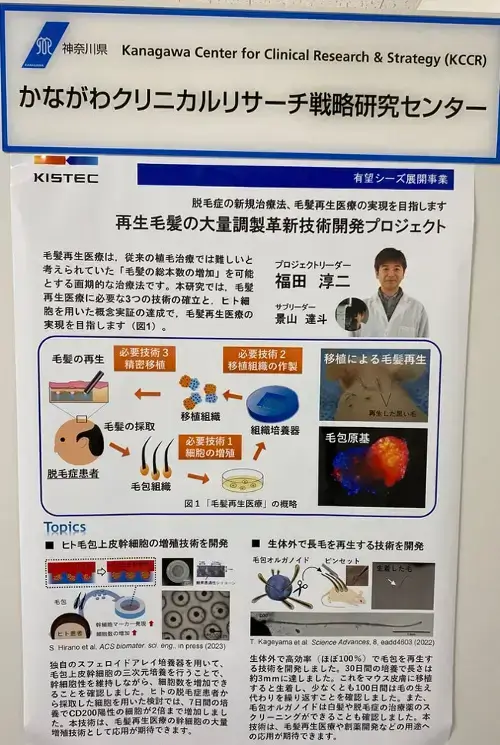
This post was originally written in 2024. I have added new updates from 2025 and 2026 at the bottom. I have extensively covered the work of the esteemed Japanese hair loss researcher Dr. Junji Fukuda for over ten years. Among the posts that I have written in relation to his team’s work at Fukuda Lab include the following: February 21, 2024 A Visit to Fukuda Lab at Yokohama National Reader “Theo” just sent me a link to a very interesting diary of a hair transplant surgeon from Japan who just visited the Fukuda Lab. Note that while Dr. Fukuda is based at Yokohama National University, the research seems to be taking place at Kanagawa Life Innovation Center (per the above link). One of the images also mentions the Kanagawa Center for Clinical Research & Strategy (KCCR). Yokohama is the second largest city in Japan and is the capital of Kanagawa Prefecture. Check out this PDF of the regenerative medicine sector at Kanagawa Prefecture. From this visit and summary, I learn some very interesting things. There are three distinct methods in which Dr. Fukuda is pursuing hair regeneration. I mentioned them in my past lengthy post too, but now we have more clarity. 1) Dermal Papilla Cell Transplantation “Dermal papilla cell transplantation is about to begin in Japan.“ Transplantation of dermal papilla cells (via stratified culture). I assume that the “stratified cuture” in the translation means 3D culturing. Dr. Fukuda mentions that Shiseido already conducted a clinical trial using 2D culturing. In this method, cells are are lined up on a flat surface when culturing, but it only resulted in a 5% increase in hair volume. The 3D method will likely be superior and the clinical trials are about to finally begin! It is hoped to be “put into practical use within five years”. 2) Transplantation of Hair Follicle Primordium “I think this will take some time.” The creation of hair follicle primordia means generating hair from scratch. i.e., hair multiplication. I previously discussed the Yokohama team’s process of achieving this via increasing and mixing epithelial cells and mesenchymal cells. These then form “hair follicle primordia“ that are transplanted to the same donor’s scalp in order to regenerate hair in thinning regions of the scalp. Per the latest feedback from Dr. Fukuda, while this process has already been proven by them in mice, human hair is a different animal. Once the primordium tissue is transplanted to human heads, the direction and length grow haphazardly. He thinks that this will take some time. 3) Transplantation of Regenerated Hair Follicles in Vitro (Organoids) “It will likely take more than 10 years before it can be used in humans.” The final method is in vitro regenerated hair follicle transplantation (also called organoid). In this process, hair follicles are regenerated outside the body, lengthened by almost 100%, and then transplanted into the scalp. Per Dr. Fukuda, it will likely take more than 10 years before it can be used in humans. Other Notes In March 2023, Dr. Fukuda and his Yokohama team published an important hair regeneration related study. They made an improvement in the expansion of hair follicle stem cells (HFSCs) and dermal papilla cells via the use of a newly designed microwell array device. Fukuda Lab’s hair research summary poster. Source:Naohiro Uchida, Director of Almo Plastic Clinic Hair Transplantation. Update: April 18, 2024 New Junji Fukuda interview given to Tokyo Television. Someone please translate it into English if you know Japanese. Not yet on YouTube. Junji Fukuda TV Interview. Update: June 15, 2025 Yet Another Visit to Fukuda Lab Yet again, Tokyo TV visited world renowned hair loss researcher Dr. Junji Fukuda at Yokahama National University. A Japanese reader posted a link to the full video in the comments, but it did not load for me. However, I managed to find two of the segments on YouTube. You can turn on English captions in the videos. The Japanese viewer comments underneath the first video are funny. Update: June 12, 2026 A number of new updates in recent months. In December 2025, Dr. Fukuda gave an interesting interview. He said that his team’s initial goal is to popularize hair regeneration therapy, thereby establishing the necessary infrastructure (such as cell processing facilities). In the future, they aim to expand this technology to regenerative medicine for various organs, in particular, the liver. Quote: “Hair is naturally formed by two types of cells (epithelial cells and mesenchymal cells) exchanging information with each other. We are challenging ourselves to unravel the mechanism of this “interaction” and completely reproduce it in a culture dish. In fact, most of the organs in our bodies are formed by the interaction of these two types of cells.” Of note, Dr. Fukuda is described as the President and CEO of TrichoSeeds, a company he co-founded several years ago. He also continues to work at Yokohama National University via Fukuda Lab as a professor and researcher. In March 2026, Dr. Fukuda co-authored a paper on the potential of employing hiPSC-derived ectodermal precursor cells in hair follicle organoid cultures in hair regenerative medicine. In April 2026, it seems like the Fukuda Lab got some funding from Beyondge Capital (Japan). Also in April 2026, Dr. Fukuda gave a presentation titled: “Treatment of male pattern baldness using microRNA produced by human papilla cells in stratified culture.” In April, Dr. Fukuda and his team authored yet another paper. They discuss their findings about the correlation between reduced CD200 expression and increased hair regenerative capability of cultured hair follicle bulge cells. Quote: “Our study refines the functional interpretation of CD200-defined bulge heterogeneity and provides insights for optimizing human bulge cell-based approaches to hair follicle regeneration.“ Source link