
For women, having a healthy reproductive system is not merely important for childbearing. It’s also imperative for overall health, including emotional wellbeing, bone strength, cardiovascular health, immune system, pelvic health, and aging. Your reproductive system is strongly connected to your hormones, which essentially control a lot of your bodily functions. Bottom line? Having a healthy reproductive system is crucial for many different parts of the body. Today, we’re going to look at the various ways that a healthy reproductive system contributes to an overall healthier you, as well as ways in which to keep your reproductive system healthy. Here are 8 different ways your reproductive system works to keep your body healthy. 1. Hormonal Health Firstly, as mentioned, your reproductive system is a major hormone producer… and hormonal balance affects your whole body. For example, estrogen, progesterone, and testosterone, all produced in the female reproductive system, influence your energy levels and fatigue, mood, anxiety and depression risk, sleep quality, metabolism and weight regulation, sex life, skin, hair, and bone health. When your reproductive system is unhealthy, these hormones can be imbalanced, having a negative effect on all of these things, all the while rippling through every organ system. 2. Fertility & Childbearing Reproductive health is essential before conception as it promotes healthy eggs, regular ovulation, balanced hormones for conception, and a lower risk of miscarriage. During pregnancy, it’s important for proper implantation, placenta development, and reduced risk of pre-eclampsia, preterm birth, gestational diabetes, and low birth weight. 3. Bone Strength & Mobility A woman’s reproductive system, and the hormones it makes, plays an important part in maintaining bone density. For example, if estrogen and testosterone are low, it can increase the risk of osteoporosis, fractures, and chronic joint and back pain. And these ailments can persist for longer than reproductive years. 4. Heart Health When your reproductive hormones are healthy, you should be able to benefit from a more regulated cholesterol, protected blood vessels, and reduced inflammation. When there is a disruption in hormone production, the opposite may occur, such as heart disease, high blood pressure, and stroke. 5. Emotional Wellbeing Our hormones are strongly linked to our emotional and mental health. When your reproductive hormones aren’t functioning at their best, it may disrupt your brain chemistry. For example, when serotonin, dopamine, and oxytocin aren’t in balance, you may experience mood swings, brain fog, anxiety and low levels of motivation, and reduced resilience because of stress. 6. Sexual Health Your reproductive system, when in balance, supports a healthy libido and arousal, allows for comfortable and pain-free penetration, enhances orgasm quality, promotes natural lubrication, and the strengthening of emotional bonding between partners. If you have an unhealthy reproductive system, these factors may suffer, creating issues in your sex life, solo or with a partner. 7. Immune System & Inflammation Your reproductive system regulates your immune system by deciding when it should react strongly or calm down to infections, injuries, and more, and how much inflammation is appropriate. If this is out of balance, and there is chronic inflammation in reproductive organs, it could cause increased fatigue, affect gut health, and raise the risk for an autoimmune issue. 8. Pelvic Health A healthy reproductive system supports pelvic floor strength, bladder and bowel control, and posture and spinal stability. With an unhealthy reproductive system, you could face pain, incontinence, or discomfort in everyday life. Different Ways to Keep Your Reproductive System Healthy We’ve established that having a healthy reproductive system is important for almost all bodily functions. So, here are some ways you can help keep it healthy and functioning optimally. Lifestyle Choices To support your reproductive system, and keep hormones balanced, you could: get 7-9 hours of sleep every night manage stress eat enough calories avoid excess alcohol and caffeine maintain a healthy body fat range enjoy balanced exercise In terms of nutrition, you can focus on nutrient-dense foods that support hormones, eggs, and tissue. For example: Healthy fats: olive oil, avocado, nuts, seeds, fatty fish Protein: eggs, fish, legumes, lean meat, tofu Micronutrients: zinc, iron, folate, selenium, omega-3s. In terms of exercise, moderate, regular activity is best. Chronic overtraining isn’t a good idea, as it can actually hinder your health. You could engage in: Strength training to support testosterone and bone health Cardio for improved blood flow to reproductive organs At the same time, you could experience negative effects when it comes to arousal, orgasm, tissue health, and fertility if you aren’t active, sit for prolonged periods of time, or don’t manage your blood pressure and cholesterol. As per weight management, maintaining a healthy weight, without extremes, is the best way to keep your reproductive system healthy. With severe dieting or obesity, ovulation, menstrual regulation, and libido may be affected. Some other lifestyle choices can disrupt your endocrine hormones. For example, smoking can damage your levels of fertility and cause hormonal damage, and using plastic, pesticides and harsh chemicals are toxins that can be harmful. Additionally, avoid taking unnecessary hormone supplements. Manage Health Conditions If you have any current health conditions, make sure to manage them correctly in hopes of keeping them in control. For example, if you have any infections, make sure to treat them immediately. And for chronic conditions, like diabetes or thyroid issues, regular check ups and medication (if prescribed by your healthcare professional) are essential. Health Screenings For preventative care, routine health screenings are a great idea… even if you don’t have any symptoms. Visiting a gynecologist/healthcare professional for a pap smear, pelvic exam, and hormone testing regularly can help you maintain good reproductive health, and any early detection means that treatment could be more effective with possibly better outcomes. Mental Health Because your hormones play a big part in how you feel mentally, you may be experiencing an unhealthy reproductive system that gives off mental side effects. After all, your mental health directly affects your reproductive health. For example: Listen To Your Body Your body is very intuitive, and it’ll give you signals. It’s important

Low Level Laser Therapy (LLLT) for Hair Loss: Which Lasers are Better — Donovan Hair Clinic
I enjoyed discussions around the topic of low level laser devices for treating hair loss. Low-level light therapy (often called LLLT or “photobiomodulation”) is a non-drug option for androgenetic alopecia that uses red light (roughly 620–670 nm) to stimulate hair follicles. Two recent systematic reviews (one if which was also a meta-analysis) of randomized controlled trials (RCTs) concluded that the home-use devices can meaningfully increase hair density compared with sham (placebo-like) devices. But how do various types of devices- including laser diode vs LED compare? Nowadays, some devices are based on laser diodes, some LED and some have both!! Let’s review two important recent systematic reviews. First, some definitions! Laser vs LED — what do these terms mean? * Laser (LD = laser diode): emits a highly collimated, narrow-band beam (very “focused” light at a fairly specific wavelength). * LED (light-emitting diode): emits non-coherent, broader-band light that spreads more. Biologically, both aim to trigger follicle “energy” pathways: red light is absorbed by cytochrome-c oxidase in mitochondria, increasing ATP/ROS signaling that can promote cellular activity supportive of hair growth. What the studies show (and which is better)?? Across 7 double-blind RCTs (607 participants), laser therapies improved hair density versus sham with an overall standardized mean difference (SMD) ~1.27. When trials/devices were grouped by light source (LD vs LED) both reviews found a statistically significant difference favoring laser diodes alone over mixed LED+laser devices: * LDs alone: SMD 1.52 (95% CI 1.16–1.88) * LEDs + LDs: SMD 0.85 (95% CI 0.55–1.16) (p=0.043). Based on current RCT level evidence, laser-diode based devices seem a bit better. That said, these are not perfect head-to-head comparisons, follow-up is generally short (≤26 weeks), and LED-only data are limited References 1. Lueangarun S et al. J Clin Aesthet Dermatol. 2021;14(11):E64–75. 2. Gentile P, Garcovich S. Facial Plast Surg Aesthet Med. 2024;26(2) #lllt #hairloss #laser #androgeneticalopecia Source link

Best Migraine Cocktails for Acute Relief: A Full Medication Breakdown
This post may contain affiliate links. Migraine Strong, as an Amazon Affiliate, makes a small percentage from qualified sales made through affiliate links at no cost to you. Migraine disease affects over 1 billion people worldwide, including more than 39 million in the United States, making it the 3rd most disabling illness globally, according to the Migraine Research Foundation. For those of us navigating this chronic condition, finding an effective migraine cocktail—a personalized mix of medications and therapies that stop an attack—is often a game-changer. In the Migraine Strong Facebook community, we talk daily about which acute medications work best, which ones can be combined, and how many triptans are actually available. This article brings together everything you need to know about building a migraine cocktail, including over-the-counter (OTC) options, prescription treatments, second-line rescue meds, and even devices. I’ll also share what works for me personally, as well as treatments for vestibular migraine and emergency care options. 🩺 Disclaimer: This post is written from the perspective of a patient and patient advocate. It is not a substitute for professional medical advice. Please consult your healthcare provider to find the best treatment plan for you. What Is a Migraine Cocktail? A migraine cocktail is a combination of medications—prescription, OTC, and/or natural remedies—used together to treat a migraine attack effectively. The goal is to interrupt the migraine process and relieve symptoms like head pain, nausea, and sensory sensitivity. It’s important to note that not all medications are safe to combine. Always speak to your doctor or pharmacist before trying a new combination. Triptans: First-Line Acute Treatment Triptans are often the first prescription medication added after OTC treatments have failed. These drugs work by narrowing blood vessels and blocking CGRP (calcitonin gene-related peptide), a protein involved in migraine pain pathways. CGRP causes blood vessels to swell and triggers the inflammation cascade that leads to migraine pain.¹ While sumatriptan (Imitrex) is the most commonly prescribed, not everyone finds it effective—or tolerable. Digestive issues during attacks can also interfere with absorption. In these cases, nasal sprays or injections might provide better relief. If one triptan doesn’t work, it’s worth trying another. Each is formulated differently. Trying a different triptan or combining it with other medications may lead to better outcomes. Triptans should be limited to 10 days a month or about twice a week to avoid rebound headaches.² #AD Acute Medications – Triptans Medication Brand Name Dosage Maximum per Day Almotriptan Axert 12.5mg tablet 25mg/day Eletriptan Relpax 40mg tablet 80mg/day Frovatriptan Frova 2.5mg tablet 5mg/day Naratriptan Amerge 1–2.5mg tablet 2 doses/day Rizatriptan Maxalt 10mg tablet or ODT 3 doses/day Rizatriptan/Meloxicam Symbravo 1 tablet (20mg meloxicam/10 mg rizatriptan) 1 dose/day Sumatriptan Imitrex 50–100mg tablet, 40mg nasal spray 200mg/day or 40mg nasal spray Sumatriptan Injection Imitrex, STATdose, Sumavel, DosePro 4–6mg subcutaneous Twice/day Sumatriptan + Naproxen Treximet 85mg sumatriptan + 500mg naproxen 2 tablets/day Zolmitriptan Zomig 2.5–5mg dissolvable tablet or nasal spray 10mg/day or one nasal spray NSAIDs and Other Non-Triptan Acute Medications NSAIDs such as ibuprofen, naproxen, and diclofenac block the neuroinflammation that fuels migraine pain. These medications may be more effective for fully developed attacks—especially those that strike during the night or early morning.³ NSAIDs can also complement triptans to form a well-rounded migraine cocktail that targets multiple pain pathways. If used alone, NSAIDs may be taken up to 15 days per month. However, when part of a combination drug like Excedrin Migraine or used in combination with a triptan, they should be limited to 10 days/month to avoid rebound. Other Acute Medications Medication Brand Name Dosage Maximum per Day Diclofenac potassium powder Cambia 50mg packet 150mg/day Naproxen/Naproxen sodium Aleve, Anaprox 220mg or 500mg 1000mg/day Diclofenac sodium Voltaren 75mg tablet 2 tablets/day Ibuprofen Advil, Motrin 400–800mg 2400mg/day Excedrin Migraine – 1–2 tablets 4 tablets/day Prodrin – 1–2 tablets 5 tablets/day Timolol maleate (ophthalmic solution) – 0.5% solution – 1 drop/eye 2 drops/eye/day Why Timolol? Timolol eye drops are a fast-acting beta blocker with no rebound risk. In a small study, they were found to help relieve migraine symptoms.⁴ They work faster than the oral version used preventively and are worth discussing with your doctor. Compounding pharmacies can make a nasal spray that is also a 0.5% solution. The formulation was published in the International Journal of Pharmacy Compounding. You can read more in our article about Timolol for migraine. New Migraine-Specific Medications Recent additions to migraine treatment include CGRP receptor blockers like Ubrelvy, Nurtec, and Zavzpret, as well as Reyvow, which works like a triptan without affecting blood vessels. Many headache specialists recommend taking these meds early in the attack. They may also be combined with NSAIDs to enhance their effectiveness. New Migraine Medications Medication Brand Name Dosage Maximum per Day Ubrogepant Ubrelvy 50–100mg tablet 200mg/day Rimegepant Nurtec 75mg orally dissolving tablet (ODT) 75mg/day Lasmiditan Reyvow 50, 100, or 200mg tablet 1 dose/day Dihydroergotamine Trudhesa 1 spray per nostril (upper nasal) Follow prescription Zavegepant Zavzpret 10mg nasal spray (1 spray in 1 nostril) 1 spray/day Rescue and Second-Line Treatments When first-line medications don’t work, rescue meds may be used. These are often prescribed for severe or prolonged attacks and are sometimes combined with Benadryl or anti-nausea meds. Our article on Benadryl for migraine provides more in-depth information. Second-Line Rescue Medications Medication Brand Name Dosage Max/Day Diclofenac sodium Voltaren 75mg tablet 2 tablets/day Dihydroergotamine Migranal Nasal spray Per RX Ketorolac Toradol, Sprix Injection 60mg/2ml 2/day Ketorolac Tablets – Oral tablets 2/day Ketorolac Nasal Spray Sprix 1 spray per nostril 4 doses/day Steroids Prednisone, Dexamethasone Varies 40–80mg max/day Ergotamine Ergomar, Cafergot Varies 2 tablets/day Controversial Rescue Treatments These medications are generally not recommended due to addiction and rebound risks. They may be prescribed in rare situations. Dr. David Watson notes that when used occasionally, opioids may offer relief.⁵ However, studies show they can lead to central sensitization⁶ and cause rebound headaches when used more than four times per month.⁷ Controversial Treatments Medication Brand Name Max Dose Guidance Butalbital combos Fiorinal, Fioricet, Phrenilin, Esgic As directed, limit per

Artificial Intelligence and Disparities in Colorectal Care
by Dr Elissa Dabaghi (Frontline Gastroenterology Global Taskforce 2025-6) Colorectal cancer remains one of the most prevalent causes of cancer-related deaths in the United States, where geographic location can significantly affect whether appropriate colorectal cancer care is available. Individuals living in low socioeconomic status areas have about a 37% higher risk of colorectal cancer and a 24% higher risk of cancer-related death than those living in higher socioeconomic status areas. Given the rapid integration of artificial intelligence into medicine, we must assess its potential impact on health equity. As the use of artificial intelligence (AI) in medicine grows, will this technology bridge or deepen existing socioeconomic disparities in access to colorectal care? Rural healthcare demonstrates the critical need to bridge the gap in healthcare disparities. The number of practicing general surgeons in rural communities has declined rapidly. Meanwhile, specialists, including colorectal surgeons, predominantly reside in urban communities. The general surgeon workforce in rural areas is projected to drop significantly in the next decade, while the workforce in urban and metropolitan communities is projected to almost double. Furthermore, there are substantial geographic barriers for patients living in rural areas. Some statistics show that 1 in 5 Americans residing in rural areas live more than 60 miles from a medical oncologist. These trends directly threaten colorectal cancer screening and treatment, as general surgeons perform over 50% of screening colonoscopies in these rural areas. With the growing use of technology and the implementation of AI, many wonder whether AI can help bridge this gap in healthcare, particularly in colorectal care, with regard to screening for colorectal cancer and potentially surgical planning. New systems, such as GI Genius, can identify colonic polyps that can be easily missed by the human eye. Certain studies have shown that this technology can decrease the adenoma miss rate from 32.4% to 15.5% when AI is utilized, with improvement seemingly most apparent in non-expert endoscopists. This is critical for reducing colorectal cancer risk over 5 years and can have a significant impact on rural healthcare, which already has limited access to specifically expert endoscopists. These AI systems could therefore help to both train less-experienced endoscopists to achieve higher adenoma detection rates and, beyond that may serve as expert-level support during these screenings going forward. However, it is important to mention that even with the implementation of AI-assisted polyp detection during colonoscopy, endoscopists remain essential to ensuring these systems are utilized effectively and appropriately. Endoscopists must understand the limitations of AI, and avoid overreliance, but rather utilize this technology as an adjunct to clinical judgement and shared decision-making, as highlighted by Frontline Gastroenterology’s review (1). Another potential utility of AI and machine learning algorithms in rural or resource-strapped settings is to triage patients who require urgent referral to specialist centers. Some AI-based prediction models have succeeded in stratifying colorectal cancer patients by one-year mortality risk, allowing the streamlining of care for more urgent cases as well as the tailoring of appropriate perioperative care to each patient. Additionally, although patients in rural areas often already use telemedicine for remote consultations and office visits, it could be interesting to pair AI with diagnostics in this setting. Patients in these rural areas who require endoscopic screening could choose to undergo a capsule endoscopy that integrates AI and machine-based polyp detection at their local center. This would ultimately facilitate more convenient (and likely, by extension, timely) colorectal cancer screening for patients that may not have access to specialist centers. Despite its promise, it is important to acknowledge the potential of AI to widen gaps in US healthcare, either through financial barriers or by creating additional limitations on access to resources. Additionally, implementing the use of AI in a rural healthcare system could be challenging due to the substantial investments and costs required to roll and maintain such systems (at all levels of care). Not only are these communities already financially stretched, but they may also lack the essential resources required to operate this technology (such as platform upgrades and even high-speed internet). Furthermore, many diagnostic AI systems are trained on data from large urban populations, which could lead to higher rates of incorrect diagnostic readings for rural populations with different demographics. As discussed in an article by Frontline Gastroenterology, the reliability of AI-driven predictions is dependent on high-quality data input (2). This article emphasizes that reducing irrelevant data input and systemic bias through precise and rigorous data selection to properly train the algorithm is essential to developing predictive tools that genuinely benefit patients of all demographics. Finally, given the relative ease of implementing these AI systems in large, urban healthcare facilities, as opposed to rural settings, there is a potential for this technology to drive patients away from local already struggling rural hospitals to these centers. This can place further strain on the finances of these institutions, and ultimately potentially worsen healthcare accessibility through their closure. Finally, as things currently stand, healthcare insurance systems and Medicare do not offer differential reimbursement rates for the use of AI-assisted technology, which could represent a challenge for rural hospitals in generating the initial financial outlay required to deploy this technology. In conclusion, we must ensure that AI reduces and prevents the worsening of disparities in colorectal care, and healthcare in the US as a whole. This includes strengthening and training these algorithms on rural populations to prevent inequities in underserved areas, as well as ensuring adequate funding for AI-assisted care to be implemented in these rural hospitals, which already have limited resources. Overall, however, there is great potential for AI to augment, not replace, rural providers and enhance triaging patients, risk stratification, and access to expert and specialized support. References Olabintan O, Fearnley L, Iniesta R, et al. Artificial intelligence in endoscopy: navigating risk, responsibility and ethical challenges. Frontline Gastroenterology Published Online First: 17 November 2025. doi: 10.1136/flgastro-2025-103107 https://fg.bmj.com/content/early/2025/11/17/flgastro-2025-103107 Ashton JJ, Brooks-Warburton J, Allen PB On behalf of the British Society of Gastroenterology artificial intelligence in IBD special interest group, et al. The importance of

You are Not Your Pain: A Teen’s Perspective on Living With Chronic Illness
By Nayeli R. Hevezi Chronic pain will always be frustrating and exhausting. However, the pain shouldn’t make us lose sight of the beauty around us. With the current state of the world, it’s hard to look for the little things that make what’s going on less scary, especially when you have chronic pain. A flare-up plus global warming? No, thank you! Teenagers with chronic pain tend to have our lives planned around our pain. We constantly have to make sure that we are feeling strong enough or well enough to partake in activities and participate in normal teenage things. But recently, I have found that my pain doesn’t define me. You’re allowed to have fun and live your life with joy and happiness. You shouldn’t have to sacrifice your own happiness and enjoyment for your pain. For example, I recently finished writing my debut novel, Annotation, which revolves around two teenagers, one of whom has chronic pain. The book is a rom-com but also ties in what it’s like to be a teenager with chronic pain. It shows how even with the pain we experience, it doesn’t mean we have to stop looking for the light in the world. I wrote this book as a way to cope with my own pain and feelings regarding being a teenager and dealing with chronic pain, and it is my hope that my book can reach other teenagers who can relate and find a safe escape within my book. In addition to my book, in autumn of 2024 I created a book account on Instagram. I created it after seeing many teenagers post about books and shared interests. I decided to join the book community on Instagram as a way to post about my own interests and to meet other like-minded individuals. And much to my delight, I have met hundreds of people because of my book account. I have found real friends who support me and never fail to make me laugh. Along with those friends, I have also found friends who have chronic illnesses and experience similar chronic pain to me. We are able to connect on so many levels, which makes our friendship feel deeper and more meaningful. I have found that even just talking to them for a few minutes can turn a bad day into a good one. Having friends who are able to empathize with what we experience is always a heartwarming feeling. Research regarding chronic pain is nowhere close to where it needs to be. As teenagers who are already dealing with enough stress in our lives, having that extra pain completely wears us out, so having one or two good friends who are able to be there for you when you’re in pain is amazing! Our pain does not need to overshadow the sweetness in our lives. Finding hobbies that distract you or allow you to cope with your pain may end up turning into a passion of yours, and hopefully you can allow some whimsy into your life. —by Nayeli R. Hevezi Source link

Información comprobada de la esofagitis eosinofílica (EEo)
English El 22 de mayo de 2026 es el Día Mundial de la Esofagitis Eosinofílica (EEo). Más de 470,000 personas en Estados Unidos viven con esofagitis eosinofílica (EEo), un trastorno que alguna vez se consideraba infrecuente pero que se ha vuelto cada vez más común en las últimas dos décadas. Saber lo que es la EEo puede ser útil para determinar si te está afectando. ¿Qué es la esofagitis eosinofílica (EEo)? La EEo es un trastorno inmunitario crónico (a largo plazo) que afecta el esófago, es decir, el conducto que conecta tu boca con tu estómago. La EEo ocurre cuando un tipo de glóbulo blanco denominado eosinófilos se acumula en la mucosa de este conducto. Esta acumulación causa inflamación (hinchazón) crónica en el esófago que puede causar los síntomas de la EEo. ¿Cuál es la causa de la EEo? Si una persona tiene EEo, su sistema inmunitario inunda el esófago con glóbulos blancos como una reacción a desencadenantes tales como ciertos alimentos y alérgenos ambientales que tocan la mucosa del esófago. Esta reacción anormal del sistema inmunitario se conoce como inflamación tipo 2. Alérgenos tales como polen, moho, polvo y pelos de animales pueden desencadenar la EEo. Pero reacciones inmunitarias a alimentos son la causa principal de la EEo. Los alimentos que pueden desencadenar la EEo incluyen: Productos lácteos Manies y frutos secos Trigo Pescados y mariscos Huevos Soya Nota: No todas las personas que tienen EEo tienen reacciones a los mismos alimentos y las pruebas no pueden predecir en una forma confiable qué alimentos la desencadenan. ¿Cuáles son los síntomas de la EEo? La EEo es diferente a edades distintas. Los bebés y los niños pequeños podrían no querer comer y podrían escupir o vomitar más frecuentemente, tener dolor de estómago, tener alteraciones de sueño y no desarrollarse apropiadamente. Para niños más grandes y adultos, los síntomas principales de la EEo son: Dificultad para tragar Alimentos que se atoran en la garganta después de tragarlos (impactación) Acidez Dolor de pecho Dolor estomacal Alimentos que suben después de tragarlos (regurgitación) Estos síntomas podrían ser intermitentes, aparecer cada cierto tiempo o ser constantes. Incluso si no tienes síntomas, podrías tener EEo porque es un trastorno crónico y de por vida. Lee: Cuando le diagnosticaron EEo a mi hijo, el mundo de nuestra familia se puso de cabeza >> ¿A quién le afecta la EEo? La EEo puede afectar a personas de cualquier edad, pero ciertos factores de riesgo podrían hacer que una persona sea más propensa a tener ese trastorno. Tus probabilidades de tener EEo son mayores si tienes: Alergias alimentarias Alergias ambientales (polen, polvo, pelos de animales, etcétera) Asma Rinoconjuntivitis (rinitis alérgica estacional) Eccema u otros trastornos cutáneos que causan manchas con picazón e inflamación Antecedentes familiares de EEo u otros trastornos alérgicos ¿Cómo se diagnostica la EEo? Puesto que los síntomas de la EEo son similares a los de otros problemas médicos que afectan el esófago, tales como enfermedad por reflujo gastroesofágico (ERGE) o alergias alimentarias, puede ser difícil diagnosticarla. Si tu proveedor de atención médica (HCP, por sus siglas en inglés) piensa que podrías tener EEo, te referirá a un gastroenterólogo (doctor GI), que es un doctor que diagnostica, trata y controla trastornos del sistema digestivo. Evaluará tus síntomas y hará algunas pruebas, las cuales podrían incluir: Endoscopía superior y biopsia: Una sonda larga y delgada (endoscopio) con una luz y una cámara se usan para visualizar la mucosa de tu esófago y tomar muestras para verlas bajo un microscopio. Se requiere una endoscopía y una biopsia para el diagnóstico de EEo. Análisis de sangre: Se realizan pruebas de sangre para detectar alérgenos, cantidades anormalmente altas de eosinófilos y otras señales de reacciones alérgicas. Toma en cuenta que análisis de sangre en forma individual no pueden diagnosticar con certeza la EEo o identificar desencadenantes alimentarios. Esponja esofágica: Se usa una esponja pequeña adherida a un hilo para tomar muestras en tu esófago sin realizar una endoscopía. ¿Cómo se trata la EEo? Si bien la EEo es un trastorno crónico de por vida que no tiene cura, puede tratarse. Gastroenterólogos tratan y controlan la EEo. Alergólogos también podrían ser parte de tu equipo médico. Si bien no pueden diagnosticar ni tratar la EEo en sí, pueden ayudar a controlar trastornos que coexisten con la EEo, tales como alergias alimentarias. El mejor tratamiento para ti depende de tu situación médica específica. Algunas opciones terapéuticas para la EEo son: Cambios dietéticos tales como reducir el consumo de ciertos alimentos que podrían desencadenar la EEo. Inhibidores de la bomba de protones (IBP), los cuales son medicamentos que reducen el monto de ácido que tu estómago genera. Corticoides, los cuales son medicamentos que son útiles para reducir la inflamación. La EEo se trata usando corticoides líquidos que se tragan para que entren en contacto directo con la mucosa de tu esófago para reducir la inflamación. Biofármacos (anticuerpos monoclonales), un tipo de tratamiento que se dirige específicamente a ciertas células o proteínas relacionadas con la inflamación, reduciéndola y haciendo que tragar sea más fácil. Dilatación esofágica, un procedimiento en el cual se usa un endoscopio para ensanchar el esófago para hacer que tragar sea más fácil, pero que no trata la inflamación subyacente. La dilatación normalmente se usa con medicamentos o cambios de dieta. Los tratamientos podrían cambiar con el tiempo a medida que tu reacción o estilo de vida cambie, por lo que deberías reevaluar tus opciones terapéuticas con tu proveedor de atención médica frecuentemente. Puesto que no se puede determinar si el tratamiento está funcionando en función exclusiva de los síntomas, se necesitarán endoscopías y biopsias en forma repetitiva para evaluar el tratamiento y la actividad o progreso de este trastorno. Tú y tu proveedor de atención médica, juntos, podrán determinar un plan para tratar tu EEo en forma continua. Disfrutar tu vida al máximo con EEo Si piensas que podrías tener síntomas de EEo, particularmente si también tienes alergias, asma u otros trastornos que incrementan tu riesgo, habla con tu

Important Announcement: Josie Roberts, CNM, Relocating
Farewell and Best Wishes for Our Midwife, Josie Roberts, CNM It is with both excitement and sadness that we share that our beloved midwife, Josie Roberts, CNM, will be relocating to the Pacific Northwest this September to follow her family’s dreams. Over the years, she has cherished walking alongside our patients through pregnancies, celebrating births, and catching up on life’s milestones. Her words capture it best: “Your strength and endurance are awe inspiring!” While she will be deeply missed, rest assured your care at Adriatica Women’s Health will continue without interruption. Our midwife team, or any Adriatica Women’s Health provider of your choice, will be happy to continue caring for you. If you wish to transfer your care outside our practice, you may request a medical records release form at www.adriaticawomenshealth.com or through our office. For any questions, please contact us at 972-542-8884. From all of us at Adriatica, we thank her for her years of dedication and wish her and her family the very best in this exciting new chapter. Click here to read Josie’s letter to her patients. Source link
Stopping JAK Inhibitors in Pregnancy — Donovan Hair Clinic
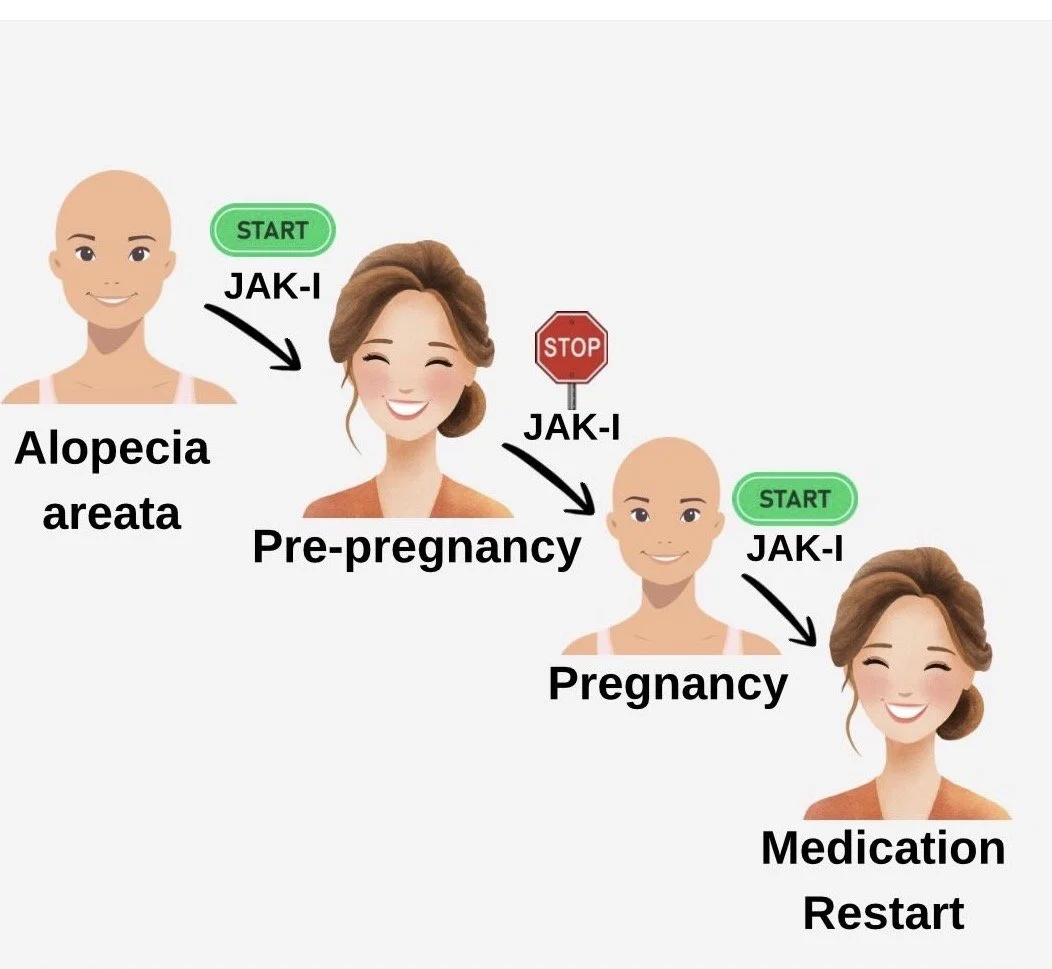
Janus kinase inhibitors (JAK inhibitors) are medications that can help some patients with severe alopecia areata (AA) regrow hair. But because safety in pregnancy isn’t fully known, current recommendations are for all women stop treatment when trying to conceive. Unfortunately, this usually leads to hair loss. A nicely conducted new study set out to describe what happens to scalp hair when women stop JAK inhibitors for pregnancy — and what happens after restarting them postpartum. Researchers followed 9 women with severe AA through 14 pregnancies. All stopped oral JAK inhibitors before or early in pregnancy. RESULTS Every woman experienced significant hair loss after stopping treatment. However, once JAK inhibitors were restarted — usually within 4 months after delivery — patients regrew their hair, often back to or better than before. CONCLUSIONS This study is great news for the many women with alopecia areata who want to become pregnant but are terrified to stop their JAK inhibitor. Women with AA who must stop JAK inhibitors during pregnancy should be counseled that hair shedding is highly likely. The encouraging news is that restarting treatment after delivery (and after breastfeeding is done) led to meaningful regrowth in all cases. This study highlights the emotional burden these women face and the need for clearer pregnancy-related treatment guidelines in AA. REFERENCE Ogbutor C et al. Int J Womens Dermatol. 2025;11:e218 Source link
From research lab to medicine cabinet: how new migraine treatments are discovered
The first widely used migraine-specific treatments, the triptans, were introduced in the early 1990s. These drugs marked a turning point towards more targeted management of migraine. However, a substantial proportion (around one third) of individuals do not respond adequately to current treatments. Many drugs primarily target head pain, despite non-pain symptoms like fatigue, light sensitivity and nausea often being just as debilitating. As a result, researchers continue to search for new drug targets. But how does a new migraine treatment turn from an idea into something prescribed in a clinic? This blog will give you some insights into what happens ‘behind the scenes’ of drug discovery. Where do new ideas come from? New treatment ideas begin with discovery science. As research improves what we know about what’s happening in the brain during a migraine attack, scientists identify biological processes that could be targeted with drugs. For example, Calcitonin Gene-Related Peptide (CGRP) was discovered to play a key role in migraine pain-signalling as its levels were shown to increase in people during attacks. This initial insight led to the development of therapies to block its effects, with some drugs now available. But not all scientific discoveries lead to the development of new drugs. Sometimes researchers can repurpose existing treatments, like botox, instead. In other cases, observing the strengths and weaknesses of existing drugs, helps researchers design safer or more effective options. New treatments rarely emerge in isolation but instead build on decades of accumulated research and clinical observations. From the research lab: Once an idea is generated, the earliest stage of drug development happens in laboratories. Scientists will first test compounds in preclinical models, like cells, animals or computer simulations, to look for signs that one of these compounds might improve migraine-related biology. You can think of drug discovery as testing many different keys in a complex lock (which may itself not yet be understood). If a particular compound is successful at improving migraine-related biology, it becomes a potential new medicine, known as a ‘drug candidate’. However, scientists may need to test thousands of compounds before finding one promising drug candidate, making this a challenging and time-consuming process. These initial investigations done in preclinical models allow researchers to begin to assess both how effective a drug candidate is at modifying migraine-related biology and whether it appears safe enough to progress further. To the medicine cabinet: If a medication shows promise in preclinical testing, it will move on to clinical trials. Clinical trials are divided into four phases to ensure safety of participants and effectiveness of a drug. Each phase has its own specific purposes and builds upon the preceding phase. The key questions answered and goals of each phase of a clinical trial are as follows: Phase 1: Is it safe? What dose should be used? Small groups of healthy participants are studied to determine the safety of the drug candidate. Phase 2: Does it show signs of working? Is it effective in improving migraine biology in people with migraine? Larger groups of volunteers, including people with migraine, allow researchers to test the effectiveness of the drug at improving migraine-related biology. Phase 3: Does it work well and safely compared to existing treatments? Does it provide additional benefits to existing drugs that are already on the market? Large populations are studied to assess if there are improved benefits to most people with migraine. Approval by regulatory bodies: Can this drug be put on the market? If there is evidence that a drug candidate meets these criteria in a significant proportion of participants, the medication will be considered for market approval. In the United Kingdom, regulatory bodies like the Medicines and Healthcare products Regulatory Agency (MHRA) oversee the approval of new medications. These regulatory bodies are critical in ensuring treatments are safe and effective for public use. In England and Wales, approval by regulatory bodies is not the final stage. New drugs also need to be assessed and approved by the National Institute for Health and Care Excellence (NICE) to make them available to people being treated by the NHS, often with specific rules. Phase 4: What happens after approval in real-world use? Even after approval, drugs continue to be monitored. This is done to look out for rare side effects that may not have been spotted during clinical trials. It also allows real-world data to be collected to refine how medications are used. For example, drugs could be repurposed or better dosing strategies can be discovered to improve their use in migraine management. Why does this process take so long? It can take years (and hundreds of millions of pounds) to develop an idea for a new migraine medication into a fully-fledged drug that is prescribed in the clinic. Circling back to the development of the triptans, although they were discovered in the late 1970s, they were only made available to the public in the 1990s. Similarly, CGRP was initially discovered in the early 1980s and convincingly linked to migraine biology in 1990, but the first CGRP-targeting drug (a CGRP monoclonal antibody called erenumab) was only approved for use in 2018. Testing these medications for safety and effectiveness took around 20 to 30 years, highlighting that the process from drug discovery to development can be slow. Many potential drugs fail along the way either in their ability to work well in improving symptoms of a migraine attack, in their safety or in providing more benefits than existing medications. Therefore, time is needed to ensure that beneficial medications are being developed. What is currently in the discovery pipeline? There are currently exciting prospects in the migraine treatment pipeline. While much progress has been driven by targeting CGRP, researchers are now exploring new approaches that go beyond pain. Recent clinical trial data showed the potential for early intervention in migraine care, whereby blocking CGRP signalling during the earliest phase of an attack, prior to the onset of pain demonstrated beneficial effects. Data from the study suggests that the early use of a
Changing course: Recognize signals, understand science
Column Orthopedics Today Commentary Add topic to email alerts Receive an email when new articles are posted on Please provide your email address to receive an email when new articles are posted on . “ data-action=”subscribe”> Subscribe We were unable to process your request. Please try again later. If you continue to have this issue please contact customerservice@slackinc.com. Back to Healio More from Column Orthopedics Today Commentary View all The challenges of health care have led many physicians to consider changing their professional environment. The first impulse is to modify the current situation, but systemic and institutional inertia may prevent any meaningful change. Questions arise and these concerns may be briefly silenced by strong clinical outcomes, patient gratitude or the rewards of mentoring fellows and residents who value your guidance. However, for an increasing number of physicians at every stage of a career, the introspective voices may be growing louder, leading one to question if status quo is still acceptable or if it is time to change course. These questions are not signs of weakness, loss of resilience or ingratitude. They reflect professional clarity and alignment with priorities and, increasingly, survival. Burnout rates among physicians have risen sharply during the past decade. The corporatization of medicine, loss of clinical autonomy, escalating administrative burdens and a sustained erosion of the patient-physician relationship have contributed. For younger physicians, disillusionment can arrive before a strong foundation is established. For mid-career physicians, recognizing that a current environment cannot fulfill their long-term vision can feel paralyzing. For senior physicians, early retirement becomes an increasingly appealing alternative. Not a failure Changing course is not failure. When approached with clarity, evidence and intention, it is often the most courageous and consequential professional decision a physician can make. The most effective way to consider a career change begins long before a moment of crisis. Every physician should develop a personal vision and mission statement that integrates professional and family priorities. This can be a dynamic document that articulates your professional vision, how you want to prioritize your time, and what matters most to your family. Ideally grounded in enduring principles, it can be refined as life stages, relationships and family circumstances change. When this foundation exists, decisions become measurable. You can honestly ask if your current environment is moving you toward or away from stated values. When the answer is consistently away, the stages of change have already begun whether recognized or not. Stages of change The Transtheoretical Model of behavior change provides a validated framework for understanding how physicians navigate professional transitions. It identifies six stages: precontemplation, contemplation, preparation, action, maintenance and termination. Every major career pivot aligns with this model. In the precontemplation stage, a physician has not yet recognized a problem. Performance remains high, external recognition is strong and dissatisfaction is rationalized as temporary. Sentinel events that move a physician into contemplation include leadership transitions, gradual erosion of input in institutional decisions, diminished autonomy and a growing dissonance between personal values and organizational expectations. Moral distress deserves particular attention. It is not frustration or a lack of resilience. It is a documented psychological red flag arising from a persistent mismatch between a physician’s clinical values and system demands. If unaddressed, it predicts emotional exhaustion, depersonalization and departure from the organization on the organization’s terms rather than the physician’s own terms. In contemplation, the physician gathers information, strengthens networks and relationships, and consults legal and financial experts. If change is pursued, then action leads to the transition, followed by maintenance, the critical post-transition stabilization period, and finally termination, which marks full integration into a new environment. The central lesson is not to wait for a crisis. When multiple red flags converge, preparation should begin on the physician’s terms. Structured introspection is the most powerful instrument in any career decision. The strongest predictor of a successful transition is clarity about one’s vision. Ask whether you are building the skills, relationships and reputation that reflect who you want to be in a decade. Without a vision, decisions default to reactivity. Equally important is a structured evaluation of the trade-offs of staying vs. changing. Life stage Career mobility is profoundly shaped by life stages. In the early years, mobility is the highest and the cost of redirecting is lowest. A physician who discovers that a clinical environment does not align with their vision should act early and decisively, before a mature practice and referral base are established and contractual obligations mount. Clarity about what you do not want is as valuable as clarity about what you do. In mid-career, mobility carries real cost. A mature referral network, established relationships with hospitals and ASCs, and ties to your community and school-aged children are powerful anchors. Transitions must be carefully planned, as referral bases are rarely transplanted and financial costs are measurable. However, cost does not mean wrong. In late career, the risk calculus shifts. Children are leaving home, financial security is more established and one’s professional reputation has matured. However, it is important to recognize that relocating to a different region offers limited portability of a mature referral network. Among professional peers, reputation is more transferable, and leadership roles and industry partnerships become more attainable. A deliberate move now may be viable and lead to long-term satisfaction. Case for change Structural forces reshaping medicine, including declining reimbursements, health care system consolidation and administrative responsibilities, are not transient. They are intensifying. The steady increase in burnout and the recognition of misaligned values are stronger predictors of dissatisfaction than income, confirming that physicians who protect their careers effectively take these signals seriously and honestly evaluate how the signals align with their personal vision. When physicians leave, it is rarely because of failure. It is because staying would have required them to become a different doctor than the one they aspired to be. Change, when it is right, is not the end of a